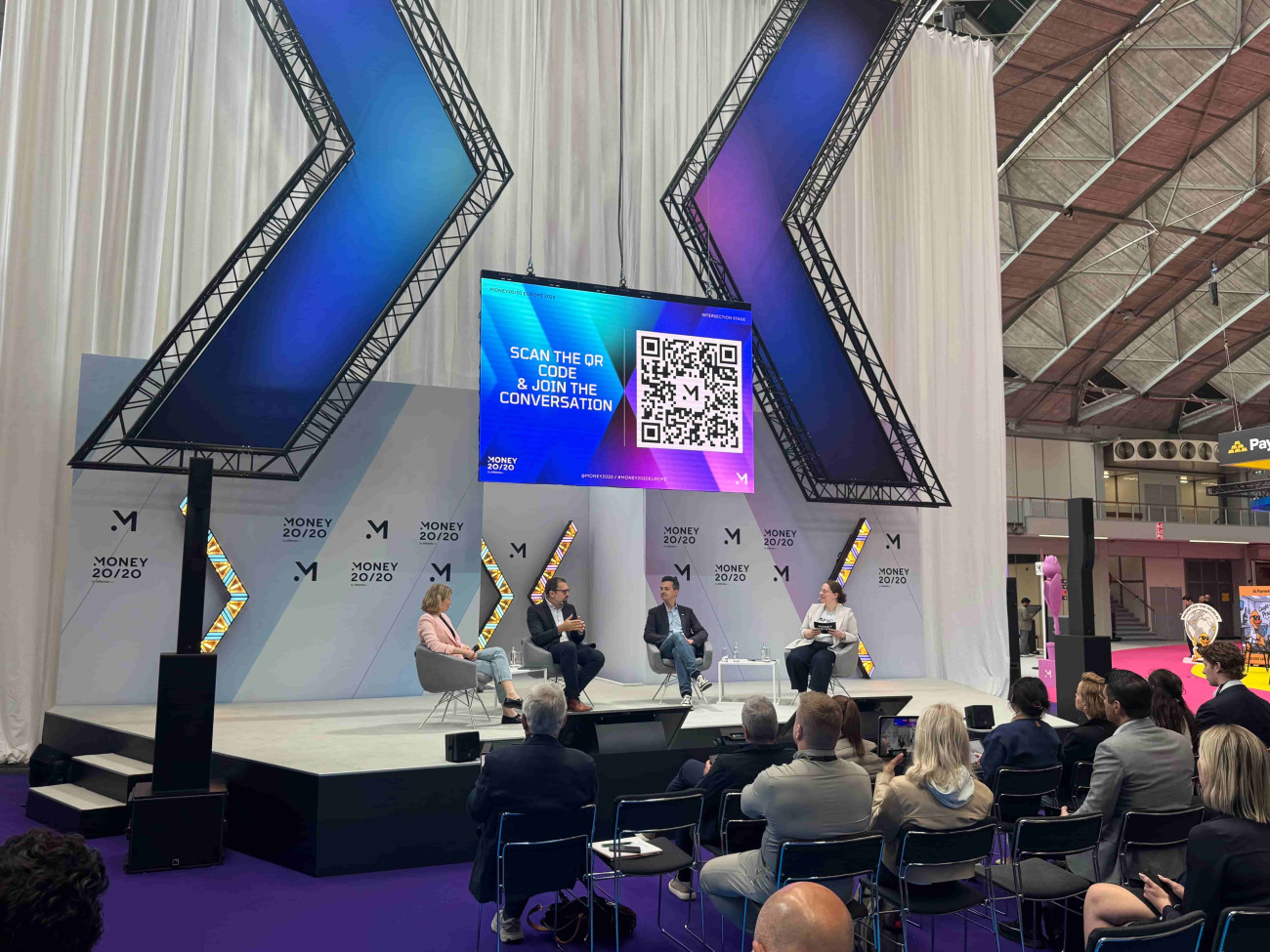
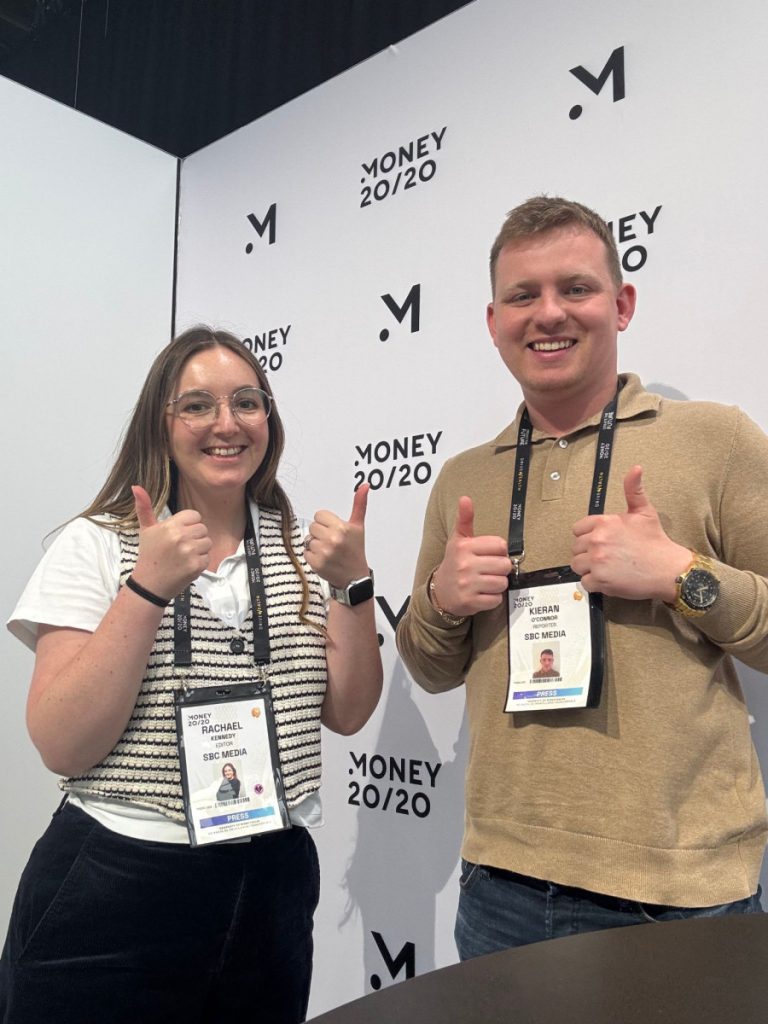
16:00 – And that’s a wrap on Payment Expert’s coverage of #Money2020EU for 2025. Rachael Kennedy, Editor and Kieran O’Connor, Senior Business journalist, share their reflections from the conference below.
Rachael Kennedy: “As we wrap up on another eventful conference it is really challenging to find one key takeaway. We’re watching the financial system quietly re-architect itself in real time. The buzzwords, embedded finance, stablecoins, CBDCs, aren’t just theory anymore. They’re showing up in partnerships, product launches, and regulation with serious momentum behind them.
I enjoyed hearing about Stripe’s programmable money thesis and how Revolut’s embraced EPI’s Wero wallet, and the ECB’s clear intent to make the digital euro widely accepted is something to watch. The building blocks of a more open, interoperable, and digital-first financial future are definitely falling into place.
But what was also evident was regulators, fintechs, and institutions now share a common challenge; move faster without breaking trust. Whether it’s embedding payments into platforms, making stablecoins useful at scale, or designing CBDCs for inclusion, the next chapter is about integration. Fintech no longer equals disruption. Europe may not be moving the fastest, but it’s laying down some of the most ambitious rails.”
Kieran O’Connor:
15:30 – “There’s a big ecosystem that goes with stablecoins. There are all sorts of different components that would involve executing a payment end-to-end and sometimes there is a bit of overhype of certain components, which can’t really be effective without the others,” said Chris Mason, CEO of Orbital.
Payment Expert asked: “Are stablecoins overhyped or underhyped, and why?” This is just a portion of Mason’s response to that question. His full answer will appear alongside insights from several other payment professionals who were asked the same. Stay tuned to Payment Expert’s LinkedIn for the full video when it goes live.
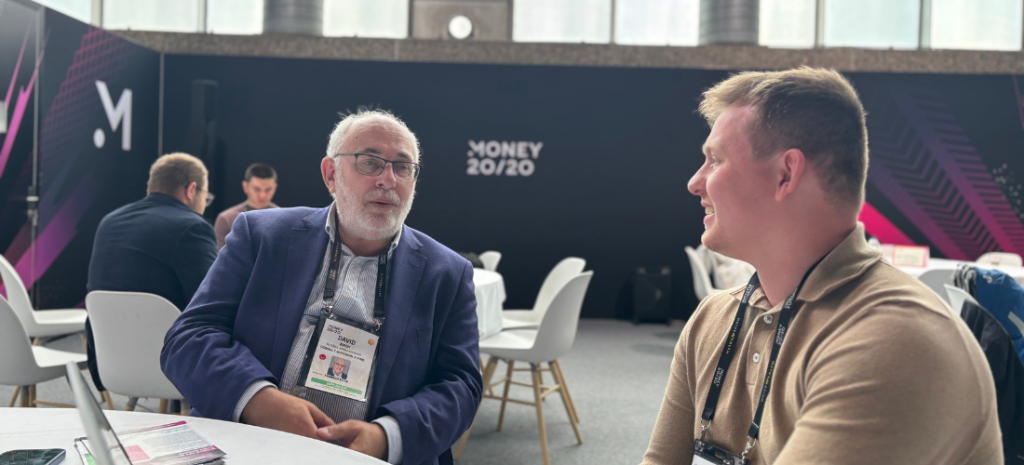
15:00 – Payment Expert’s final interview of Money20/20 EU 2025 was with none other than David Birch, prolific fintech commentator. He provided a candid look at how wearable payments are evolving from niche novelty to strategic necessity, driven by form factor, functionality, and fashion.
He noted wearables are no longer just smartwatches; they’re rings, bracelets, charms, even chip-enabled fingernails. With remote personalisation via smartphone, users can turn almost anything into a payment device, removing reliance on factory-issued cards.
He emphasised that the real long-term opportunity is identity, using wearables for secure access, age verification, and authenticity at events, festivals, and retail.
“In the long run, identity is the bigger play. You need something that can’t be copied—and that’s hardware.”
Birch also touched on wearables’ potential in emerging markets via prepaid models, and on how merchants can use wearables to create branded payment moments that smartphones simply can’t. He closed by reflecting on the future—gesture-based and ambient payments might be coming, but control and privacy will keep wearables relevant.
“Most people want something they control. That’s why wearables matter.”
14:15 – Today’s out the box speaker swapped Liverpool football legend to… astronaut?
Lisa Valencia, Project Manager at NASA Kennedy Space Center covered an array of topics, from her 35 year career at NASA and Guinness World Record to the rise of private entities like SpaceX, which has launched 180 missions this year, and the increasing role of public-private partnerships in space exploration.
“Back in the day, NASA got 4% of the national budget. Now it’s down to just 0.1%, so we’ve had to get creative with private partnerships. SpaceX is the perfect success story,” she said.
“They came to us in 2007 needing money after some rocket mishaps, and look at them now! From my balcony, I see their launches every other day. They’re planning 180 launches this year alone.Talk about a return on investment!”
She also touched on international collaborations, particularly with the European Space Agency and the Italian Space Agency, and the potential for space tourism and colonization of the moon
“We’re planning to colonize the South Pole on the moon. The idea is to extract water and hydrogen from the regolith—both for living there and for fuel,” she said.
14:00 – Curious about how to create and leverage FinBank partnerships? The discussion focused on the evolution and success of fintech partnerships with banks. Key points included the shift from transactional partnerships to more collaborative, value-driven relationships, emphasizing joint KPIs and product creation.
Alex Johnson, Chief Payments Officer, Nium
You really have to differentiate. You really have to stand out for a bank to say, ‘Yeah, I like what you offer enough to go through, six months of onboarding.’ Dare I say, maybe more.”
13:00 – Over lunch, a panel brought together payment and product leaders from Back Market, J.P. Morgan Payments, Riverty, and Mirakl to explore how technology, infrastructure, and evolving customer expectations are reshaping payments and e-commerce across global markets.
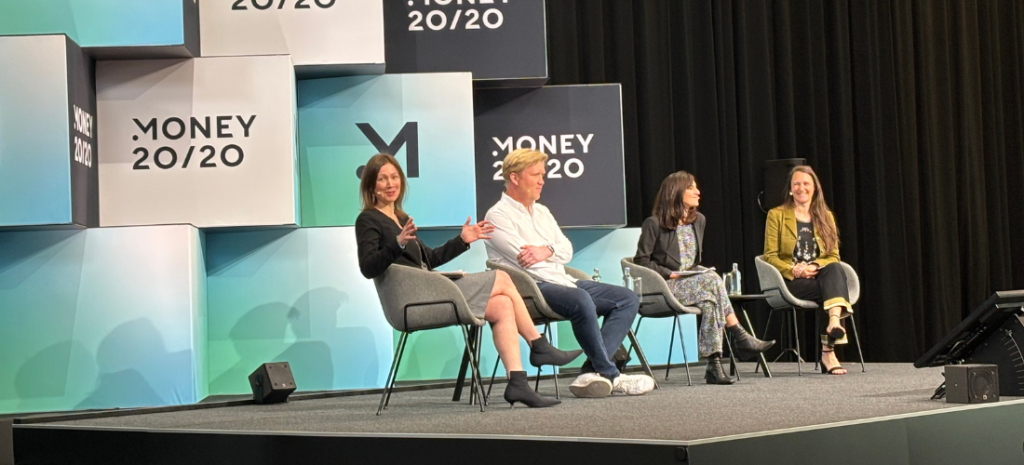
The conversation began with reflections on the shift away from cash and how digital payments have become the norm—even in remote or traditionally cash-reliant settings. Each speaker underscored how local nuances, regulation, and complexity drive the need for adaptable and intelligent payment systems.
“We couldn’t keep all our eggs in one basket. When our provider went down for an hour, we knew it was time to become agnostic.”
— Laurene Lecomte, Back Market
12:15 – A multi-trillion-dollar opportunity! This is what Lucy Demery, Head of Visa Commercial Solutions Europe at Visa Europe and Meron Colbeci, Chief Product Officer at Checkout.com, believe embedded finance is for the payments industry.
Why is embedded finance such a big opportunity? Well, it allows businesses to “get paid faster, reduce fraud and reduce debt,” said Demery.
She also explained it is helping to digitise the ecosystem and improve efficiency by removing the need for manual processes.
One of the best examples of the growth of embedded finance is the increasing adoption of BNPL. Colbeci stated that by 2027, we will see around $500bn of volume coming from BNPL services.
11:45 – Find yourself someone who looks at you the way Ken Villum Klausen looks at Motie Bring. The mutual respect and easy humour between the Lunar CEO and the PPRO chief set the tone for this sharp and honest discussion on why the Nordics remain one of the toughest and most rewarding markets to crack in fintech.
From the outside, the Nordics look like a digital payments fairytale: wealthy populations, high digital adoption, and world-leading mobile payment usage. But as Klausen bluntly put it, “It’s more Stephen King than Hans Christian Andersen.” Each country comes with its own rails, regulators, currencies, and consumer behaviours — and treating the Nordics as a single region is a surefire path to failure.
“P27 promised unification. Finland left. It became P22. It failed. That says a lot,” said Ken Villum Klausen.
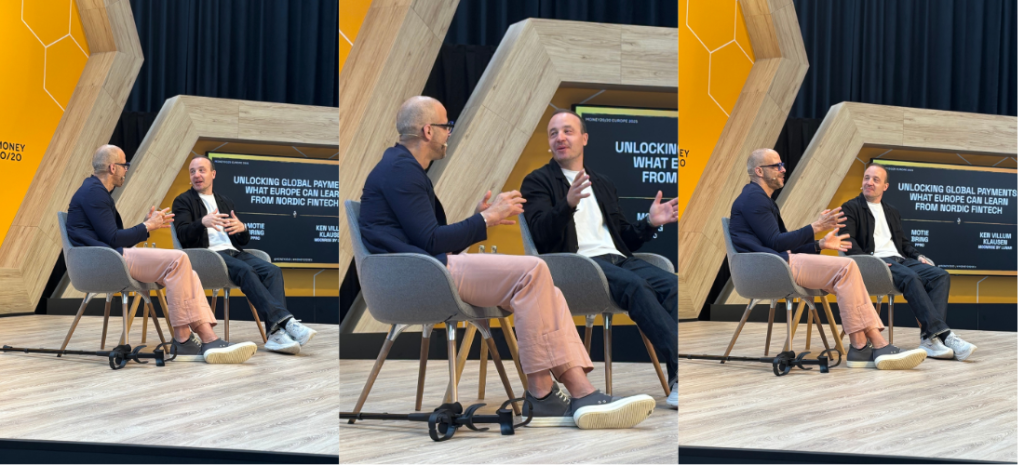
Key Takeaways in a nutshell –
- The Nordics ≠ One Market: Sweden, Denmark, Norway, and Finland each have unique payment rails, consumer habits, and regulatory frameworks. Success demands tailored local integrations, not one-size-fits-all solutions.
- Legacy Dominance + Structural Complexity: Local incumbents have long monopolised payments infrastructure, making it hard for new players to gain traction — but recent collaborations (like Lunar + PPRO) are cracking it open.
- The Myth of ‘Just Launching’: Foreign fintechs that enter the region without integrating local payment methods or ID systems consistently fail. Adoption demands deep localisation.
- Fragmentation is Real — and Instructive: Despite efforts like P27 (a failed attempt at Nordic payment unification), the reality is that most payment innovation still grows at the local level.
- Opportunity Through Underserved Markets: The difficulty of entering the Nordics means fewer players — and big upside. “There’s so much business and so little competition,” said Klausen.
- Parallel Lessons for Europe: As domestic European payment systems mature, the need for hyper-local thinking at scale becomes more urgent, a key takeaway from Nordic dynamics.
11:15 – While AI continues to dominate headlines, a panel during this morning’s program brought it back to ground-level finance operations. Hosted by Marina Mouka (Editor, The CFO), the discussion zeroed in on how CFOs are actively embedding it into tools, teams, and transformation plans. Featuring finance leaders from Payhawk, Starship Technologies, and Dott, the panel made it clear that AI in finance isn’t futuristic.
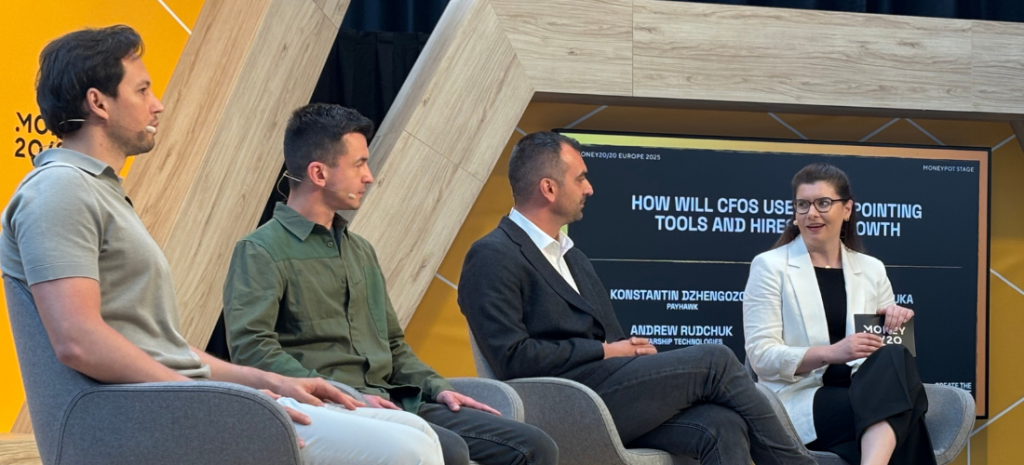
“AI isn’t a black box—it needs guardrails, transparency, and trust to work in finance,” said Konstantin Dzhengozov, CFO at Payhawk
From OCR-based invoice capture to intelligent bank reconciliations and automated compliance reporting, CFOs are building AI into their day-to-day operations. Yet data quality remains a universal pain point, along with the challenge of change management. Upskilling existing teams is the current priority, with some early moves toward embedding engineers within finance departments. The dream? Fully autonomous finance workflows built around clean data, transparent processes, and AI agents that do the grunt work—so humans can focus on strategy.
“If you’re not using AI in 2026, you’ll be buried in slow processes, low data accuracy, and high costs.”
– Ilia Shabrov, Head of Systems & Processes at Dott
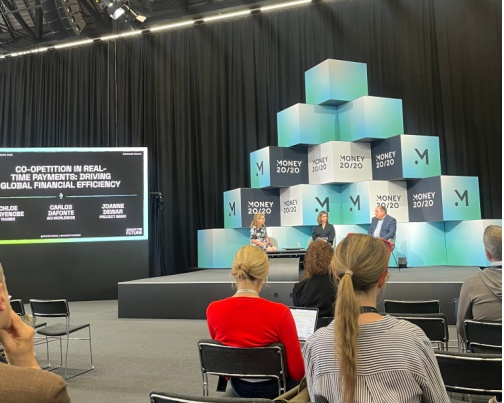
11:00 – Efficiency was the topic at the Summits Stage this morning. Joanne Dewar, Project Nemo, moderated a discussion with Chloe Mayenobe, President and COO at Thunes, and Carlos Dafonte, Global Head of Merchant Partnerships at ACI Worldwide.
While effiency and speed is the a key target for payments for consumers and merchants. Dafonte reminded those in attendance that security cannot be forgotten. He explained in the coming years there will be more solutions foucused on solutions, such as robot to robot payments, but asked a key question.
Dafonte said: “Who’s watching the store to make sure these transactions are legitimate?”
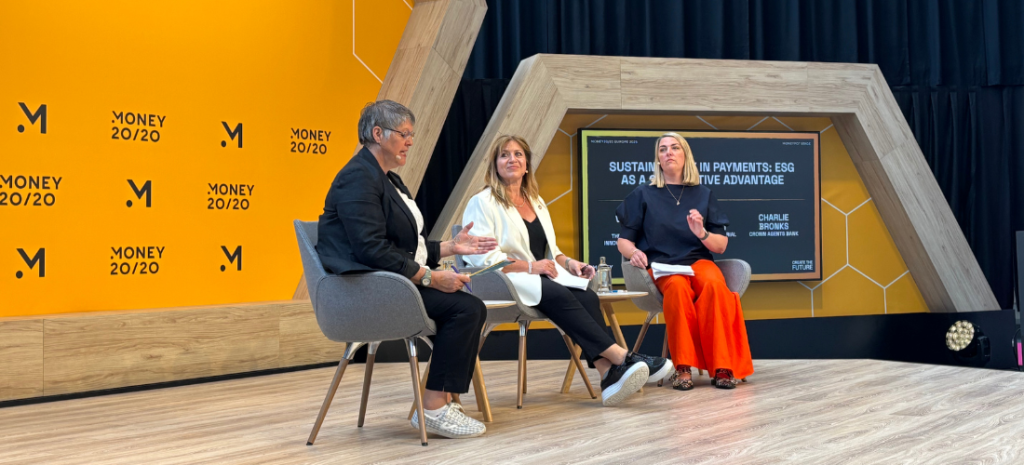
10:35 – ESG has officially crossed over from feel-good initiative to business-critical differentiator.
Moderated by journalist Joy Macknight, the discussion featured insights from Charlie Bronks (Crown Agents Bank) and Victoria Jory (Alliance for Innovative Regulation – AIR), collectively argued that sustainability is a gateway to contracts, capital, and trust.
Crown Agents Bank is already winning business thanks to ESG credentials, including government contracts that award 10% weight to social value. AIR’s regulatory “techsprints” are tackling real-world “wicked problems” like climate risk and consumer protection through cross-sector collaboration.
Those who treat ESG as a commercial driver, not a compliance checkbox, are poised to lead. “If you’re not building ESG into your business now, you’re already behind. It’s not just an advantage—it’s a risk if you don’t,” said Bronks.
09:35 – While much of Money20/20 is dominated by regulation, infrastructure, and technical innovation, there was a panel this morning that shifted the focus to something equally critica, but often overlooked: how fintech brands earn real traction and trust in the eyes of consumers.
In a market where features can be copied and regulatory constraints are tightening, marketing becomes a core differentiator. This session brought together top marketing leaders from Checkout.com, Flutterwave and Amazon Pay to explore how fintech storytelling, branding, and metrics shape perception and performance.
The panel made a clear case: trust is the real currency in fintech, and it can’t be built through traction alone. Younger generations bring new challenges to how trust is formed—balancing increased vulnerability to fraud with rising influence in the digital economy.
“Traction doesn’t equal trust. If consumers don’t trust the system, there is no commerce.”
– Rory O’Neill, CMO at Checkout.com
Fintech marketing must dig deeper than product features, leaning into storytelling that reveals the human experience behind every transaction. Meanwhile, CMOs are navigating noisy data environments by interpreting metrics contextually, aligning brand efforts to core business KPIs, and rethinking team structures to stay agile. AI is helping—but its true potential lies in disrupting roles, not just streamlining them.
“There’s a human experience behind every payment. No matter how technical it gets, there’s always a story.”
– Yewande Akomolafe-Kalu, AVP, Branding & Storytelling at Flutterwave
09:00 – We’re back for the final day at Money20/20 Europe 2025. On the agenda this morning, a panel of CMOs will share honest and insightful lessons from the coal face on what works and what doesn’t. How can fintech firms get the attention of their ideal customer profile?
We’ll also hear about the latest sustainability advancements in payments and FX. Panelists will debate the commercial impact of ESG in emerging markets, hoping to demystify regulations, ratings and certifications, while showcasing the best practices for sustainable success.