China’s digital economy is opening up with a rare focus on foreign visitors
Tencent has flipped its usual model on its head, testing TenPayGo to help overseas visitors access China’s digital‑first economy.
China has a host of challenges for tourists when it comes to payments. Despite having one of the world’s most advanced domestic infrastructures, visitors are often locked out because the system is built around identity checks and verification processes with only residents in mind.
Foreign cards rarely work at the point of sale and cash, which most travellers rely on, barely circulates, leaving many struggling to complete transactions on their trips.
TenPayGo is Tencent’s attempt to improve the experience, launching a dedicated super‑app that lets overseas visitors pay at merchants, book services and access everyday tools in a similar way to locals.
The app bundles travel utilities with merchant payments, with early test versions showing support for dining, transport, shopping and other daily services, all routed through the network running on WeChat Pay (Weixin Pay).
The service is currently still in testing and is reported to have been developed following China’s recent push to attract more tourism, including new initiatives such as allowing UK passport holders to travel visa‑free for stays of up to 30 days.
Tencent turns its attention to overseas visitors
Tencent’s ecosystem covers messaging, gaming, cloud services and fintech, with Weixin acting as a main gateways. The platforms connect hundreds of millions of users to everyday services and have become a key part of China’s mobile-first economy.
Weixin Pay is embedded into almost every part of daily life, covering transport, dining, retail and entertainment. Tencent’s international payments strategy, until now, has mainly focused on helping Chinese consumers use their mobile wallets overseas through partnerships with global payment networks and merchants.
Across Asia, Weixin Pay has been integrated into regional payment networks including Singapore’s SGQR, Malaysia’s PayNet and Thailand’s PromptPay, allowing users to pay at millions of overseas merchants.
Collaborations like these have allowed Chinese travellers to continue paying abroad in the same way they do at home, reducing reliance on foreign cards and cash.
The experience for visitors arriving in China has been much more complicated, with foreign users often facing barriers to accessing local payment services. Tencent is now using its existing payments infrastructure, merchant network and super-app model to create a more accessible entry point for those visiting China.
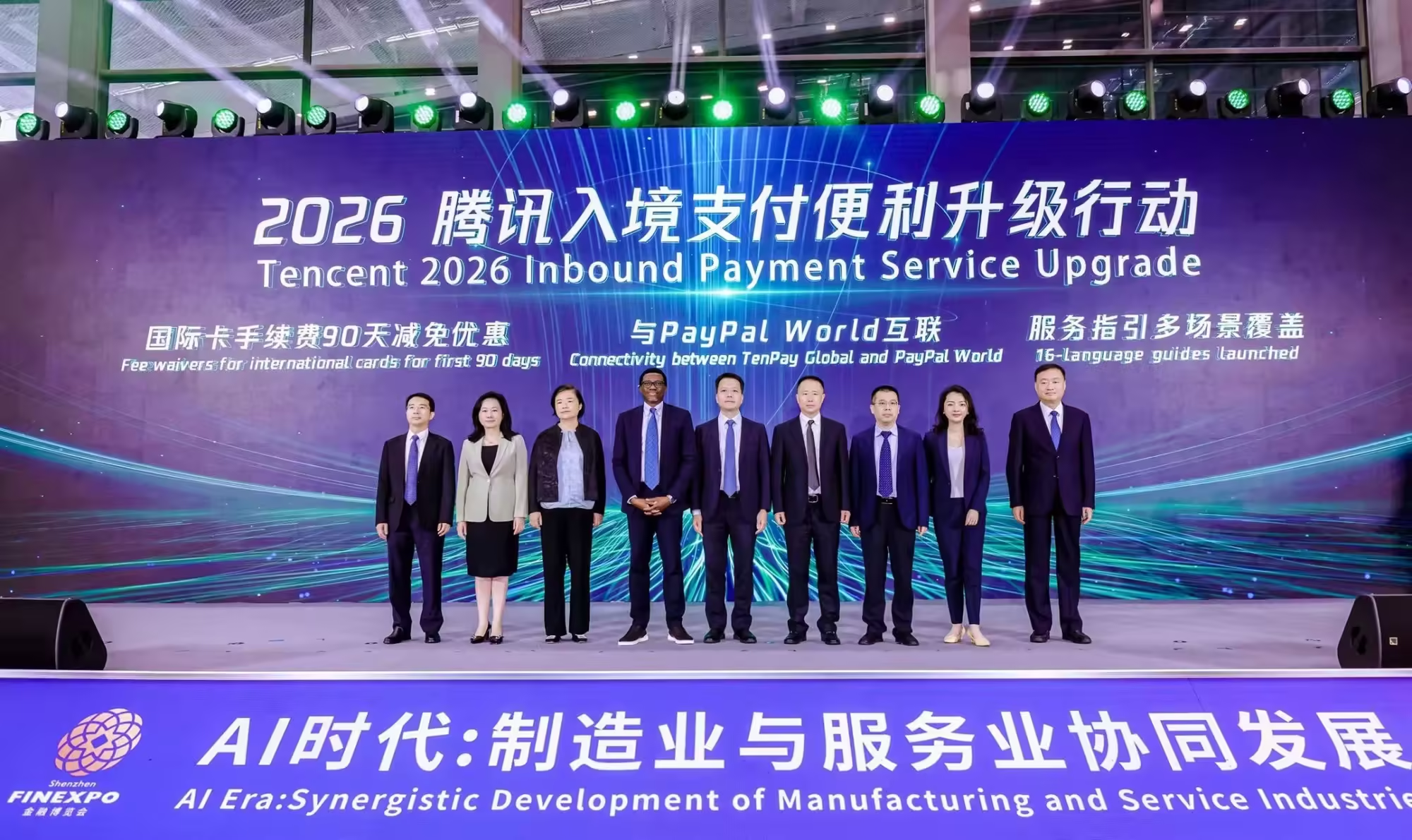
Earlier this year, the company announced the 2026 Inbound Payment Service Upgrade Initiative at the opening forum of the 20th Shenzhen International Financial Expo. The initiative will introduce upgrades across products, international wallet partnerships and services aimed at improving the experience for visitors.

The announcement included a partnership between TenPay Global and PayPal World, allowing PayPal users to scan Weixin Pay QR payment codes in China, initially supporting users from the US.
“China is home to one of the world’s most sophisticated digital payment ecosystems, and for international travellers, the ability to pay seamlessly is integral to the experience of being here,” said Otto Williams, SVP, PayPal World, Regional Head and GM, PayPal Middle East and Africa.
“Through PayPal World’s partnership with TenPay Global, we are committed to ensuring that international visitors can enjoy frictionless payments, using a wallet they already know and trust.”
China is changing
China’s payments have formally, like other sectors of the country, been closed off to the rest of the world

The country has concentrated on developing its own payment infrastructure, with platforms such as UnionPay, Alipay and Weixin Pay accounting for almost all consumer and merchant activity inside the mainland.
This preference has created one of the world’s most advanced digital payment ecosystems, but it has also made access for overseas firms extremely difficult.
However, the approach has started to show signs of change, with a series of recent developments suggesting China is experimenting with structured forms of inbound access.
One example is the development of inbound payment corridors built on Chinese networks. Visa’s partnership with UnionPay International allows businesses and consumers to send funds into China through Visa Direct, with transactions routed through UnionPay’s MoneyExpress platform.
The service continues to operate through domestic payment rails, but provides global platforms with a way to reach Chinese users without building separate local infrastructure.
Other partnerships have followed a similar model, with OwlTing’s agreement with US-based Credible Finance connecting OwlTing’s regulated settlement infrastructure with Credible’s global payments network.
China is also participating in cross-border settlement initiatives such as mBridge, a multi-CBDC project involving several central banks. The platform aims to improve international settlement by reducing reliance on intermediary currencies and creating more efficient liquidity flows between markets.
These projects are by no means a suggestion that the country is fully opening its market, but they indicate a change in approach towards foreign companies and users and could bring a wave of opportunities.