PayPal is feeling the impact of tense US-China relations as lawmakers question its Tencent partnership.
The US House Select Committee on the Chinese Communist Party has questioned PayPal’s partnership with Tencent’s Tenpay Global due to risks of money laundering and illicit finance.
The committee set out its concerns in a letter sent to PayPal CEO Alex Chriss on September 19.
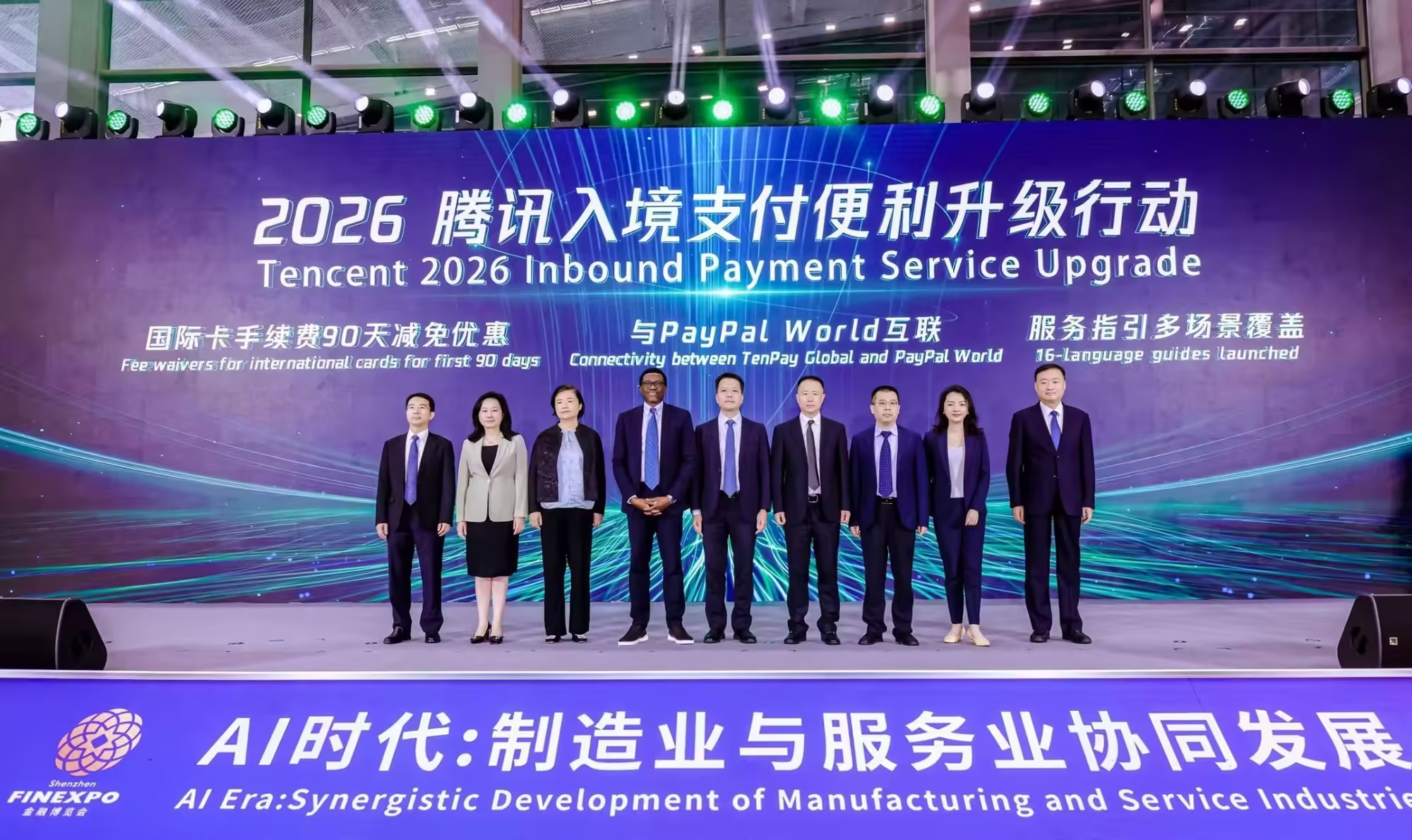
Announced in April and July 2025, PayPal’s deal with Tencent allows customers in the US, Canada and Europe to send money directly into Weixin (WeChat) Pay wallets and linked bank accounts in China. They can also make purchases in the country by scanning QR codes.
US lawmakers have requested a staff briefing and extensive documentation from PayPal by October 3, including agreements with Tencent, internal AML risk assessments, compliance procedures and records of suspicious activity reports filed with the US Treasury’s Financial Crimes Enforcement Network (FinCEN), covering activities dating back to January 1, 2023.
“We seek assurances that PayPal’s new partnerships will not enable [Chinese money laundering organisations] to shift from merely using Weixin Pay to organize illicit activity into actually moving illicit funds directly through PayPal–Weixin Pay channels,” the letter stated.
WeWhat?
WeChat, operated by Tencent’s Tenpay Global, is one of China’s two dominant mobile wallet platforms, with hundreds of millions of users. It allows people to make payments, transfer funds and scan QR codes for purchases both online and in stores.
US authorities have identified WeChat as a hub for Chinese money laundering organisations, including those tied to drug trafficking.
The September 19 letter warns PayPal’s partnership could convert the platform from a coordination tool into a direct payment channel, potentially enabling illicit actors to bypass KYC and other AML safeguards.
As a US-registered “money transmitter” PayPal is legally required to comply with the Bank Secrecy Act. The company must maintain a risk-based AML programme, including customer identification, ongoing monitoring, recordkeeping and the filing of suspicious activity reports.
The letter also highlighted concerns due to Tencent’s ownership structure. The company is designated as a “Chinese military company” by the US government and its subsidiaries, including Tenpay, operate under Chinese law, which may require cooperation with state authorities.
“The US institution bears primary responsibility for compliance, regardless of reliance on foreign partners for operational support,” the letter states.
Where strategy meets politics
PayPal’s partnership represents a significant commercial opportunity. China’s digital payments market is one of the largest in the world and mobile wallets dominate transactions. Successfully expanding into this market could significantly boost PayPal’s cross-border remittances, e-commerce payments and corporate services.
Unfortunately for PayPal, US political tensions could complicate plans. Earlier this year, the US introduced tariffs on imports from China, with some rates reaching 125%, and imposed restrictions on Chinese access to advanced semiconductors and AI technologies over national security concerns.
Deals involving Chinese tech firms now face tougher reviews from US regulators, particularly regarding data handling, financial transparency and operational risk. Companies may also face reputational challenges from lawmakers or consumers over partnerships with politically sensitive Chinese firms.