From QR linkages to CBDC platforms, APAC’s payment corridors are being rewired — connecting the region’s instant rails to the Gulf, Latin America, Southeast Asia and beyond
Cross-border payments from Asia-Pacific totalled $13.5tn in 2025, representing 31% of global outflows, and are projected to grow to $24tn by 2033; a 36% share of all global cross-border volumes, per FXC Intelligence.
The region’s domestic rails – from India’s UPI to Singapore’s PayNow to Indonesia’s QRIS – have long outpaced the correspondent banking model that still governs much of international settlement.
Payment Expert spotlights five payment corridors connecting APAC to the world that are reshaping how businesses and consumers move money across borders.
1. Southeast Asia

Multilateral Rail: Project Nexus/Instant Payment System interlinking
Mechanism: Central-bank-governed multilateral hub connecting domestic IPS networks
Status: Implementation phase; technical operator procurement underway, live operations targeted
The most structurally significant development in APAC cross-border payments is arguably Project Nexus. Originally incubated by the BIS Innovation Hub, it moved into formal implementation in April 2025 with the establishment of Nexus Global Payments (NGP) in Singapore – a non-profit entity backed by the central banks of India, Malaysia, the Philippines, Singapore and Thailand. Indonesia subsequently joined as a participant, with Bank Indonesia citing the country’s status as one of the world’s largest remittance markets as the strategic rationale.
The model is architectural; rather than each country’s instant payment system building bespoke connections to every other, each connects once to a central hub, gaining access to all others.
Nexus is designed to enable cross-border payments in 60 seconds or less, operating around the clock and integrated into existing mobile banking apps without requiring a separate application. The scale of potential reach is significant, with the European Central Bank participating as a special observer. Its eventual full participation would create a corridor touching a combined population of around 2.15 billion people across India and the EU alone, says RedCompass Labs.
2. India

Gulf Cooperation Council Rail: UPI (Unified Payments Interface) bilateral linkages
Mechanism: NPCI International-brokered integrations with Gulf fast payment systems
Status: Live in UAE, Qatar, Bahrain, Singapore; expansion ongoing
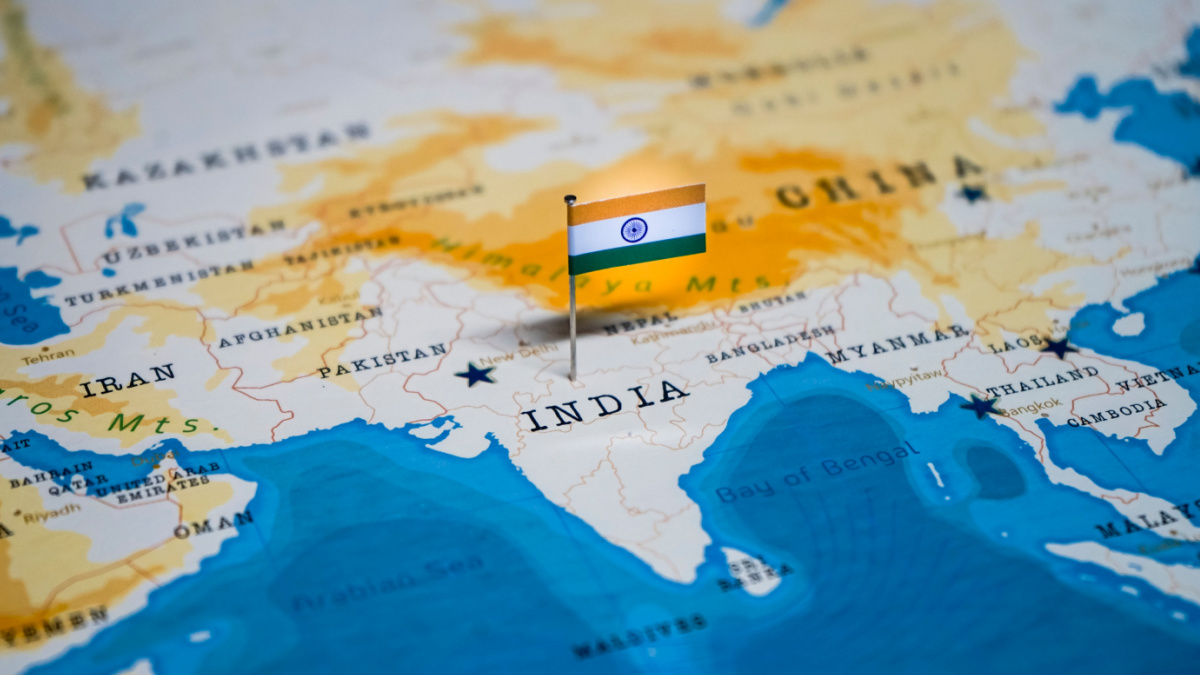
India’s UPI has become as much a diplomatic instrument as a payment system.
India’s UPI has become as much a diplomatic instrument as a payment system. According to the RBI Annual Report 2024-25, NPCI International Payments Ltd (NIPL) is working to extend UPI to 20 countries, with an initiation timeline of 2024-25 and a completion target of FY29 – covering QR-code merchant acceptance and bilateral fast payment system linkages, says Business Standard.
The Gulf has been a primary focus, given the scale of the Indian diaspora and the volume of southbound remittances it generates. NPCI International has been expanding UPI acceptance across the UAE, aligned with the Dubai government’s stated target of achieving 90% digital transactions by 2026.
Qatar became the eighth overseas destination to go live with UPI. The RBI eased forex regulations in January 2025 to allow Indian exporters to open foreign currency accounts overseas and to permit Rupee transactions for non-residents, in a push toward Rupee-based trade settlement that reduces reliance on dollar intermediation, says The Payments Association.
3. China

Southeast Asia Rail: CIPS (Cross-Border Interbank Payment System) and bilateral QR linkages
Mechanism: RMB settlement network plus central-bank-backed QR interoperability pilots
Status: CIPS operational and expanding; QR corridors with Vietnam and Indonesia in active pilot
China’s cross-border payment infrastructure is deepening its Southeast Asian footprint through two parallel tracks. FXC Intelligence found CIPS processed 175trn yuan in transactions in 2024, a 43% increase year-on-year, with total participants growing 10% to 1,683 institutions by May 2025, of which Asia accounts for 73% of indirect participants.
Alongside the CIPS expansion, China has moved into direct QR-based connectivity with its closest trade partners. China launched new QR-based payment programmes with both Vietnam and Indonesia, eliminating the need for currency conversion by connecting local switching networks and payment service providers in each country, with plans to extend participation to all member institutions including banks and local e-wallets in 2026.
4. China/India – Sub-Saharan Africa

Rail: CIPS (RMB settlement) and NPCI International infrastructure export
Mechanism: Direct RMB clearing via CIPS; UPI-stack licensing to African central banks
Status: CIPS live via Standard Bank across 21 African markets; Namibia UPI build underway
The China–Sub-Saharan Africa corridor is the continent’s largest bilateral trading relationship, yet one where the majority of settlement has historically been routed through US dollar correspondent banking in London or New York.
However in November 2025, Standard Bank of South Africa became the first African bank to connect directly to CIPS, going live across its digital platforms in 21 African markets after securing its licence at China’s Lujiazui Forum in June.
Direct participation allows RMB transactions to clear without dollar intermediation – significant given that 34% of African businesses now source imports from China, up from 23% a year earlier, and China-Africa trade reached $134bn in the first five months of 2025 alone.
On the India side, NPCI International signed an agreement with the Bank of Namibia in May 2024 to deploy the UPI technology stack – its first collaboration with a central bank to build UPI-like domestic infrastructure in another country, with bilateral connectivity to India as the longer-term goal.
Sub-Saharan Africa remains the most expensive region in the world for cross-border payments, with average remittance costs of 8.45% in Q1 2025 against a UN SDG target of 3%.
5. APAC – Middle East (Project mBridge)

Rail: mBridge multi-CBDC platform
Mechanism: Distributed ledger enabling real-time central bank digital currency settlement
Status: Minimum viable product reached; BIS has exited, now managed by participating central banks
Project mBridge, the multi-central bank digital currency platform connecting the central banks of China, Hong Kong, Thailand, the UAE and Saudi Arabia, has processed more than 4,000 transactions worth $55.49bn, with China’s digital yuan accounting for 95.3% of settlement volume.
In November 2025, the UAE executed its first government payment using the wholesale digital dirham on mBridge, testing readiness for settling energy and commodity trade.
The BIS stepped back from mBridge in 2024, describing the move as a “graduation” rather than a withdrawal; the platform is now managed directly by the participating central banks.
For the APAC-Gulf corridor specifically, where energy trade between the two regions runs at significant scale, the ability to settle in digital sovereign currencies without correspondent bank intermediation has been a big shift in how the corridor is plumbed – irrespective of current transaction volumes.