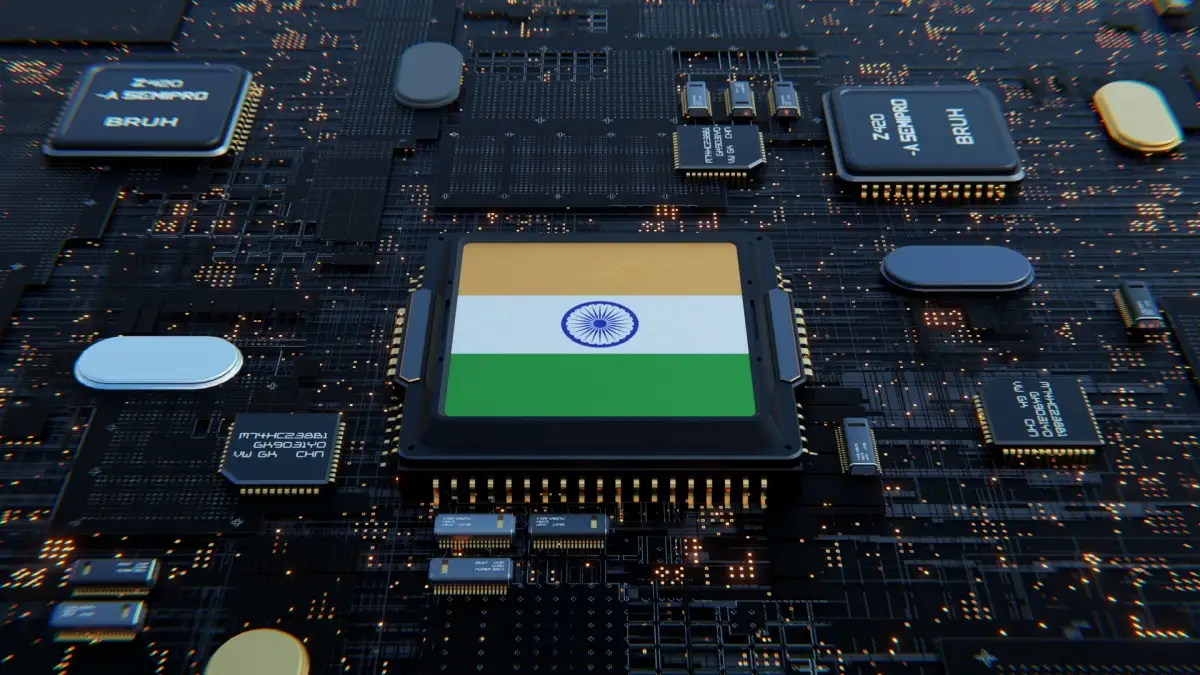
India’s payments body moves to embed a sovereign AI foundation into its digital public infrastructure, signalling the next phase of evolution for UPI and the country’s population-scale payments rails.
The National Payments Corporation of India (NPCI) has announced a collaboration with NVIDIA to develop a sovereign, payments-native artificial intelligence foundation for India’s digital payments ecosystem.
The 18 February announcement signals a change from discrete AI use cases to the creation of a scalable AI layer designed to sit within the core of India’s real-time payment infrastructure.
NPCI said the initiative will “scale and advance its sovereign AI model capabilities purpose-built for India’s payments ecosystem”, emphasising trust, resilience, security, and alignment with India’s regulatory and data sovereignty requirements.
The NPCI oversees the infrastructure behind Unified Payments Interface (UPI), the country’s real-time, account-to-account payment system that has reshaped consumer and merchant behaviour. UPI has become the default rail for peer-to-peer transfers, merchant QR payments, and an expanding range of financial services use cases.
Alongside UPI, NPCI operates or manages products including RuPay, IMPS and NACH. Collectively, these systems form the backbone of India’s digital public infrastructure for payments.
India’s payments push has been characterised by three principles: scale, interoperability and financial inclusion. UPI’s open architecture allowed banks, fintechs and BigTech platforms to plug into a common rail, accelerating adoption across urban and rural markets alike.
The AI initiative represents the next iteration of that infrastructure model.
Building a payments-native AI foundation
Under the collaboration, NPCI will use NVIDIA Nemotron, described as a family of open models with open weights, training data and recipes, as part of its model development journey.
The intention is to create a “sovereign, payments-native AI foundation” tailored to the specific requirements of high-volume, low-latency payment environments.
The proposed architecture will explore approaches such as Mixture of Experts models to support real-time systems operating at a population scale. In practical terms, that reflects the need for AI systems capable of processing enormous transaction flows without introducing friction or latency.
NPCI’s Chief Technology Officer Vishal Kanvaty described the initiative as a move from use-case-led AI deployments to “a foundational and scalable AI layer” aligned with regulatory and data sovereignty requirements.
From grievance bots to infrastructure intelligence
NPCI has already begun experimenting with AI in specific applications. It recently introduced a UPI Help Assistant pilot, supported by a Financial Model for India fine-tuned small language model, to improve grievance redressal processes.
The assistant enables more timely and consistent responses at scale, addressing one of the operational challenges that arises when real-time payment systems reach mass adoption.
NPCI said the AI layer is expected to support innovation in trust frameworks, grievance redressal processes and operational intelligence. It is also intended to provide a platform that banks and fintechs can leverage, while maintaining strong controls around data security and responsible AI use.
Sovereignty as strategy
India’s digital public infrastructure strategy has consistently prioritised domestic control over critical systems, from identity through Aadhaar to payments through UPI and RuPay. By framing the initiative as sovereign AI infrastructure, NPCI is positioning AI as an extension of that model.
The use of open models and alignment with India’s regulatory requirements underscores a desire to avoid dependence on external, closed AI systems that may not conform to domestic data localisation or governance standards.
For a payments system that underpins economic activity at national scale, the integration of AI raises questions around data handling, model training, oversight and systemic risk. NPCI’s language suggests an effort to address those concerns at the design stage.