40 years in the making, Visa could gain access to China’s domestic payment system, after receiving clearance from the People’s Bank of China.
Visa is one step closer to launching its cards business to China after receiving preliminary permission by the People’s Bank of China (PBOC).
In an announcement today (13 October), Visa confirmed it was granted an ‘Application to Prepare’ from the PBOC to begin building a domestic bankcard clearing institution in the country.
Becoming a fully operational, regulated bankcard clearing institution would allow Visa to perform and process transactions across China’s payment network, which are filed to the PBOC’s national payment system to be debited and credited.

Ryan McInerney, CEO of Visa, said: “The approval of our Application to Prepare marks a significant step forward in Visa’s long-standing commitment to China.
“We greatly appreciate the important role of the leaders of the United States and China in pursuing a constructive and strategically stable relationship between the world’s largest economies.
“For more than 40 years, Visa has been an active contributor to China’s dynamic payments landscape. We look forward to taking the necessary steps in the process, pursuant to the PBOC’s regulations, to begin operating domestically in China.”
Why Visa has not had a strong presence in China
Visa has had a presence in China for more than 40 years but under significant limitations. The country has long maintained the sovereignty of its native domestic payment systems and methods to keep transaction data in-house.
Visa has primarily existed in China for decades as a cross-border payment service for Chinese tourists. These payments are performed on Visa-branded UnionPay-issued cards.
China is “one of the world’s most advanced and dynamic digital payments markets”, Visa noted in its announcement, which has seen consumers bypass traditional card payments in favour of digital payments such as QR codes.
The emergence of Alipay and WeChat Pay over the past decade-plus has meant the appetite for Visa cards and payment processing has not been required as much as it is other markets.
But in February 2026, Visa partnered with UnionPay International to allow businesses and consumers to send money directly to China, as opposed to what it had historically been performing allowing Chinese tourists to spend in other countries.
At the time, UnionPay International CEO, Larry Wang, described the deal as an “active response to the digitisation and convenience trends” influencing global remittances, highlighting a demand for faster, cheaper and more transparent money movement.
The geopolitics behind payment sovereignty
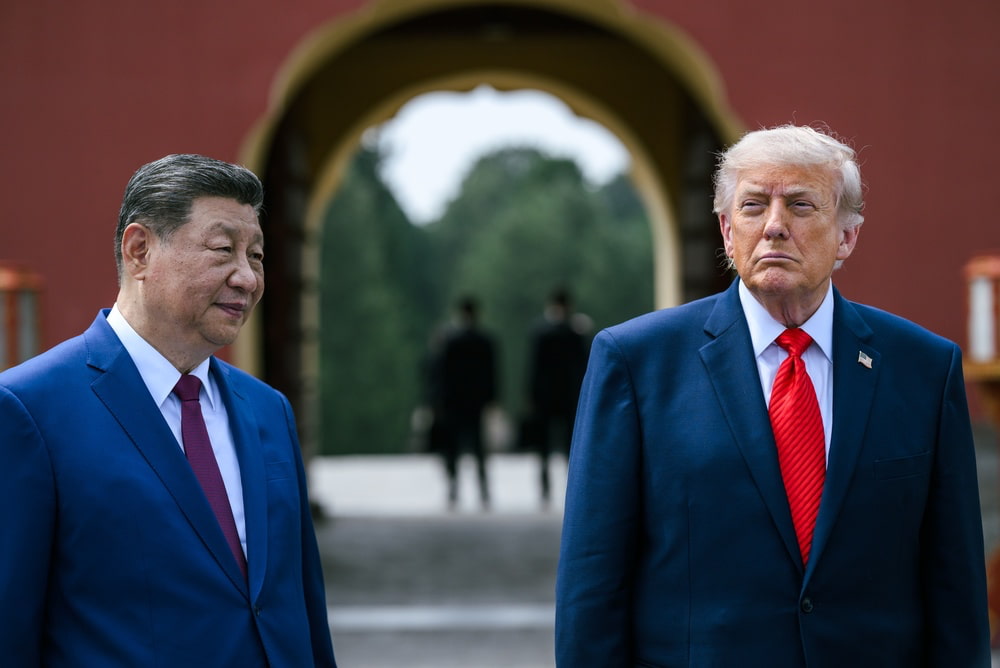
As McInerney highlighted in his comments, US-China relations have served as an entry point to being one step closer to assessing China’s domestic payment network.
During his first US Presidential term, Donald Trump and China President Xi Jinping agreed an economic and trade agreement which allowed Visa, Mastercard and American Express to gain formal access in China.
Visa submitted its application under Article 4.4 of the trade agreement to begin technical preparations for market access to the PBOC in 2020.
The trade agreement was struck in a bid to resolve the World Trade Organisation’s (WTO) ruling that China’s ban on foreign payment companies and methods violated General Agreement on Trade in Services (GATS) rules.
China complied with the WTO’s order to allow foreign cards at the point-of-sale and amended regulations to comply with the new clearing rules enforced by WTO. However, foreign payment companies noted stringent administrative delays to entering the country.
Fast-forward to present day and Visa could soon join the likes of Mastercard and Visa as the first US payment companies to gain access to China’s domestic payment rails.