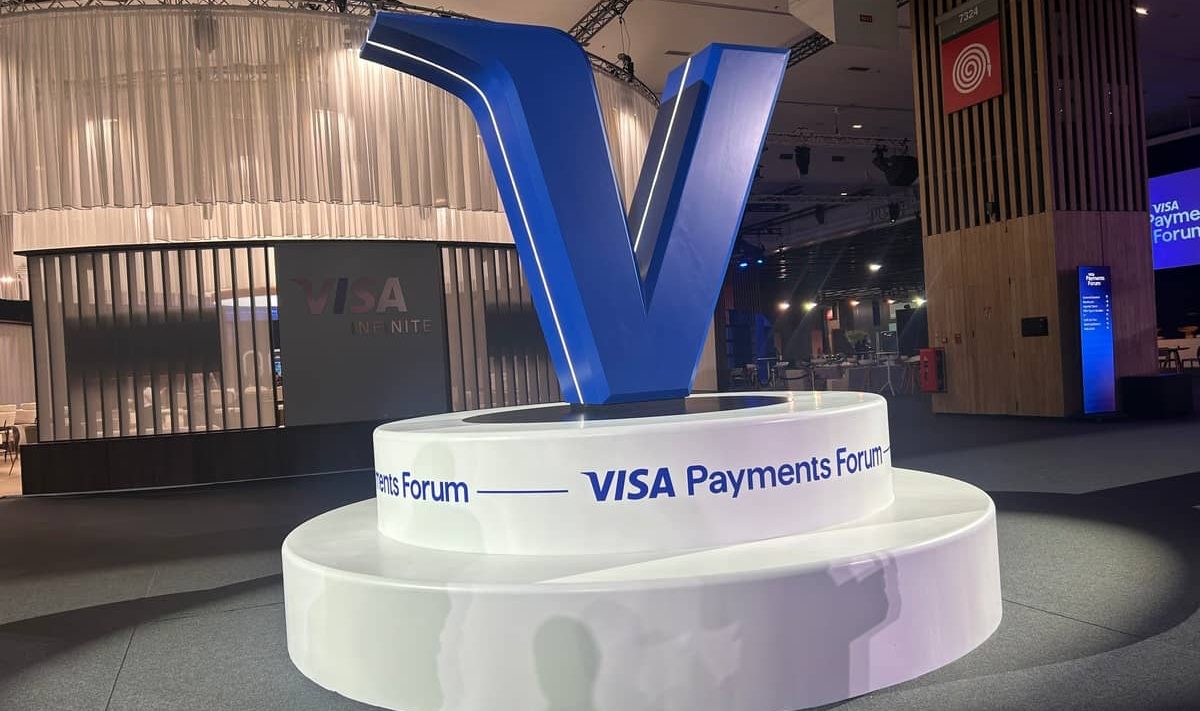
Payment Expert was on the ground in Paris for Visa Payments Forum 2026, where Visa announced the launch of agentic payments on merchants checkouts.
Visa has announced the first live agentic commerce payments executed across several European merchant websites.
Announced during Visa Payments Forum (2 July) in Paris, the global card network is moving beyond testing agentic payments from controlled storefronts to carrying out transactions on the behalf of customers at merchant checkouts.
These transactions were enabled by Visa Intelligent Commerce and were authorised by the consumer, as the AI agents deployed were programmed to the user’s controls and parameters.
Some of the merchants that settled Visa’s agentic commerce transitions were lastminute.com, Frasers and BrickDepot. Other transactions using the same agentic protocols were settled for travel, retail and e-commerce payments.
Mathieu Altwegg, Head of Product and Solutions at Visa Europe, said: “We’re now seeing AI agents buy on behalf of people directly with independent merchants.
“The next step is to scale this by bringing the whole ecosystem together – from standards and infrastructure to partners and enablers – with trust built in from the start. It’s the same approach we took to scale contactless, and it’s how this next wave of commerce will take shape.”
Speaking to the reporters – including Payment Expert – on 30 June at Visa Payment Forum, Altwegg revealed Visa has been working with OpenAI to enable these payments to prepare for a retail future shaped by agentic commerce.

“We’re working with (OpenAI) to enable payments closer to the agents that consumers are actually working with,” said Altwegg. “Then we work with the banks because they have to make sure that the consumers can be trusted, and trust these agents to interact in a trusted way.
“Finally, we need to work with merchants because they need to find ways to interact with these agents in a more structured way. They need to be able to distinguish the fraudulent bots that represent some of the web traffic from the real, trusted agents that will interact on behalf of consumers.”
Agentic payment passkeys
Visa also announced the extension of Visa Payment Passkeys, which authenticates payments via AI agents on behalf of the consumer.
Each transaction is securely authorised and directly linked to a verified user and their instruction, enabling consumer control of when and how payments are made.
By ensuring authentication of the cardholder and identification of the AI agent, Visa then provides the trust layer, supporting the agentic payment to complete securely and with full visibility and control to both the consumer and merchant.
Onboarding merchants to agentic payment experience
Altwegg told reporters Visa was “moving from concept to reality” by expanding the Visa Agent Ready programme to include merchants to become the missing link for Visa’s testing of end-to-end agentic payments.
Merchants that participated in the program will have been onboarded though Visa’s Trust Agent Protocol, a standard that is designed for merchants to work with AI agents in controlled platforms and environments
The protocol allows merchants’ agent identity to identify AI interactions from non-verified traffic, while maintaining control over how agents access their sites, surface products, and complete transactions.
The AI agents do not require new infrastructure as they can be integrated into existing risk, policy and user experience frameworks. The Implementation process is supported by infrastructure providers Cloudflare and Akamai.
The Visa Trust Agent Protocol is also designed to work alongside both existing and emerging commerce protocols, such as Google’s Universal Commerce Protocol and OpenAI’s and Stripe’s Agentic Commerce Protocol.
“We have a couple of marquee merchants here in Europe that already fully integrated themselves with the Trusted Agent Protocol,” said Altwegg to reporters.
Some of the financial institutions part of the Visa Agent Ready program includes: Barclays, BBVA, CaixaBank, Commerzbank, Bank of Cyprus, HSBC UK, ING, Klarna, Lloyds Banking Group, mBank, Nationwide Building Society, NatWest, Nexi Group, and Revolut.