Betaland’s CEO on continuous monitoring as ‘a true revolution’, the three tests every regtech provider must pass, why the final call stays human, and the compliance pressures building ahead of SBC Summit 2026
AML checks were long run as one-off tests at onboarding, completed once and rarely repeated.
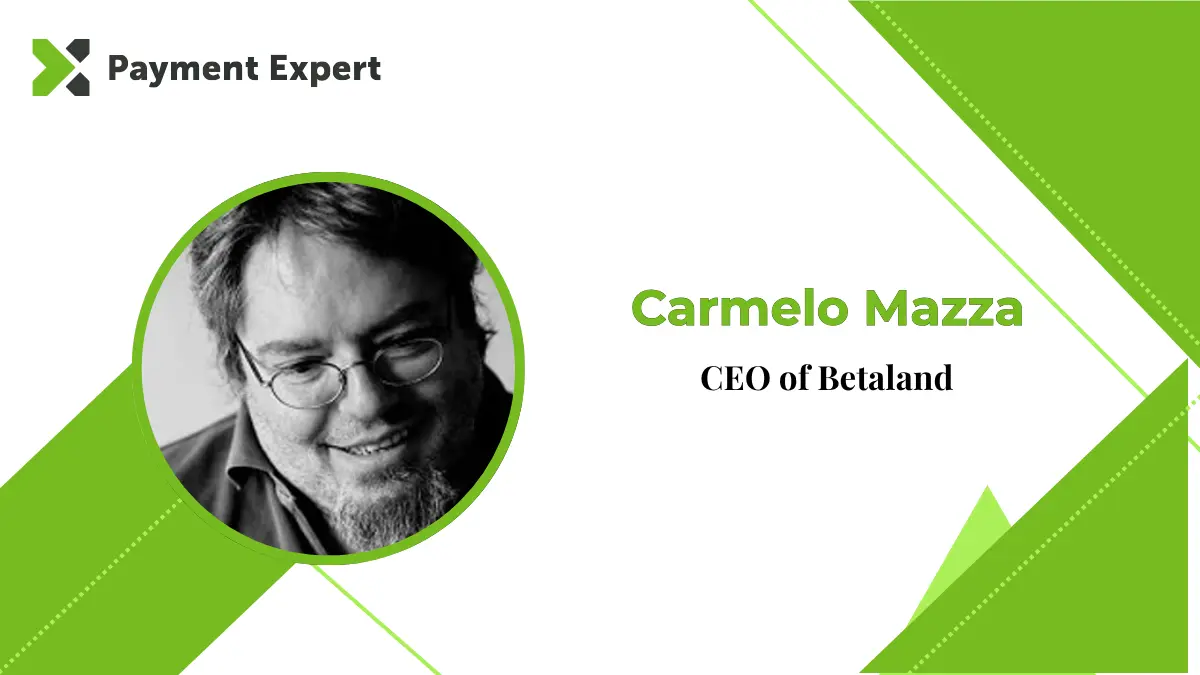
Carmelo Mazza, CEO of Italian sports betting operator Betaland, argues the model is finished. He says the move towards continuous AML monitoring is “the greatest revolution in compliance gaming has ever experienced”, and says the data it generates carries business and marketing value operators have yet to use.
Betaland operates in Italy, one of 27 EU member states now falling under the new Anti-Money Laundering Authority (AMLA), which began operations in July 2025 and is standardising AML supervision across the bloc.
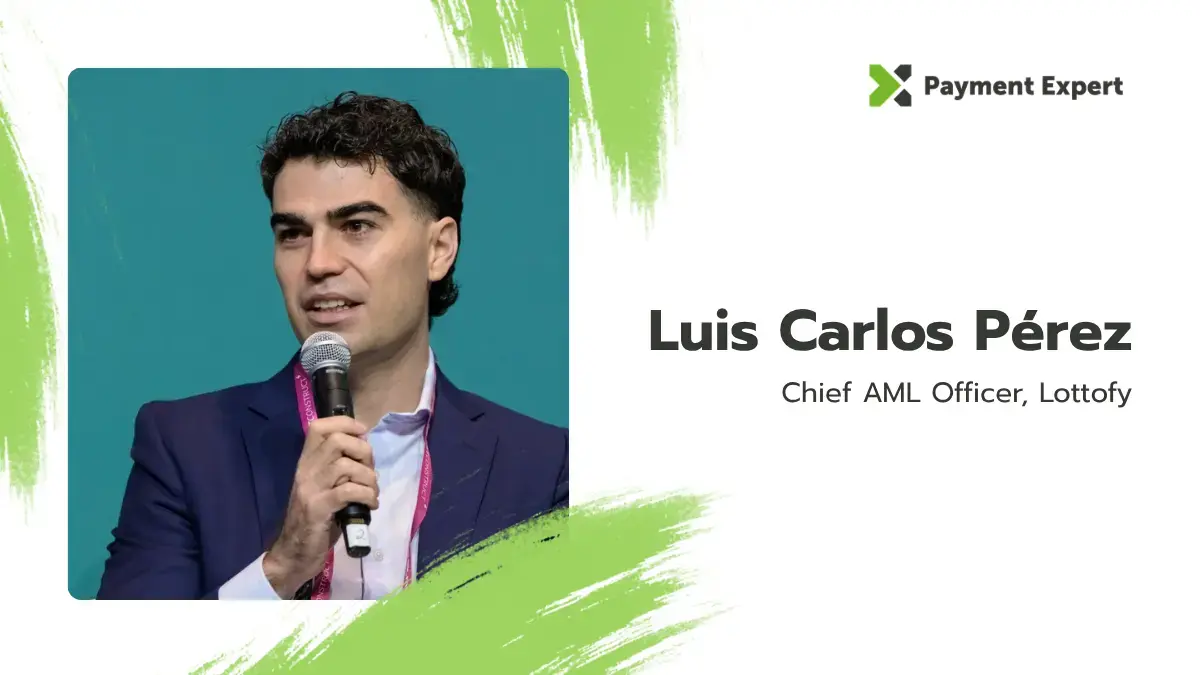
Ahead of his appearance at SBC Summit 2026 in Lisbon, Payment Expert spoke to Betaland’s Mazza about how monitoring data doubles as marketing intelligence, the three tests he sets for any regtech provider, why he keeps the final reporting decision with human analysts, and what he expects from the AML agenda over the next two to three years.
For more details on your chance to attend SBC Summit 2026, and hear from Betaland’s Carmelo Mazza in person, follow the link HERE for more details.
Read the full interview with Betaland’s Mazza below.
What has the regulatory move from one-off AML checks toward continuous monitoring changed about how a gaming company like Betaland runs compliance day to day?
It is a dramatic change. I view AML continuous monitoring as the greatest revolution in compliance gaming has ever experienced. On one hand, it forces us to take very seriously all the potential legal threats to business activity.
In highly regulated markets, this is key to success. On the other hand, it reveals how AML-monitoring data can add a very high business and marketing value. It broadens KYC perimeter and customer data and allows us to target much more precisely those customers we really want to invest upon.
Accordingly we should learn to deal with AML-monitoring data with the same accuracy we deal with traditional marketing data. This is a true revolution!
In your opinion, how does a gaming company like Betaland decide which regtech and fintech providers to work with for real-time transaction monitoring, and what separates a provider it will sign from one it won’t?
Cost is the usual suspect for any decision in the gaming industry. However, this is not the case. I say that we have three magic words for any provider of data-driven activities: accuracy, breadth, and flexibility.
Accuracy since we need error-free data and first-hand analyses. Breadth because we ideally need as much information as possible. Flexibility, because we need to continuously fine tune the data and analysis to focus on, otherwise breadth of data will kill us.
None of the three alone is enough; the three magic words to work together well. And to explain that you cannot excel only in one is the real challenge to face when you choose a regtech/fintech provider.
How much of your case management and SAR/STR reporting is automated now, and what still needs a human analyst to make the call?
I am old fashioned: I will always leave the call in a human analyst’s hand. Any description, any report, no matter how accurate, leaves something outside the picture. Humans are far better than automatic data processing systems to catch what exceeds the main view (at least so far…).
The more the picture is accurate the more human analysts need to focus on what is beyond. It is like the famous film “Blow up” where the photographer discovered a murder on the landscape of a photo. Now accurate reports allow us to see everything in the photo; it is up to us to discover the reasons beyond the photo.
Where do you draw the line between tightening AML controls and keeping friction low for legitimate players?
This is an everyday matter of reflection and concern. Nevertheless, I would like to provoke further reflections by addressing this relevant question with another question: Is this trade-off significant for our customers? We are constantly requested to comply with AML questionnaires by our banks, our digital wallets, and so forth.
I am not so sure that for our customers it is a big issue to comply with such controls. They are already aware of them and, at the end of the day, we hold their money.
Of course, I do not expect that customers have the same attitude about these controls everywhere. However, I believe this is a general trend for online markets; therefore I believe we will have more and more customers who do not care much about AML controls.
Of course, the real risk for gaming companies is overdoing it. The three magic words above are therefore useful to effectively target who and how to control.
What do you expect to be the dominant AML conversation at SBC Summit 2026, and where do you think compliance frameworks in regulated gaming are heading over the next two to three years?
At the beginning I spoke of a revolution in gaming compliance. I expect SBC Summit 2026 to account for this revolutionary nature of AML continuous monitoring.
It is not only AML-driven changes; the revolution I highlight is very broad and entails almost all our business processes. SBC Summit has always scrutinised what was around gaming and could affect the industry.
Nowadays we live in a globalised compliance society; regulated markets will enforce everything that comes from the compliance society. I believe that in the next few years, our compliance departments will be under strong pressure to adapt to new procedures and controls from the company’s governance to customer management processes.
We need to prepare for that since industry’s legitimacy is rooted in its ability to align with societal pressures. It is a deep change at all levels and we cannot fail.
Held in Lisbon from 29 September to 1 October 2026, SBC Summit is one of the world’s largest gatherings of betting and gaming professionals.
The event will bring together 40,000 attendees from across the industry for three days of learning, networking, and discussion, alongside a major exhibition featuring leading brands from around the globe.
For more information and tickets, visit sbcevents.com/sbc-summit.