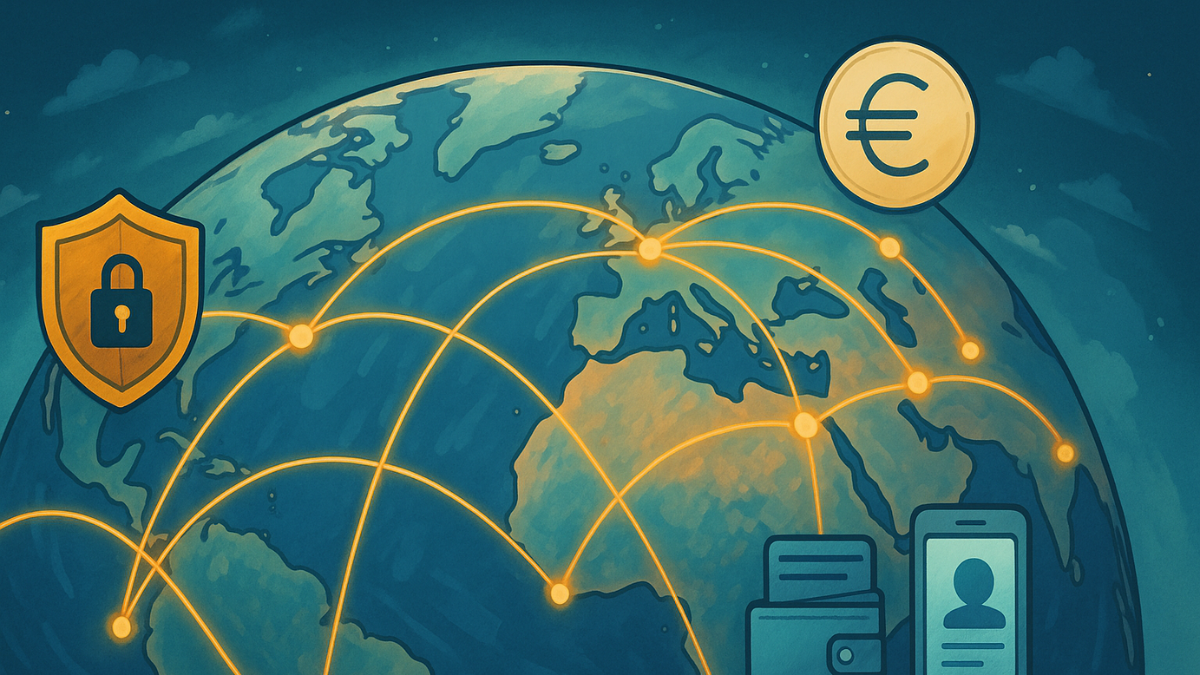
The European Payments Initiative (EPI) has launched its unified digital wallet, Wero, to challenge the global card duopoly
Most consumer payments in Europe are processed through international card networks, meaning transactions rely on infrastructure outside the region.

This has led to concerns from policymakers, including European Central Bank President Christine Lagarde, who argue that Europe needs greater control over the systems that support everyday payments.
“When you think of it at the moment, a lot of our digital payment, e-commerce or when you use your card or your phone, you always rely on non-European infrastructure,” said Lagarde.
“Whether you use a card or a phone, typically it goes through Visa, Mastercard, PayPal, Alipay – where are all those coming from? Either the US or China. The whole infrastructure mechanism that allows for payments, credit and debit, is not a European solution.”
EPI has been created in response to this, with the goal of building a unified European alternative that can support payment sovereignty, improve competition and reduce the reliance on separate national schemes.
What is the European Payments Initiative?
EPI was launched in 2020 by a group of European banks and payment providers with the aim of creating a pan‑European card scheme that could operate across borders and reduce reliance on separate national systems.
As the initiative progressed, the consortium changed its approach to focus on what could be realistically delivered and adopted by consumers and merchants.
In 2023, EPI acquired iDEAL in the Netherlands and Payconiq in Belgium and Luxembourg. These domestic payment platforms enabled online payments, peer-to-peer (P2P) transfers, and merchant acceptance, providing EPI with the infrastructure and user base to build on.
The project now focuses on Wero, a digital wallet backed by participating banks, which will support account-to-account (A2A) payments, P2P transfers, online checkout and QR‑based in‑store payments.
Why Europe wants an alternative to Visa and Mastercard
One of the reasons for the initiative is control over payment infrastructure. European regulators have emphasised critical payment systems should be governed within the region, particularly as digital payments become more important to economic activity.
Without this control, Europe has a limited ability to set standards or influence how payment systems evolve, a concern that has become more prominent as geopolitical pressures increase.
Fragmentation across the bloc is another issue that EPI hopes to solve. Some countries have strong domestic schemes, such as iDEAL in the Netherlands or Bancontact in Belgium, while others rely on international networks. This creates inconsistencies for merchants and consumers and makes it harder to build EU‑wide alternatives.
Momentum has also improved following the introduction of the Instant Payments Regulation. With banks required to support SEPA Instant, policymakers see an opportunity to develop consumer‑facing services on top of real‑time infrastructure.
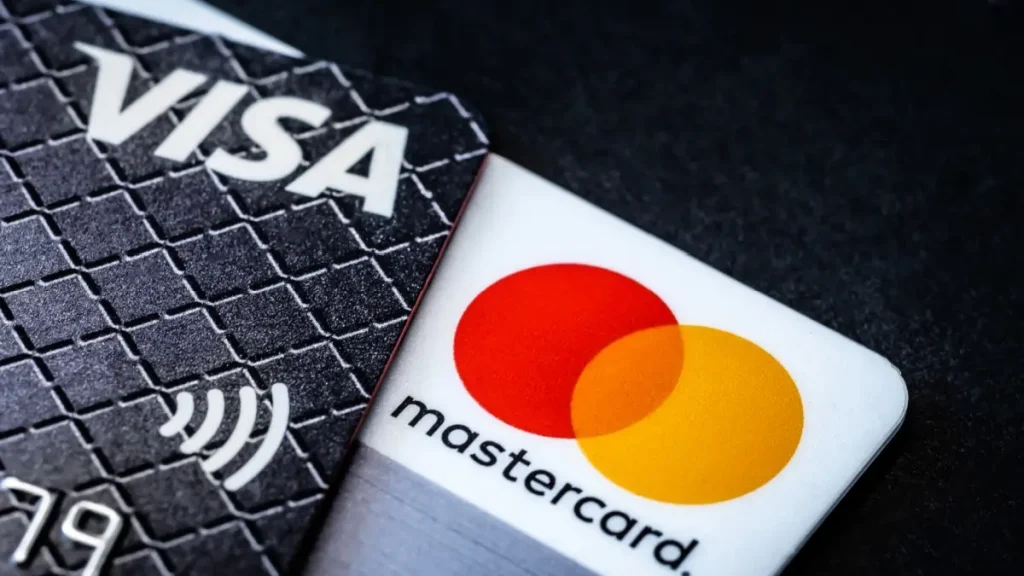
Finally, there is also a desire to increase competition at checkout. Merchants currently have limited choice when accepting payments, with Visa and Mastercard holding a duopoly in most markets. A European alternative could provide an additional option with different pricing structures and settlement processes.
How Wero works in practice
EPI’s foundation consolidates the acquired Dutch platform iDEAL and the Belgian/Luxembourgish platform Payconiq onto a shared, cross-border infrastructure.
The initiative is backed by a joint venture of 14 major European banks and payment processors. Transactions run on the SEPA Instant Credit Transfer scheme, moving funds A2A in under 10 seconds.
Participating banks support updated connectivity requirements, including unified APIs and standardised authentication flows. This ensures that Wero works consistently across borders, removing the need for merchants to have separate regional payment integrations.
E-commerce merchant onboarding is increasing across Germany, France, Belgium, Luxembourg and the Netherlands. For businesses already using iDEAL or Payconiq, the technical transition is simple. However, expanding into new areas requires coordinated onboarding through major payment acquirers.
Brick-and-mortar merchant acceptance is scheduled to follow on the official product roadmap, utilising standardised QR-code systems for in-store payments.
For consumers, the Wero wallet has passed 50 million registered users. It integrates into participating banks’ mobile apps, eliminating the need for standalone downloads.
In France, adoption was helped by Wero replacing Paylib and absorbing its 35 million users. The network has already processed over €7.5bn in total transferred volume.
Consumers can initiate P2P transfers, online checkouts, and QR-based in-store payments instantly using only a mobile phone number, email address, or QR code.
The consumer challenge
- Entrenched habits: Payment routines are ingrained and cards are the default payment method across most of Europe. Competing and changing how people choose to pay will take time and obvious benefits.
- The protection gap: Traditional card networks offer consumer safety nets, such as chargebacks and dispute rights. Replicating these protections on instant A2A rails hasn’t been achieved yet, leaving some consumers cautious.
What success would look like
Success for EPI and Wero would not necessarily mean replacing existing card networks, but would involve creating a viable European alternative that can operate across borders, support instant payments and give merchants and consumers more choice.
A meaningful share of A2A payment volume, widespread merchant acceptance and consistent functionality across markets would likely be regarded as progress. Reducing reliance on non‑European infrastructure and aligning with EU regulatory goals would be the main goals of policymakers.