The Transatlantic Taskforce backs cross-border stablecoin use and one-to-one reserve backing, but issuers still face two separate authorisation regimes
The US Department of the Treasury and HM Treasury published the UK-US Joint Statement on Stablecoins on 14 July, alongside a set of recommendations from the Transatlantic Taskforce for Markets of the Future.
The recommendations aim to deepen cross-border financial activity between the United States and the United Kingdom, reduce unnecessary frictions, and advance open, market-based standards which promote innovation and support growth. They set shared policy goals rather than binding rules.
The statement affirms stablecoins held out as money should be fully backed, on at least a one-to-one basis, by high-quality, liquid assets, with each jurisdiction defining eligible reserves in its own framework.
Reserve assets should be segregated from the issuer’s own funds and safeguarded for holders, while issuers should redeem obligations in a timely manner and disclose the legal rights granted to holders.
Both governments said their frameworks should give stablecoin holders a protected legal claim on reserves in the event of insolvency, bankruptcy, restructuring or resolution, ranking ahead of other creditors, subject to each jurisdiction’s laws.
No mutual recognition on stablecoins
The statement commits both governments to explore a pathway for stablecoins issued in one jurisdiction to access the other’s market, subject to domestic law. It does not create mutual recognition.
Both governments said they intend to avoid prudential measures requiring inappropriately high levels of ring-fenced resources, and reserve requirements disproportionate to risk that create barriers to entry.
The statement also backs a financial system in which multiple forms of digital money coexist, naming stablecoins, tokenised deposits and similar instruments.
It endorses market-driven access by stablecoin issuers to banking and other financial services, including use as settlement instruments in securities and commodities markets.
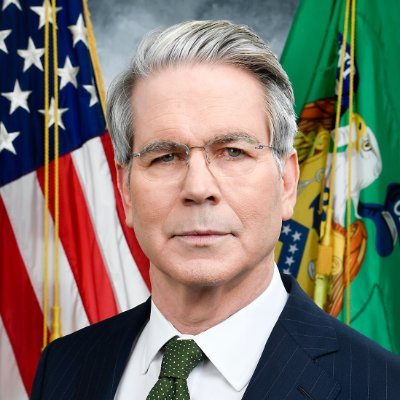
The Taskforce was established by US Treasury Secretary Scott Bessent and UK Chancellor of the Exchequer Rachel Reeves in September 2025 during President Donald Trump‘s historic State Visit to the United Kingdom.
Bessent said the Taskforce highlights the strength and depth of US and UK markets and a shared commitment to advancing global standards that reward innovation and competition.
UK regime still to take effect
The statement comes as both jurisdictions continue to build domestic regimes. Crypto firms, including trading platforms, intermediaries, custodians, stablecoin issuers, and firms arranging staking must obtain Financial Conduct Authority (FCA) authorisation to operate in the UK.
Firms can apply for authorisation between 30 September 2026 and 28 February 2027, so they are ready to start or continue to trade under the new mandatory regime which will come into force on 25 October 2027.
Following consultation, the FCA has simplified key elements of the regime to make it more workable in practice including simpler capital requirements for stablecoin firms.
David Geale, the FCA’s Executive Director of Payments and Digital Finance, said in the regulator’s 30 June press release announcing those rules the framework does not force firms to choose between regulatory certainty and room to innovate. Sterling stablecoins sit under FCA supervision, with the Bank of England taking prudential oversight of issuers HM Treasury recognises as systemic.
Stablecoin market capitalisation, for instance, was around $320bn as of end-May 2026.
The Bank for International Settlements, in its 2026 Annual Economic Report, argued stablecoins fall short of the properties of money. There is a risk of “stablecoin dollarisation” in emerging markets and developing economies, where demand for foreign stablecoins could reshape capital flows, affect exchange rate dynamics and challenge monetary sovereignty.