Several major players are now driving the rise of agentic commerce and AI-powered payments, just as merchants enter their busiest period of the year.
Checkout.com has become the latest payment company to integrate OpenAI’s Agentic Commerce Protocol (ACP) to settle payments by using ChatGPT.
Announced today (November 25), Checkout.com will support the growth of agentic commerce by allowing its merchant base to support instant payments, as well as via OpenAI’s Instant Checkout.
The digital payment company intends to build a trusted and secure agentic commerce experience through a suite of tools covering verified onboarding, identity management, and fraud prevention.
Merchants will be able to maintain brand control, ensuring they retain the end-to-end customer relationship even when AI agents are acting on the consumer’s behalf.
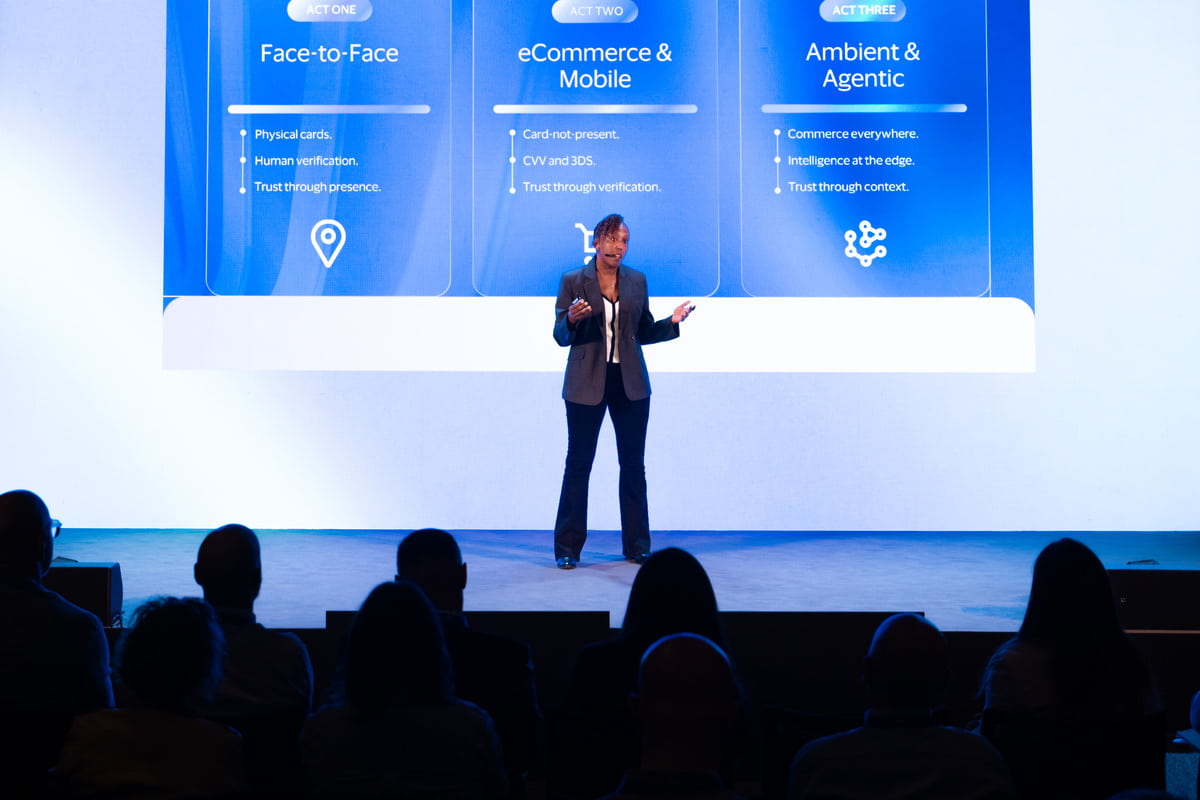
“We’re focused on helping merchants prepare for a world where AI agents are making real-time decisions on behalf of their customers,” said Meron Colbeci, Chief Product Officer at Checkout.com. “But success relies on deep, trusted collaboration across the entire ecosystem.
Checkout.com also revealed it is “actively collaborating” with partners such as Visa, Mastercard, and Google, to establish global standards for secure, tokenised, and intelligent payments.
This will focus on preparing businesses for agentic commerce and act on their behalf, safely, transparently, and within clear guardrails with AI Agents.
Mollie’s hackathon API breakthrough
Financial service provider Mollie announced on November 19 it had become the first European company to build a fully functional payment integration with OpenAI’s ChatGPT.
Mollie is now fully compatible with OpenAI’s ACP and despite the agentic commerce payment tool not yet launched in Europe, Mollie’s systems are now available to help businesses accept payments via ChatGPT.
This breakthrough came during a hackathon in Lisbon, where Mollie’s product and engineering team was able to complete a purchase through an AI assistant. This involved the process of using agentic AI to discover the product, before making the payment using Apple Pay.
Mollie was able to successfully develop a payments API compatible with ACP which, when launched, will allow businesses who use Mollie to accept different AI commerce protocols via a single integration of ACP.
Believing agentic commerce to be the “next major shift in e-commerce”, Mollie has also stated it is working alongside other AI platforms on the development of its own Agent Payments Protocol.
“This is a strategic move that shows we’re actively building for the future,” said Bernardo Caldas, Director of Data and AI at Mollie. “When this new sales channel opens, we’re ready.”
“Our customers shouldn’t need to be experts in competing protocols. We handle this for them. Our infrastructure is ready, which means they can focus on their business, knowing we’ll be prepared to help them sell through AI from day one.”
What is the Agentic Commerce Protocol?
OpenAI’s ACP has gained momentum across the financial services industry as firms are looking to better engage the next-generation of commerce shopper.
Built in collaboration with Stripe, ACP deploys standardised AI agents to display products, manage checkouts and process payments from ChatGPT.
Its deployment can allow a wide range of businesses to accept payments from ChatGPT and is not contingent on the Agentic APIs developed by OpenAI or Stripe, as it is an open platform-agnostic protocol that is compatible with other APIs, such as Mollie’s for example.
“Mollie’s long-term vision is to give businesses access to different AI commerce protocols through a single integration,” added Caldas. “This means businesses won’t need to choose between different platforms, but can continue building on their existing Mollie integration. “This isn’t about a product launch.”
For merchants accepting payments via ACP, they can integrate the solution via a single integration after installing a few lines of code from Stripe’s Agentic infrastructure. When a payment is made, the merchant will remain on record and customers can use ChatGPT to go back to the merchant information in the need of performing returns or needing customer support.
Fundamentally, ACP seeks to ensure there is a streamlined network of communication between its AI Agents, merchants and customers for the product discovery, payment processing, and additional order information customer journey.
ACP is currently only available in the US but with Mollie now onboarded, a European launch could be coming soon.

Who are the key players in agentic commerce?
Mollie and Checkout.com are not the only payments companies to have successfully integrated with ACP.
PayPal announced on October 28 it has adopted ACP across its global merchant network, integrating the system to enable payments through ChatGPT and becoming the first payment method embedded directly into the AI app.
The service has quickly begun to spread across many merchants, such as Etsy, Salesforce and commercetool integrating ACP for its customers to make payments.
While the likes of PayPal and Mollie have leveraged ACP, Worldpay has built its in-house agentic AI payment platform to support the surging rise in Agentic Commerce.
The global payment technology company revealed the launch of Worldpay Model Context Protocol (MCP) on November 24, designed to allow merchants to download, modify and deploy and create its AI Agents to perform direct payment integrations from their point-of-sale.
Worldpay’s MCP is currency available in the US and has already been embedded in its Developer Hub and Github platforms.
“Agentic commerce is rapidly emerging as the next evolutionary step in online shopping,” said Cindy Turner, Chief Product Officer at Worldpay.
“By launching Worldpay MCP, we’re answering the demand of developers and merchants, giving them the freedom to experiment, build and innovate in a controlled environment, while connecting directly to our global payment infrastructure. We’re not adding another protocol, we’re making them all work together for sellers.”
The figures behind agentic commerce’s rise
Off the back of its MCP launch, Worldpay found 44% of American shoppers are willing to engage with an AI agent to browse on their behalf, signalling the shift to a more automated shopping experience.
Furthermore, Checkout.com revealed agentic commerce is set to account for 21% of all monthly household spending within the next five years.
The upcoming festive shopping season may prove to be the perfect testing ground for OpenAI’s ACP and other AI agents to help shoppers automate their experience by navigating products and performing payments during the busiest time of the year for merchants.