Visa and Mastercard are stepping further into automated payments, as a 20‑year legal shadow follows close behind
A US District Court in Brooklyn has given preliminary approval to a revised $38bn settlement between Visa, Mastercard and more than 12 million merchants challenging the level of interchange fees charged on credit card transactions.
The ruling, issued by Judge Brian Cogan, could bring an end to one of the longest‑running antitrust cases in US payments, though the agreement still requires final approval and faces opposition from several retail groups.
Filed in 2005, the lawsuit alleges that the two card giants and issuing banks conspired to keep interchange fees artificially high.
The revised settlement would lower certain swipe fees over a multi‑year period, cap some rates and hand merchants more control over accepting premium, commercial and standard card categories.
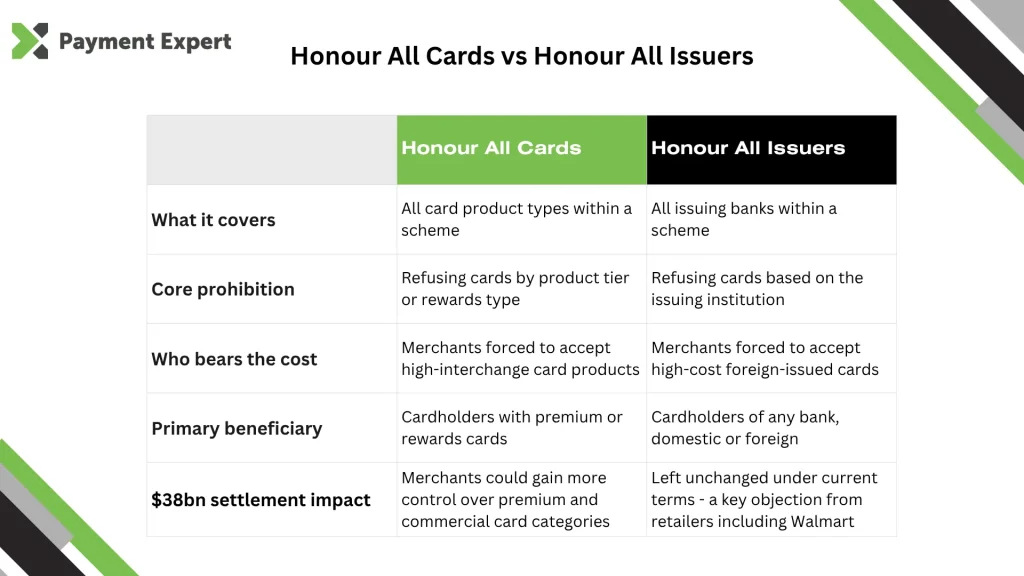
Depending on the final decision, it could potentially impact the Honour All Cards rule, which forces merchants to accept every Visa or Mastercard product if they accept one at all.
This rule is not to be confused with Honour All Issuers, which, under the conditions, would be unaffected – a sticking point for some of the retailers that aren’t happy with the settlement, such as Walmart.
“The objectors identify several things that they want to do but can’t (e.g., rejecting cards at the issuer-level, surcharging at the issuer-level) and that they theoretically can do but won’t (e.g., rejecting premium cards),” Cogan said.
“But the question is not whether the amended settlement constitutes the best possible recovery, end stop – it’s whether the amended settlement constitutes the best possible recovery in light of what can be gained and lost through trial.”
Visa and Mastercard appear to be content with the settlement, with Mastercard stating that it “balances the interests of all parties.”
Mastercard and Visa look to the future
Despite expecting further objections to the settlement, Visa and Mastercard are not letting a two‑decade legal battle stop them from pushing into the next era of payments. On 10 June, both companies announced new products and capabilities aimed at preparing their networks for AI‑driven commerce.

Mastercard set out its most detailed vision yet for machine‑driven payments, introducing Agent Pay for Machines, a framework designed to let AI agents and connected systems initiate, authorise and settle transactions with minimal human involvement.
“Agent Pay for Machines will create the conditions for a superbloom of AI business models,” said Jorn Lambert, Chief Product Officer at Mastercard.
“Machine payments can make it possible for services to be bought and sold among agents at fundamentally different scales than payments today – very high volumes, very small values, very fast and at extremely low latency.”
In the company’s Q1 earnings, Mastecared told investors it was preparing for payments initiated by AI agents and highlighted early adoption of its Agent Pay framework by partners, including OpenAI.
The new system adds infrastructure for credentialing, permissioning and guaranteed settlement across multiple payment rails, including cards, bank accounts and stablecoins.
The company noted potential use cases such as AI agents purchasing cloud services, logistics bots paying for freight or warehouse access, and small businesses delegating tasks like domain registration or web‑hosting purchases to automated systems.
More than 30 industry partners, including Adyen, Ant International, BVNK, Checkout.com, Cloudflare, Coinbase, Getnet by Santander, Global Payments, OKX, Stripe and Tempo, are working with Mastercard on common rules for adoption.
Visa expands AI and stablecoin infrastructure
One of the biggest reasons interchange fees have been the subject of litigation is the market power Visa and Mastercard hold over card networks. With consumers and businesses having limited alternatives, the two companies have been able to set fees within the boundaries of regulation.
As payments enters a new era, with account‑to‑account adoption accelerating and agent‑driven transactions emerging, both networks appear to have no intention of loosening their grip.

On 10 June, Visa announced a wide array of upgrades aimed at preparing its network for AI‑initiated payments and more programmable forms of digital money.
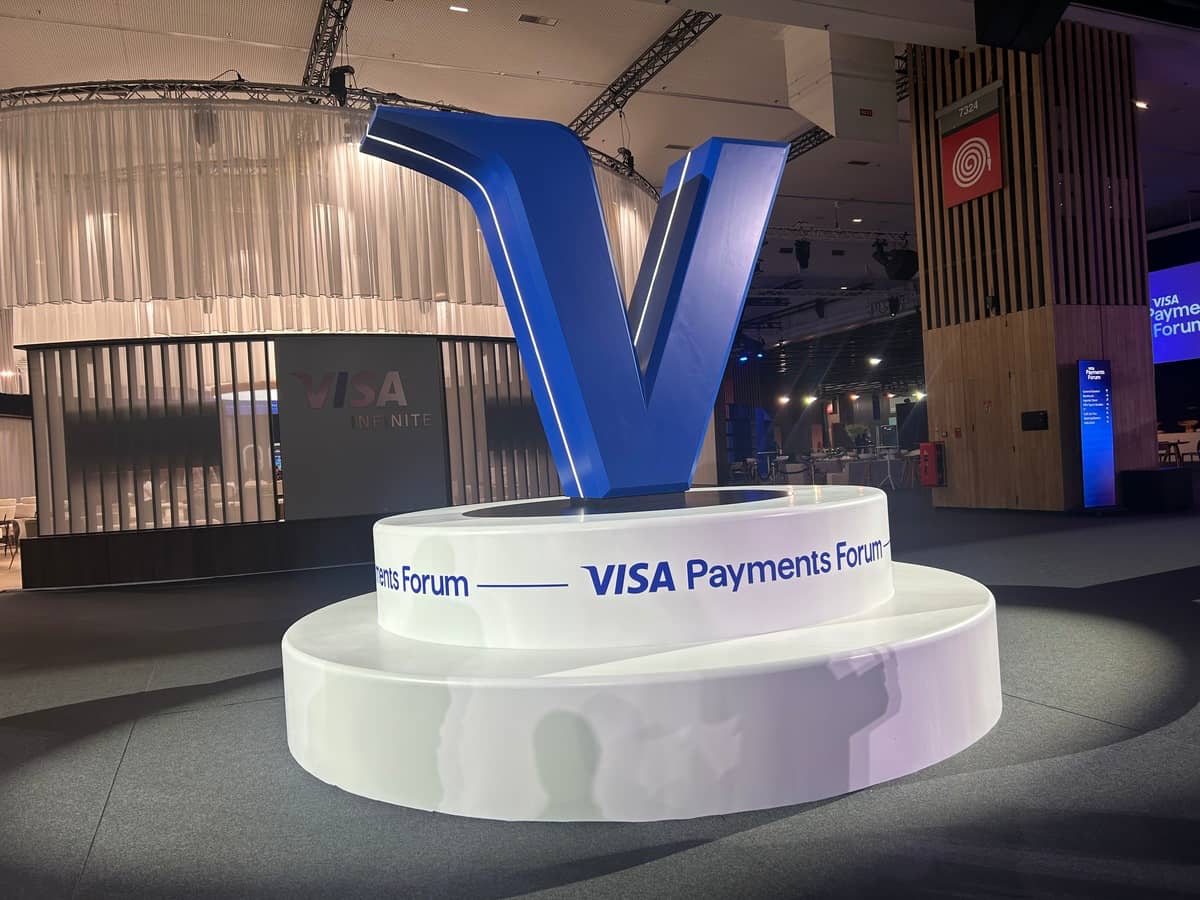
Speaking at the Visa Payments Forum in San Francisco, the company unveiled new tools to help merchants and issuers identify and evaluate transactions initiated by AI agents.
These include systems that determine whether an automated agent is authorised to act on a user’s behalf, as well as new fraud‑detection models trained on billions of historical transactions to improve approval rates and reduce false declines.
“History is filled with innovations that never reached scale. What determines success is trust, security and global reach. That’s what Visa brings to every new era of commerce – and what we’re building for the future.”
Jack Forestell, Chief Product and Strategy Officer at Visa
Visa also introduced early components of its “agentic commerce infrastructure, which includes ways for merchants to assess whether their websites can be reliably navigated by AI agents and a registry of verified agents and merchants.
In addition to these AI updates, Visa announced improvements to its token infrastructure. The company is adding more contextual and behavioural data to tokenised credentials to give issuers an understanding of when to authorise payments and reduce unnecessary declines.
“We believe a growing share of creation and transactions will be led by developers using AI tools,” said Forestell. “We are working with the industry to make cards the best way to pay in the Command Line.”