Agentic commerce has emerged as the next evolution of e-commerce, but are merchants prepared?
Agentic commerce is rapidly emerging as the next evolution in how consumers shop, signalling a shift from assisted transactions to fully automated customer journeys.
Powered by increasingly sophisticated AI agents, this new model promises to enable users not only to search and compare products, but to complete purchases, manage payments, and interact with merchants with minimal direct input.
At its core, agentic commerce builds on the foundation laid by embedded finance, reimagining the infrastructure that supports payments, lending and credit decisioning. Rather than replacing these systems, AI-driven agents are enhancing them.
Major players are already staking their claim in this space. Companies like Stripe, with its agentic commerce protocol, and Google, through its universal commerce protocol, are working to establish early frameworks for what could become a standardised, automated commerce layer. Yet, for many merchants, questions remain over whether this evolution will deliver the same revenue impact as embedded finance has in recent years.
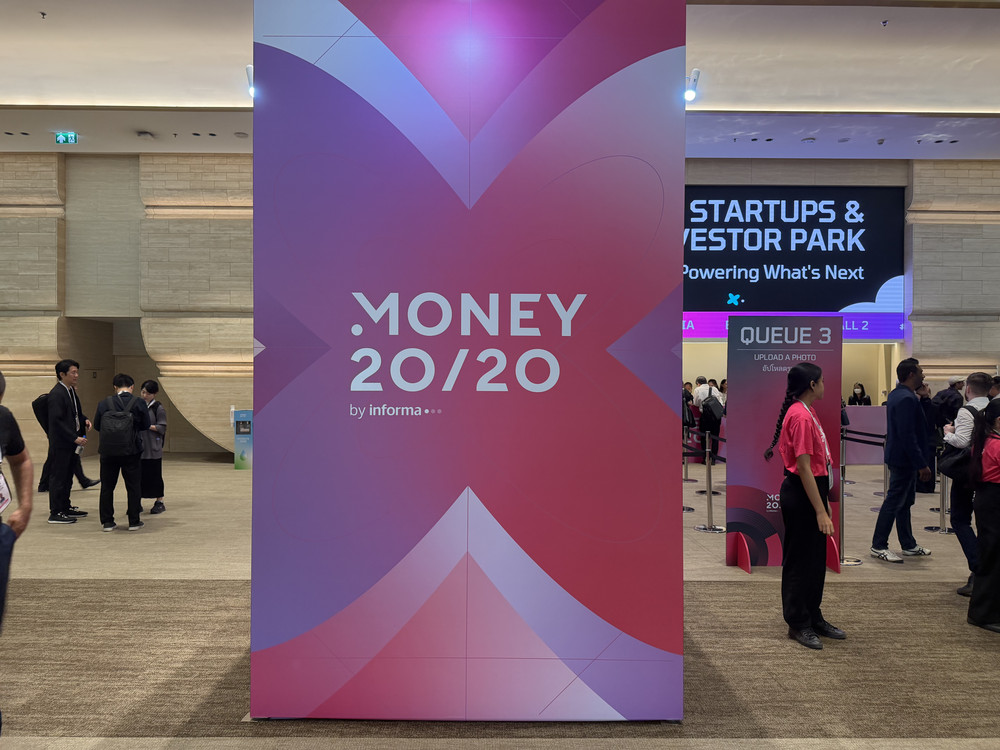
Speaking to Payment Expert on the sidelines of Merchant Payment Ecosystem (MPE) 2026, Payrail’s Chief Operating Officer Emre Talay argues merchants should approach agentic commerce in much the same way they adopted embedded finance; by focusing on enablement rather than ownership.
Talay points to a recurring mistake among platforms attempting to build everything in-house, warning that this often limits the value they can ultimately unlock. Instead, he stresses the importance of partnerships and taking a longer-term view on returns.
“Sometimes, platforms misconceptualise the value they can unlock, and they try to do everything by themselves. You shouldn’t,” he says.
Rather than chasing direct revenue from embedded services, Talay suggests merchants should prioritise indirect gains (such as improved conversion and customer experience) particularly in a market where margins are already under pressure.
Keeping it simple
While the financial upside of automating payment processes may be the immediate focus for some merchants, hesitation remains around handing over transaction control to AI agents.
Research from Global Payments’ Commerce and Payment Trends 2026 report highlighted this caution, revealing that 72% of retail businesses would be concerned about AI agents making purchases on their behalf. Security, accountability and the lack of clear regulatory standards continue to weigh heavily on merchant sentiment as AI infrastructure evolves.
Concepts such as ‘know-your-agent’ (KYA) – an emerging counterpart to know-your-customer (KYC) – may offer a future framework for trust in agentic environments. However, for many businesses, preserving authentic, human-led commerce remains a priority, particularly as the technology matures.

Kym Lukins, Commercial Director for Digital Business at Worldline, suggests merchants should prioritise strengthening their core customer journeys rather than overextending into still-developing AI capabilities.
“Everyone is busy trying to work out how to implement (AI) in their own businesses,” she tells Payment Expert. “I think what’s important for merchants is that they go back to the basics in some respects and really focus on their consumer journeys.
“This, along with agentic commerce, for example, a lot of the infrastructure to support it being successful is just not there yet. What we’re doing with our merchants is making sure that they go back to what they do best and start with the basics.”
Tailoring AI to a merchant’s needs
For merchants looking to stay competitive, adopting agentic commerce may be less about urgency and more about clarity of purpose.
According to Talay, AI should not be treated as an end goal in itself, but as a tool to solve specific problems within the commerce stack.
“First of all, we should understand that AI is an enabler,” he says. “It’s a means to achieve something, not an objective.
“The biggest mistake with so many companies, they take (AI) as an objective and try to do something without knowing what they’re trying to solve.”
When applied effectively, the potential use cases for agentic commerce are already beginning to take shape. AI-powered agents can introduce payment prompts within chatbot interfaces once a consumer selects a retailer, while also enabling dynamic pricing that adjusts in real time based on demand signals.
“AI should not come as a magical tool to solve everything, because today, nobody cares about the cost.”
Research from McKinsey & Company notes decision-making no longer needs to follow fixed cycles, as AI agents can continuously optimise pricing, promotions and product assortments through real-time insights.
However, alongside the opportunity, Talay warns that cost discipline is being overlooked in the race to adopt AI. “You can do so much automation with AI, but again, so many companies are missing one point… cost,” he says.
While alternative, non-AI solutions can still automate certain processes, Talay cautions against viewing AI as a universal fix—particularly as pricing models evolve.
“AI should not come as a magical tool to solve everything, because today, nobody cares about the cost, but soon they’re going to care when all the providers start increasing their fees. Then they will realise.”

Don’t forget, you’re human
It is easy for merchants to get swept up in the hype surrounding AI, particularly as the promise of automation-driven customer journeys continues to grow.
However, the importance of human oversight in agentic commerce cannot be overstated. Ensuring that AI agents operate not only efficiently, but securely and transparently, will be critical to long-term adoption.
Worldpay has already identified this as a key priority, highlighting human oversight and dynamic consent management as essential components for the future of agentic commerce. Central to this is the need for transparent consent frameworks which give consumers real-time control over both an agent’s actions and the use of their personal data.
“How confident will you be to let AI decide on your behalf to then make payments?” asks Talay. “The technology will be there, but you shouldn’t forget the human being; a very emotional creature. We cannot give control to the agent for everything.”
For merchants, maintaining this layer of oversight is not just a technical requirement, but a commercial one. Trust in how AI agents handle consumer data and execute transactions will play a decisive role in shaping customer retention.
In this context, a secure and compliant approach to agentic commerce may ultimately prove to be the defining factor between strengthening customer relationships and losing them altogether.