The UK looks set to play an important role in testing agentic payments with Mastercard.
Mastercard has chosen the UK to launch Proto, a sandbox that will allow retailers and payment providers to test agentic AI solutions.
Proto will go live in the UK in August and will allow businesses to test and scale new forms of AI-enabled commerce, which Mastercard says is a key step in moving agentic commerce from an ambition into real-world implementation.
Simon Forbes, Division President, UK & Ireland at Mastercard, said agentic commerce will change the way people discover, select and purchase products online.

“But before agents are trusted to act on behalf of consumers and businesses and be deployed at scale, retailers and their partners need the tools and environments where they can evaluate performance, identify failure points and refine controls,” said Forbes.
Proto will allow retailers and payment providers to assess how easily their products can be discovered by AI agents, test payment journeys and evaluate operational processes such as dispute management.
The platform builds on Mastercard’s wider agentic AI framework, which includes the Agent2Agent protocol and the Agent Toolkit. The toolkit uses the Model Context Protocol to allow AI assistants to access Mastercard’s API documentation.
Further details on the firms involved and how the sandbox will operate are expected to be revealed in the coming weeks.
In addition to Proto, Mastercard also announced three new AI agents designed to support enterprise functions.
The shopping agent looks to improve customer engagement by helping businesses create more intelligent retail experiences. The onboarding agent will help banks reduce friction when bringing new merchants onto their platforms, while the dispute agent aims to make interactions between merchants and customers more efficient.
Why did Mastercard choose the UK?
Forbes said the UK is an important market for testing how agentic commerce can work in practice due to its “digitally-savvy consumers” and strong fintech ecosystem.
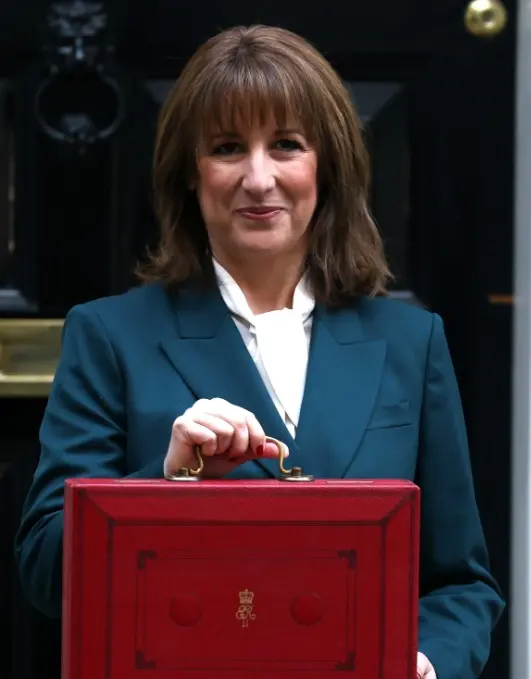
However, Mastercard’s decision to launch Proto in the UK also follows government pledges on accelerating AI adoption across the economy, with Forbes citing Rachel Reeves, Chancellor of the Exchequer.
“AI is the defining technology of our generation, critical to our economic future. The role of government is not to step back from the opportunities and challenges AI presents, but to step up,” said Reeves.
“This is a strong vote of confidence as we look to make Britain the fastest adopter of AI in the G7. By creating the right conditions for innovation and adoption, we can attract investment, boost productivity and supercharge growth for the economy.”
The UK has been competing with Europe, the US and other global markets over recent years to attract investment from the growing AI sector. Now, the country appears to be focusing on agentic AI.
Last month, the Financial Conduct Authority (FCA) published the Mills Review, which examined how AI and agentic AI could impact retail financial services by 2030.
The report suggested consumers will increasingly move away from human-led financial activities towards AI-enabled services capable of carrying out more continuous tasks, including making purchasing decisions and initiating payments.
One of the recommendations called for the development of trusted agent protocols and financial infrastructure to support digital identities, payment permissions and liability frameworks.
This dedication, combined with the UK’s experience of testing new technology through regulatory sandboxes, makes the country an attractive environment for Mastercard to introduce Proto.
Forbes said the UK has the “ingredients” needed to help shape the next stage of AI adoption in commerce and business. However, he also echoed a point raised by the FCA around the importance of collaboration between industry stakeholders.
“But no single company, sector or technology can do it alone. It will take partnerships across industry – retailers, banks, fintechs, technology providers, small businesses and policymakers – to build the trust, standards and practical use cases that allow AI to move safely from possibility to progress,” said Forbes.
“If we get that right, AI will not just be something businesses adopt; it will be something the UK uses together to unlock growth, strengthen confidence and create new opportunities across the economy.”