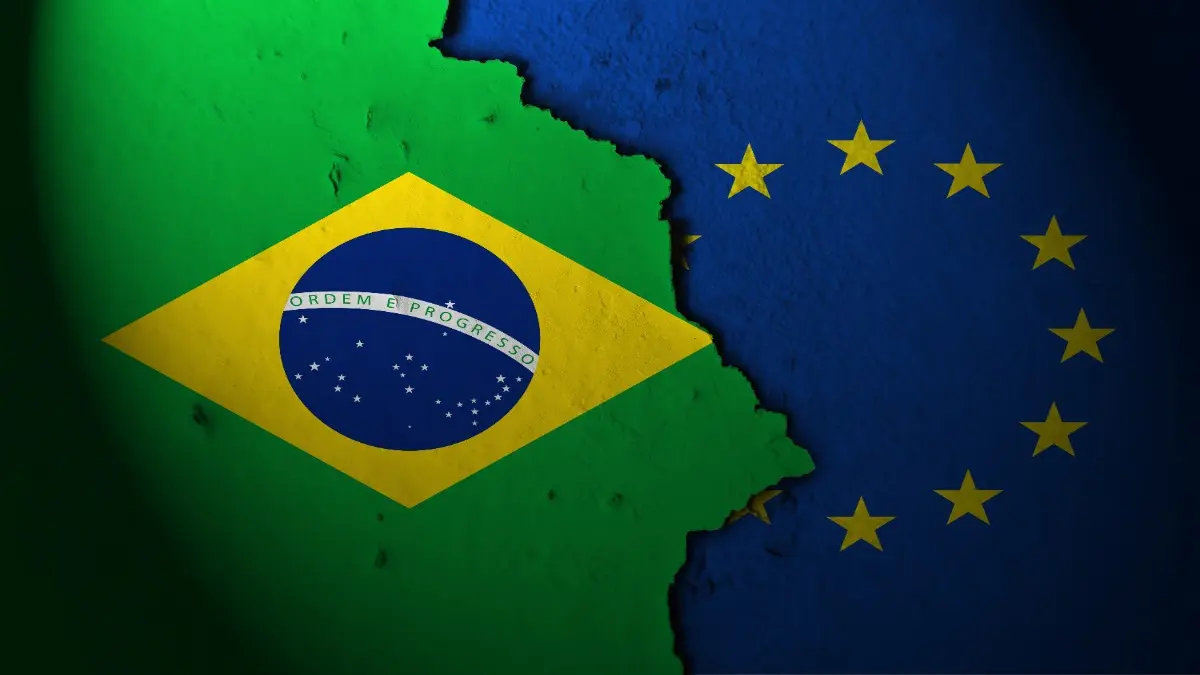
Brazil’s Pix and Europe’s TIPS are the two most recent instant payment systems to be considered for a cross-border link.
The European Central Bank (ECB) and the Brazilian Central Bank have confirmed talks about linking their instant payment systems.
According to Reuters, the two central banks have started looking at whether Brazil’s Pix network could be connected with Europe’s TARGET Instant Payment Settlement (TIPS), creating a route for payments between the two markets.
Pix has become one of the most widely used instant payment systems since launching in 2020. Operated by Brazil’s central bank, users can send and receive money within seconds or make transactions via QR codes.
Slightly older, TIPS launched in 2018 and allows instant payments to be settled in central bank money around the clock. The service supports the euro, Swedish krona and Danish krone, with further currencies set to be added in the coming years.
Reuters reported that a pilot linking the two systems could be launched in 2028, although further details such as how the connection would operate have not yet been confirmed.
Why make the connection?
According to the Bank of England, the value of cross-border payments is expected to rise from almost $150trn in 2017 to more than $250trn by 2027, an increase of over $100trn in a decade.
Such growth has piled pressure on the payments industry to make moving money between countries faster, cheaper and more transparent.
At the moment, a lot of cross-border payments rely on correspondent banking relationships, meaning a transaction can pass through several institutions before reaching its destination. Each additional step can add time, cost and complexity to the process.
Domestic instant payment systems have improved how money moves within individual markets and are being considered as part of the solution to similar problems internationally.
Connecting TIPS and Pix could allow more of a transaction to travel through existing real-time infrastructure at either end, cutting processing times and some of the costs associated with cross-border payments.
However, a link would still have to deal with areas including foreign exchange, compliance, data requirements and differences between the technical standards used by each system.
Brazil isn’t the ECB’s only target as the central bank has also been exploring a potential connection between TIPS and India’s Unified Payments Interface (UPI), in addition to work to improve interoperability with other fast payment systems.
Another nod to instant payments over CBDCs
Other markets are considering a similar approach, with Reserve Bank of India Governor Sanjay Malhotra revealing last month that BRICS members are discussing ways to reduce the cost of cross-border payments.

“Various options are on the table,” he said, highlighting both central bank digital currencies and links between fast payment systems.
A fast-payment approach would be particularly significant for Brazil and India, which have built two of the world’s most established domestic systems through Pix and UPI.
Connecting instant payments isn’t the only solution and BRICS has considered alternatives in the past. Earlier this year, India proposed linking the bloc’s CBDCs to improve payments between member countries.
However, countries are all at different stages in their respective CBDC development, while fast payment systems such as Pix and UPI are operating successfully.
Therefore, connecting existing infrastructure looks like a more straightforward option on paper. Countries could retain their currencies and domestic payment systems, as well as create new routes for cross-border transactions.