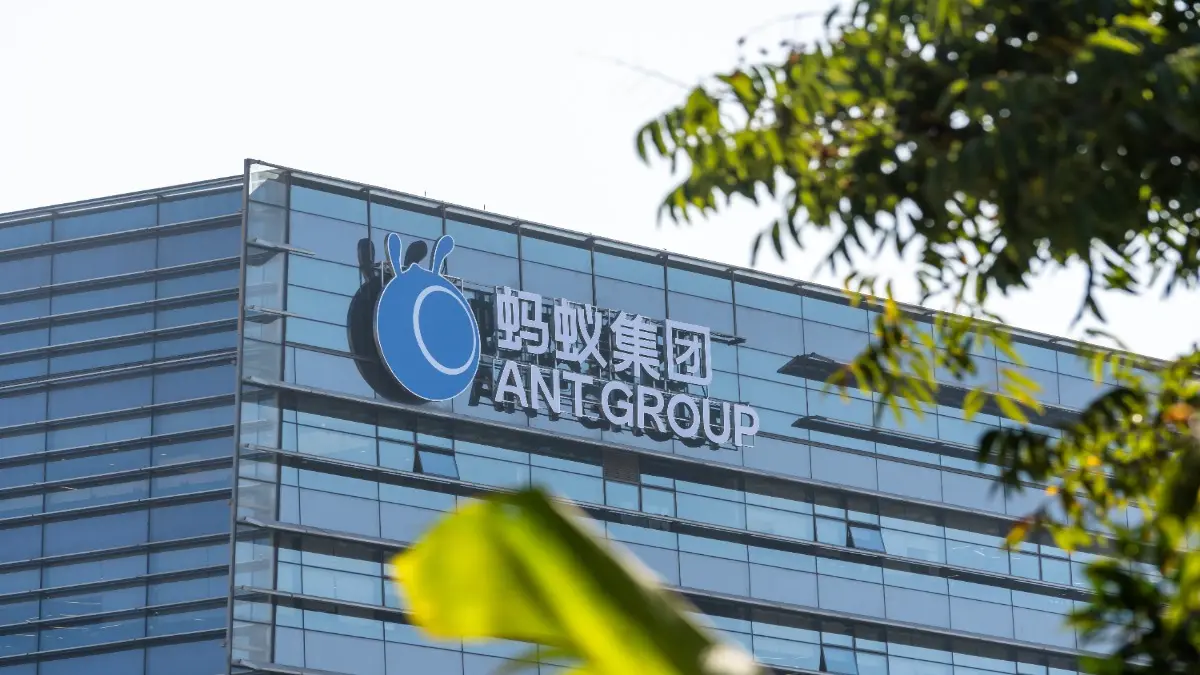
Ant International has secured a Payment Institution licence from the Central Bank of Brazil.
The approval provides the company with a stronger regulated footing in the market and will support the expansion of its local and cross-border payment capabilities, including services for businesses and platforms.

Rodrigo Reif, General Manager of Ant International Brazil, said the company is ready to “step up” the payment and account services it provides in the country.
Ant International operates in Brazil through Antom, its merchant payment and digitalisation platform, which allows merchants to accept Pix, credit cards and alternative payment methods.
The company also provides cross-border payments and account services, in addition to embedded credit, treasury and other financial technology solutions across the continent.
“With the Central Bank’s invaluable support, we are ready to step up more reliable and comprehensive global payment and account services to enterprises, platforms and SMEs in the country’s dynamic digital economy,” said Reif.
Why Brazil matters to Ant International
A stronger regulated presence allows Ant to create more services around how Brazilians pay and help local merchants connect with international consumers and cross-border payment methods.
This is essential to the work of Antom, Ant International’s merchant payments arm, which helps businesses accept local payment methods across different markets through a mix of payment rails.
Brazil has undergone a payments transformation over the last decade, mostly due to the launch of Pix by the Central Bank of Brazil in 2020.
More than 170 million people have used Pix, equivalent to around 80% of the population, according to the central bank. The instant payment system also processed more than seven billion transactions in January 2026.
Pix is used across person-to-person transfers, e-commerce, and physical retail, making it a key part of how consumers and businesses move funds in the South American nation.
Its popularity also means global payment providers looking to work with Brazilian merchants need to support the payment methods consumers expect to use. Therefore, integrating local rails such as Pix into Antom, Ant can make regional payment methods more accessible to its global merchant network and improve cross-border payments.
Different markets, different regulatory hurdles
Ant International’s progress in Brazil was announced days after the company featured in a very different regulatory story in India.
Last week, reports stated that India had stalled a proposed connection between Alipay+ and the country’s Unified Payments Interface (UPI), which would have allowed users to make cross-border payments through Ant International’s network.

The proposal faced concerns around data privacy, national security and financial crime, with Indian authorities cautious over how transaction data would be handled.
Alipay+ proposed connecting UPI to its international payments network earlier this year, potentially extending its reach to merchants across several Asian markets. However, India has strict data localisation rules, which limit where payment information can be stored and processed.
The setback comes as instant payment systems are being considered for cross-border links. Earlier this week, the European Central Bank and the Central Bank of Brazil confirmed talks over a potential connection between TIPS and Pix and earlier this year BRICS members discussed linking fast payment systems to reduce the cost of moving money between countries.
Most of these ideas are still in early stages of development, though it’s believed that the European Central Bank has earmarked a pilot for 2028. However, issues such as those Alipay+ is facing in India could be a sign of what’s to come for these initiatives.