John Healey replaced Rachel Reeves as Chancellor on 20 July, six days after HM Treasury opened a consultation on payment services regulation
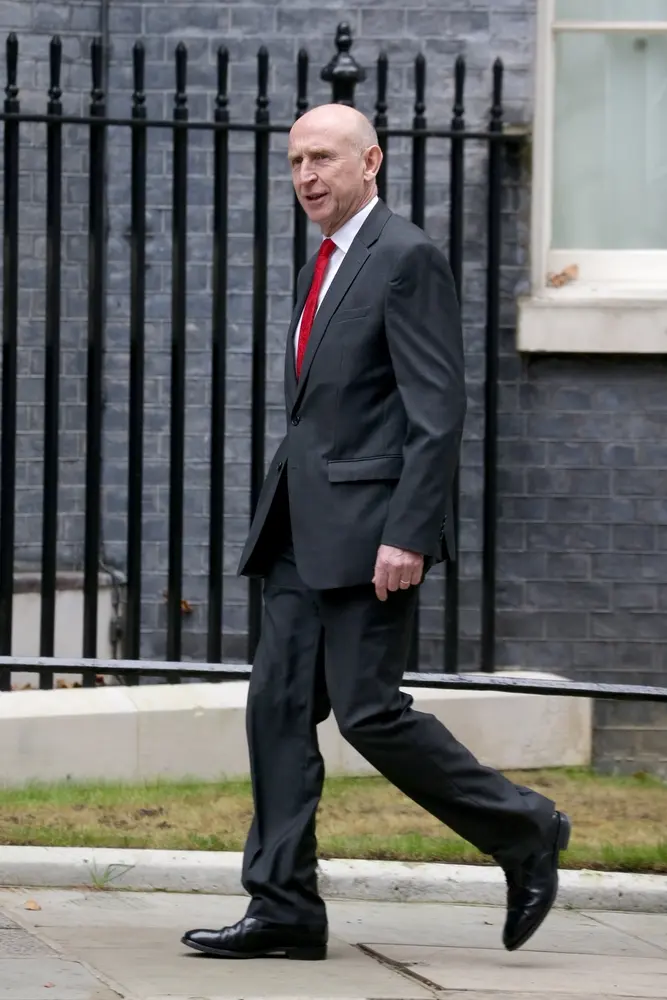
John Healey was appointed Chancellor of the Exchequer on 20 July 2026, hours after Andy Burnham took office as Prime Minister and with Rachel Reeves leaving government the same day.
Healey has run Treasury business before, serving as Economic Secretary from May 2002 to May 2005 and Financial Secretary from May 2005 to June 2007, after two years as parliamentary private secretary to Chancellor Gordon Brown.
He was Defence Secretary from July 2024 until he resigned over military funding on 11 June 2026.
The Economic Secretary job he held two decades ago is now the City Minister role, and its published brief runs directly through the payments industry, covering cash and payments, fintech and cryptoassets, financial services regulation and countering economic crime, according to HM Treasury‘s ministerial responsibilities list.
Payments consultation opened six days before Healey became Chancellor
HM Treasury published Modernising Payment Services Regulation on 14 July 2026, setting a deadline of 11:59pm on 6 October for responses to its Payments and Fintech team.
The paper asks how the framework should adapt to tokenised payments, open banking and agentic payments while keeping consumer protections intact.
It landed alongside Reeves’ third Mansion House speech that evening, in a package that also carried a ring-fencing reform consultation, an AI Adoption Plan for financial services and a “One Year On” report on the Financial Services Growth and Competitiveness Strategy. Reeves left the Treasury six days later, with the consultation still eleven weeks from closing.
PSR abolition bill sits in Lords committee
The Financial Services and Markets Bill, which abolishes the Payment Systems Regulator and moves its functions to the Financial Conduct Authority, cleared first reading in the Lords on 19 May and second reading on 8 June.
It also reforms the Financial Ombudsman Service, creates a provisional licences authorisation route and changes bank ring-fencing rules, according to the House of Lords Library.
The Payments Forward Plan sits behind the bill, published on 26 February 2026 by the Payments Vision Delivery Committee – HM Treasury, the Bank of England, the FCA and the PSR.
It sequences three years of work across retail payments, wholesale payments and parts of digital assets, committing HM Treasury to a Q2 2026 consultation on assimilated EU payments law, the FCA to an open banking interface rules consultation in Q3 2026 followed by a policy statement in Q1 2027, and HM Treasury to a statutory instrument under the Data (Use and Access) Act 2025 in Q4 2026 handing the FCA open banking oversight powers.
All of it stems from the National Payments Vision of November 2024, which created the committee.

The ministers now in place
Emma Reynolds arrives as Chief Secretary to the Treasury having held the payments brief herself, serving as Economic Secretary and City Minister from 14 January to 5 September 2025 and setting out the Leeds Reforms to the Commons on 16 July 2025 as the government’s ten-year plan for financial services.
She was Managing Director of Policy at TheCityUK before returning to Parliament in 2024.
Burnham comes to Downing Street with a contactless record from Greater Manchester, where he introduced tap-and-go on the Metrolink tram network in July 2019 and extended it to Bee Network buses on 23 March 2025 using Vix Technology’s account-based ticketing.
TfGM said 16.5 million contactless Metrolink journeys were made in the preceding year, a 20% rise, with 64% made on devices rather than bank cards, and set fare caps of £9.50 a day and £41 a week at launch.
Jonathan Reynolds took Business, Innovation, Science and Trade in the same round of appointments, Kanishka Narayan was made Minister for Artificial Intelligence jointly across the Cabinet Office and the business department, Shabana Mahmood stayed at the Home Office and Louise Haigh became First Secretary of State and Chancellor of the Duchy of Lancaster.