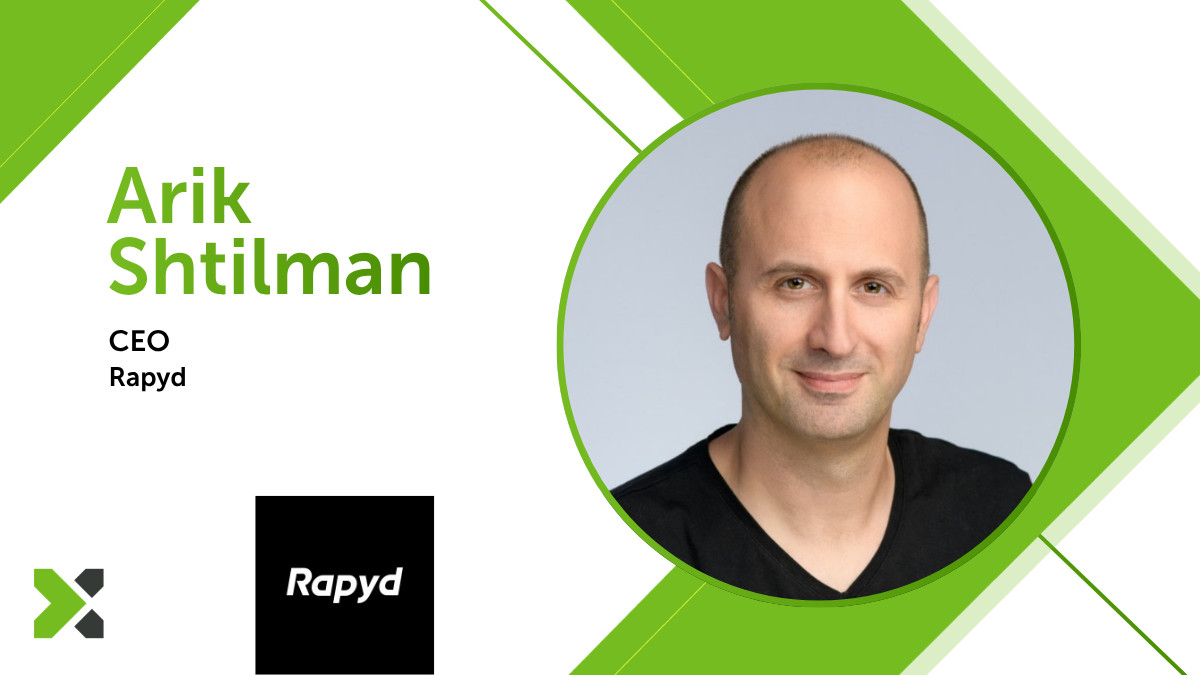
As global payment volumes grow and cross-border infrastructure comes under increasing strain, the companies best positioned to benefit are those building for complexity from the start. Rapyd is one of those companies
Speaking to Payment Expert Editor Rachael Kennedy, Rapyd CEO Arik Shtilman talks through the growth of its “fintech-as-a-service” platform, the unseen complexities of building global payment systems and the evolution of stablecoins as a revolutionary payment system.
The complexity of global payments
Shtilman begins by attempting to correct one of the industry’s biggest misconceptions: that global payments begin and end with card rails.
“People think it’s a 16-digit card number, an expiration date and CVV, and that’s it. The money will move anywhere in the world. The reality is far more complex,” Shtilman said.
Enter Rapyd.
It removes major points of friction experienced by businesses, mainly around currency and payment methods, to create a seamless payment system that works across the globe.
Local infrastructure for global markets
Asked by Kennedy about Rapyd’s “global by default” position, Shtilman highlights how this approach can only be achieved by focusing on “local”.
Local offices, local regulatory licenses and local teams on the ground with genuine market knowledge.
“A lot of companies think that because they have a local partner in a specific country, it means they’re local. But there’s a completely different experience you can provide when you’re actually locally licensed and have people on the ground,” Shtilman added.

Scaling changes everything
Looking back on the challenges Rapyd has faced during its expansion, Shtilman points to how the company has had to fundamentally rethink its infrastructure as currency trading volumes grew.
“When you need to move $100,000 a day, you stumble into some challenges. When you move $100 million a day, the challenges are completely different,” Shtilman said.
Stablecoins enter the infrastructure layer
Looking to the future, Shtilman believes we are witnessing a stablecoin transition, from an experimental currency system to one increasingly baked into mainstream financial infrastructures.
“Our clients are actually coming to us and asking to be settled in stablecoin. They want it because it’s 24/7 and gives them access to their own liquidity in 15 minutes.” Shtilman added.
For Shtilman, it’s that speed of access that is driving so much of the hype around stablecoins, “When you get access to capital in minutes and you don’t need to wait two business days, and you can get it over the weekend this is a huge cost of capital saving.”
Shtilman predicts stablecoins will ultimately become the de facto method for cross-border money movement, though he expects the transition to happen within a regulated framework, with banks and regulators formalising adoption rather than being bypassed by it.