Parliament rejects efforts to prioritise an offline-only rollout, reinforcing the digital euro’s dual-format design amid growing sovereignty concerns.
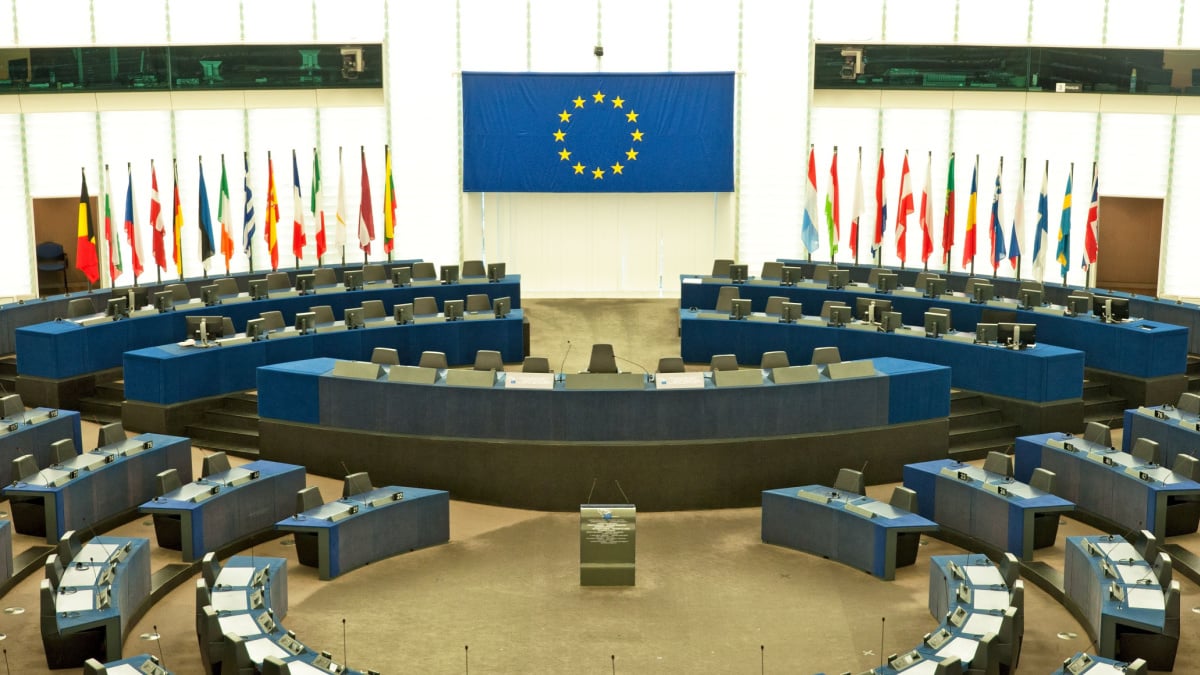
MEPs have thrown their weight behind a digital euro available both online and offline, pushing back against efforts to slow the project by prioritising an offline-only model.
The decision was announced on February 10 as part of the European Parliament’s annual resolution on the European Central Bank (ECB), where lawmakers stated that “an online and offline digital euro should contribute to safeguarding universal access to payments and broad acceptance by merchants across the EU.”
In recent weeks, political divisions have surfaced over whether the digital euro’s rollout should focus initially on offline functionality – often framed as a privacy-first compromise – while postponing the more complex online version. The adopted text makes clear that Parliament is not prepared to separate the two.
Parliament draws a line
The vote follows growing tension between political groups over the direction of the project.
“We call on the EPP rapporteur to take note of the House’s position and abandon a strategy that divides the project – one that merely seeks to postpone indefinitely the approval of an online digital euro while, in the meantime, pushing through an offline digital euro with the support of the far right. Slowing down the process is not a viable option. It is time to move forward decisively,” said Jonás Fernández, spokesperson for the S&D group on economic and monetary affairs.
His comments underscore the broader debate which has surrounded the legislation throughout early 2026.
As Payment Expert reported last month, a group of 70 academics warned that political compromises risk “hollowing out” the digital euro project, arguing that a diluted version would leave Europe dependent on foreign payment providers and exposed to geopolitical risk.
Those academics were explicit that a viable digital euro must function both online and offline, be widely accessible and carry meaningful holding limits if it is to act as a credible public alternative.
The Parliament’s adopted language now aligns closely with that position.
Sovereignty framing intensifies
Beyond the technical debate, the resolution frames the digital euro as part of a broader sovereignty strategy.
MEPs stressed that increasing digitalisation of payments, if left exclusively to private and non-EU actors, risks creating exclusion and dependency. The digital euro is described as essential in a context of “heightened geopolitical uncertainty” and “excessive dependence on non-EU payment infrastructures.”
This echoes concerns raised at MoneyLive Europe in November 2026, where central bank officials questioned whether Europe wants “true independence in European payments.”
The geopolitical backdrop has sharpened those arguments. With US-based card schemes and fintech providers dominating retail payments across much of the euro area, the digital euro has increasingly been positioned as a defensive infrastructure project rather than a technological experiment.
A more pragmatic Parliament
The endorsement of a dual-format digital euro also lands just weeks after lawmakers adjusted distribution rules in committee.
Amendments introduced tighter monitoring for non-eurozone usage, capped wallet balances for users outside the euro area and made participation voluntary for non-eurozone payment service providers.
This move suggested a more pragmatic phase of the legislative process, shifting from rhetoric around innovation to concrete implementation mechanics.
However, critics have questioned whether some of those changes risk watering down the ambition of the project. References to the digital euro as a “catalyst for innovation” were removed, and several provisions were softened from “must” to “may”.
The latest resolution itself does not finalise the digital euro legislation, but it provides a clear political signal ahead of the decisive legislative vote expected later this year. If approved by a majority of MEPs, the legislation would accelerate the ECB’s roadmap, with issuance currently targeted for around 2029.
But support remains divided. Some lawmakers continue to question consumer demand, while banks have raised concerns about potential competition with private payment initiatives. Others warn of privacy risks, though the ECB has repeatedly rejected surveillance claims.