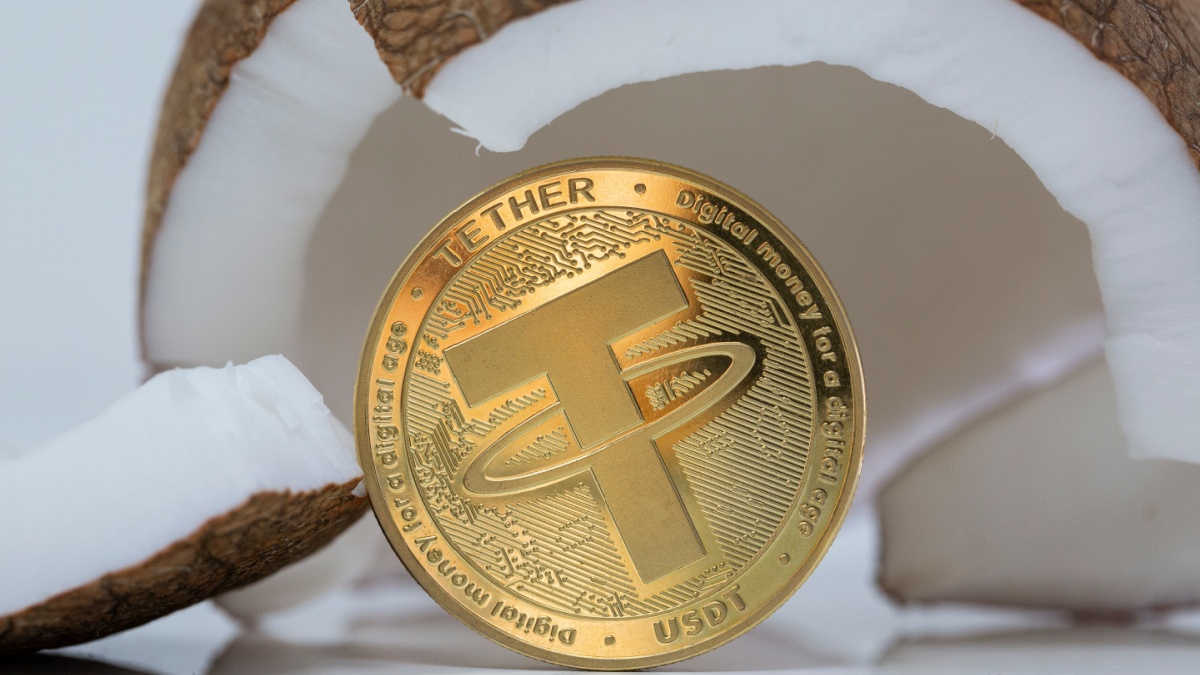
S&P Global downgrades Tether’s USDT to “weak” amid growing risk and limited transparency.
S&P Global has issued its latest stablecoin stability assessment and confirmed Tether’s stablecoin USDT, the world’s largest stablecoin by market cap, has been downgraded to the lowest rating.
USDT fell from a score of four, described as “constrained”, to five, labelled as “weak”. The firm said the downgrade reflects a rise in high-risk assets across Tether’s reserves over the past year and “persistent gaps in disclosure”.
S&P highlighted USDT’s backing spans bitcoin, gold, secured loans, corporate bonds, and other investments. Each carries exposure to credit, market, interest-rate or FX risk and the agency said disclosures remain limited across these categories.
A core concern is Tether’s growing bitcoin allocation, with BTC now representing around 5.6% of USDT in circulation, a level which exceeds the 3.9% overcollateralisation buffer S&P believes is necessary for the reserve to “fully absorb a decline in its value.”
The agency also criticised what it described as limited visibility into “the creditworthiness of its custodians, counterparties, or bank account providers.”
“We have observed other weaknesses. These include limited transparency on reserve management and risk appetite, lack of a robust regulatory framework, no asset segregation to protect against the issuer’s insolvency, and limitations to USDT’s primary redeemability,” S&P added.
Tether’s relocation to El Salvador was also noted. The company now reports to the country’s Financial Investigation Unit and is regulated by the National Commission of Digital Assets (CNAD). Under its rules, stablecoin issuers must maintain a 1:1 reserve ratio, with at least 70% of assets liquid within 30 days.
S&P welcomed the move to a clearer supervisory regime but said the framework still allows high-risk assets such as loans, bitcoin and gold to be counted as eligible reserve holdings. “There is no requirement on the segregation of reserve assets,” the agency wrote, comparing this with stricter rules in Europe and the US.
Payment Expert has approached Tether for comment.
How other stablecoins compare
Despite regulatory uncertainty, USDT continues to dominate the market. Its capitalisation has grown from around $120bn to $183bn over the past year. However, its lead has narrowed as USDC expands, with Tether’s relative size falling from 3.5x USDC’s supply to 2.4x.
S&P also updated its ratings of other major stablecoins. TrueUSD, which is now run by the Asia-based company Techteryx, received the same “weak” rating as USDT. S&P said this was mainly because there is still little information available about how the coin is managed and how decisions are made inside the organisation.
Circle’s euro stablecoin, EURC, received a much stronger score. S&P said EURC is supported by euro deposits which are kept separate in accounts at regulated financial institutions. Most of this money is held with a major global bank which has a high credit rating.
The only factor to reduce EURC’s overall score was its smaller scale and shorter track record compared with longer-established stablecoins.
Circle’s USDC was also rated highly, with S&P noting it is backed by low-risk assets, mainly short-term US government bonds and cash held in a regulated reserve fund managed by BlackRock.
The agency said the only remaining concern is whether all reserves would remain protected if Circle were ever to enter bankruptcy, although it recognised the assets are kept separate from the company’s own funds.