Stablecoin issuers will soon be held to the same regulatory standards as traditional financial institutions in the US
The Office of the Comptroller of the Currency (OCC) has proposed bringing stablecoin issuers under Bank Secrecy Act oversight.
Published on 22 June, the notice of proposed rulemaking details how the OCC plans to supervise permitted payment stablecoin issuers (PPSIs), a new regulatory category created by the GENIUS Act.
Following the announcement, a 30‑day comment window opened in the Federal Register, allowing affected firms and stakeholders to raise any concerns.
The GENIUS Act, passed earlier this year, established the first federal framework for US dollar‑backed payment stablecoins. It requires issuers to meet prudential standards, maintain 1:1 reserves and operate under the oversight of either the OCC or a state regulator.
The Act also mandates that federally supervised issuers comply with the Bank Secrecy Act, which is believed to help create a “consistent, enforceable” compliance baseline for stablecoin issuers under the watchdog’s jurisdiction.
It applies to both federally qualified PPSIs and state‑chartered issuers for which the OCC has enforcement authority under the Act.
What is the Bank Secrecy Act?
The proposed rule sets out a detailed anti-money laundering (AML)/counter-financing of terrorism (CFT) and sanctions compliance framework for stablecoin issuers, placing them under the same expectations as banks and other regulated financial institutions.
First introduced in 1970, the Bank Secrecy Act was created to combat money laundering, tax evasion, and organised crime. Before its implementation, criminals could easily hide illicit profits in foreign accounts or make untraceable cash deposits at US banks.
Under the proposal, stablecoin issuers would be required to comply with the Act, sections 4(a)(5) and 4(a)(6)(B) of the GENIUS Act and all applicable regulations issued by FinCEN and the Office of Foreign Assets Control.
This includes sustaining a full AML/CFT programme, sanctions screening processes, suspicious activity reporting and customer due diligence controls.
The rule also introduces a formal supervision and enforcement structure, under which the OCC would gain authority to examine PPSIs’ AML/CFT programmes, issue supervisory findings and take enforcement action when gaps in compliance are found.
In cases involving significant supervisory or enforcement activity, the OCC would be required to consult with FinCEN, a bureau of the US Department of the Treasury that acts as a financial intelligence watchdog.
Another provision would allow PPSIs to share certain non‑public OCC information with the Director of FinCEN when an AML/CFT enforcement action is in progress or being considered.
Welcome to regulation
For months, the industry debate has been about whether stablecoins can truly go mainstream. The GENIUS Act – and the Bank Secrecy Act obligations that come with it – largely settles that, giving the sector a clear compliance framework
The sector has expanded exponentially, much of it in a grey zone with little oversight. The OCC’s proposal is a reality check: stablecoin firms will soon face the same compliance standards as banks, ending an era of light-touch regulation.
Regulatory scrutiny for crypto firms could well be high, given the numerous regulatory failings of the past.
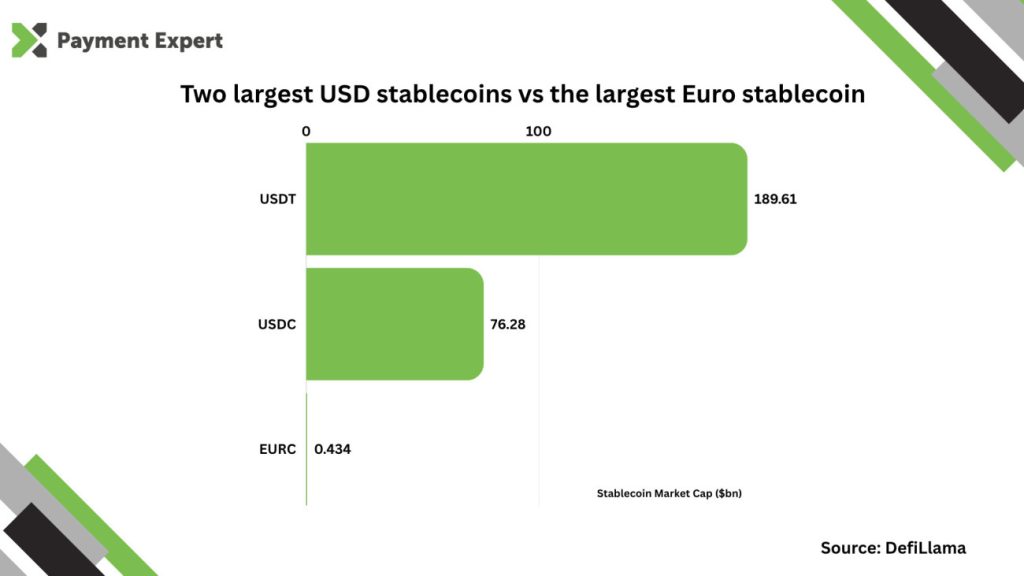
In 2021, the New York Attorney General concluded a multi‑year investigation into Tether and its affiliated exchange Bitfinex, resulting in an $18.5m settlement after finding the company had misrepresented the backing of its tokens and, at times, held no reserves at all.
Later that year, the Commodity Futures Trading Commission fined Tether a further $41m for claiming its stablecoin was fully backed by US dollars – a statement regulators said was untrue for most of the period between 2016 and 2018.
Since then, the company has made efforts to rebuild its reputation. In January, it launched USAT, its first federally regulated stablecoin, and in April, Tether appointed KPMG to conduct its first full independent audit, which the company described as a “defining moment”.
Elsewhere, Terraform Labs, the issuer of the stablecoin UST, faced regulatory scrutiny following the collapse of its multi-billion-dollar ecosystem in May 2022. US and global investigations eventually targeted the company for failing to prevent illicit finance and misleading regulators about the stability and mechanics of its minting and burning processes.