Brian Armstrong, the founder of Coinbase, recently offered a thought that should give anyone working in payments pause, writes Payment Expert Editor Rachael Kennedy

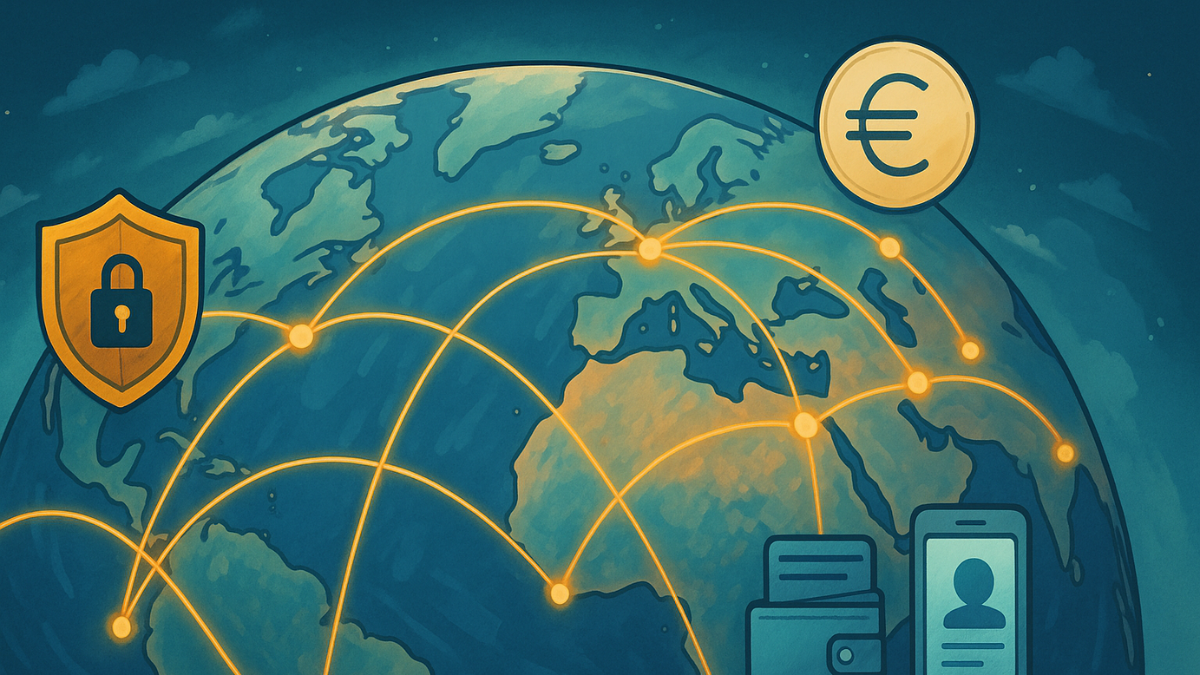
“Very soon, there are going to be more Al agents than humans making transactions,” said the Coinbase founder. “They can’t open a bank account, but they can own a crypto wallet. Think about it.”
At first glance, it reads like the kind of provocation Silicon Valley founders enjoy making. But the more you sit with the idea, the more it exposes a structural tension in the financial system.
Payment infrastructure is built around human identity. Al agents are not human.
Banks, card networks and payment institutions rely on frameworks designed for individuals and legal entities. Accounts require identity verification, contractual relationships and regulatory oversight. Know your customer (KYC) processes are built on the assumption there is a person, or at least a company, standing behind every transaction.
Autonomous software agents do not fit neatly into that model.
They cannot complete onboarding forms or provide identity documents. They cannot sign contracts or accept legal liability. From the perspective of traditional financial infrastructure, they simply do not exist, yet economically, they increasingly do.
Across the internet, software agents are already performing tasks that once required human intervention. They search for prices, execute trades, manage digital assets and interact with online platforms at scale. As Al capabilities expand, it is not difficult to imagine these agents initiating transactions as part of their activity. If an Al agent needs to pay for something, what financial rails can it use?
This is where Armstrong’s comment about crypto wallets becomes interesting. Unlike bank accounts, wallets do not require formal onboarding with a regulated institution. They are programmable, automated and designed to interact with software systems. In other words, they are infrastructure which machines can use as easily as people. Whether crypto becomes the dominant mechanism for this type of activity remains uncertain. But the idea highlights an emerging gap between how financial systems operate and how digital activity is evolving.
Online betting markets already operate in a highly automated environment. Operators process millions of digital transactions daily across multiple jurisdictions and payment rails. Algorithmic strategies, automated tools, and data-driven wagering models are already part of the ecosystem, even if largely controlled by human users.
If autonomous agents become more sophisticated, it is not difficult to imagine them participating in these environments. Al-driven systems could analyse odds movements, manage bankroll strategies or execute wagers programmatically across different platforms.
That raises difficult questions for payment teams and for regulators.
Who is responsible for the activity of an autonomous agent? How should operators verify the identity of a customer that is effectively a piece of software? And how would anti-money laundering controls apply if the economic actor initiating a transaction is not a human at all?
These questions do not have clear answers yet, and the industry is not on the verge of being dominated by machine customers. But Armstrong’s observation points to a broader shift that payments professionals should not ignore.
The financial system still assumes that every transaction begins with a person. The digital economy increasingly suggests otherwise.
This article first appeared in SBC Leaders June 2026 edition.