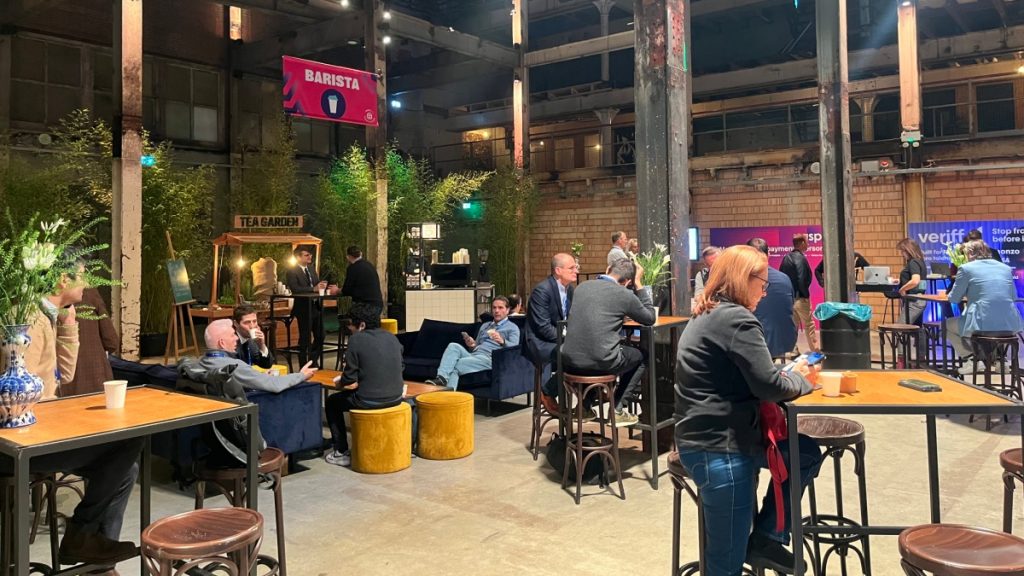
Payment Expert is back on the ground at MoneyLIVE in Amsterdam for Day 2, with Kieran O’Connor bringing you live updates throughout the day. Expect more industry insights and a preview of our exclusive interview with PayDo CEO Serhii Zakharov.
15:45 – Thanks for following along!
Uber has been reliable at MoneyLIVE over the past two days, not just getting me from the airport to my hotel, but also bringing a sense of candidness often missing at events like this.
A key example came during a panel on whether merchants should build their own wallets and the value they deliver. Uber’s Anurag Chitlangia left nobody in doubt: “Uber wallet would not make sense.”
Yesterday, Uber also made my personal highlights as Uber Payments COO Divya Bhardwaj delivered a jab at the banks while sharing a stage with Standard Chartered, ING and JP Morgan.
Another standout moment came today on cards, when Gerry Davies of Santander noted the drive away from cards in the UK isn’t being led by consumers.
It hasn’t just been about quotes, however. Yesterday, NatWest’s Jonathan Leslie said, “Reimbursement is never going to be the end game,” adding while APP fraud volumes are falling, the value of attacks is rising.
Virgin Media O2’s James Harwood explained how call labelling and smarter data sharing are helping combat fraud, though challenges remain.
It’s been a packed two days of debate, insights and bold statements – thanks again Uber. Make sure you’re signed up to Payment Expert’s newsletter for more coverage from MoneyLIVE. I’m Kieran O’Connor, and it’s been a pleasure reporting from the floor.
15:10 – Stablecoins… finally
It took until the final panel of the day, but stablecoins have finally made their appearance at MoneyLIVE.
Ville Sointu, Chief Strategist, Transaction Banking and Digital Currencies at Nordea, cautioned against lumping stablecoins and CBDCs together, saying the comparison is “like apples to oranges.”
Sointu said the key distinction is the digital euro is being designed primarily as a retail payment instrument, whereas stablecoins exist in many forms with no single definition. “Anyone can create a stablecoin,” he noted, and as a result, regulation varies widely, creating fragmentation.
Even when focusing on something seemingly straightforward like a euro-denominated stablecoin, Sointu said it’s ultimately just “a token on a public blockchain,” with no consistent approach or unified direction behind them.
Therefore, he concluded stablecoins cannot be meaningfully compared to a digital euro, which is built with a very different purpose, governance model and level of oversight.
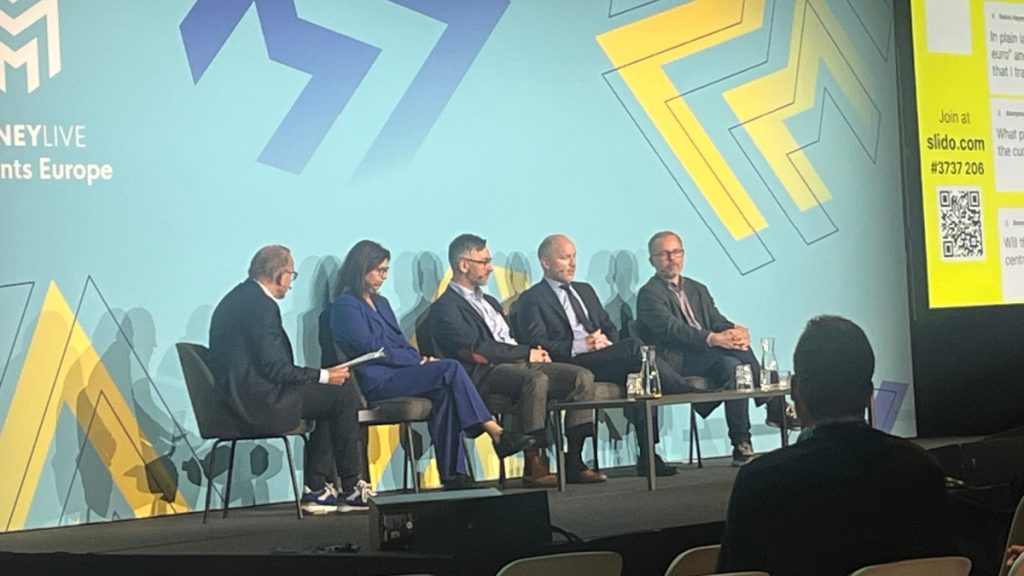
15:00 – Central banks weigh in on Europe’s payments future
Alexandre Stervinou, Director of Cash and Retail Payments Policy and Oversight at Banque de France, cited three key trends shaping the European payments landscape.
First, cash usage is declining, with fewer people using it for everyday transactions. Second, the market remains fragmented, though ongoing initiatives are beginning to address this. Third, European players are still competing against a dominance of US-based providers like Visa, Mastercard and PayPal.
Stervinou posed a question to the audience: “Do we want true independence in European payments?” Answering his own question, he said that central banks suggest the digital euro as a potential solution. Drawing parallels with history, he explained that just as the rise of private money once led to bankruptcies before the invention of central banks, Europe now faces a similar moment in the digital age.
14:30 – The Digital Euro
The last panel at MoneyLIVE is exploring the Digital Euro, which has recently seen a lot of progress. Last month, the European Central Bank (ECB) revealed any final decision on the progression of the Digital Euro roadmap is contingent on legislation being formalised and implemented by the European Parliament next year.
If legislators adopt the relevant regulation, the ECB is hopeful this will make way for pilot transaction testing scheduled for mid-2027. If the Eurosystem is satisfied with the results from the test pilot, issuance of the Central Bank Digital Currency (CBDC) could happen in 2029.
14:10 – Cancellations, but the show goes on
A highly anticipated Keynote from Joachim Schwerin, Principal Economist at European Commission, has been cancelled. This means the next panel will be the last of the day.
13:15 – Bringing energy to fintech while the rest of MoneyLIVE breaks for lunch
While the main floor emptied for lunch, I had the chance to catch up with Serhii Zakharov, Founder & CEO of PayDo, in the speakers’ lounge.
Zakharov shared how he plans to inject energy into the fintech sector, noting payments innovation has moved slower compared to other industries. He highlighted the fragmentation in the industry and explained how a unified offering can simplify processes for merchants and consumers alike.
We also discussed Open Banking collections, non-redirect e-wallet checkouts, and the importance of creating innovations that solve real-world problems, not just flashy features.
Stay tuned for the full article coming next week, where we’ll dive deeper into his journey and vision for the payments industry.
12:25 – Why card modernisation still matters in the UK
Gerry Davies, Payments Commercial Director and Cards Tribe Lead at Santander, explained why cards remain a cornerstone of the UK payments landscape and why innovation cannot stop.
“Cards are ubiquitous. We can’t rest on our laurels,” Davies said. He told the audience Santander are innovating to make card payments more secure, seamless and reliable. He continued:”From a UK consumer perspective, cards work perfectly well, and consumers aren’t necessarily driving the change.”
This is a big statement given the amount of regulatory encouragement for alternative payment methods in the UK, with both the Payment Systems Regulator (PSR) and the Financial Conduct Authority (FCA) promoting new options.
12:10 – Meet Serhii Zakharov, Founder & CEO of PayDo
I made it just in time to catch the keynote from Serhii Zakharov, Founder & CEO of PayDo, who I’ll be interviewing later today.
Zakharov’s mission is to remove complexity from modern business payments. PayDo is tackling this by reducing fragmentation, the extra costs, compliance burdens and operational friction highlighted in earlier panels.
With 78% of users willing to switch banks for a better interface, PayDo offers solutions like easy-to-implement APIs and consumer-to-business Open Banking collection accounts. Seven years on, the company now processes over €5bn annually across all major payment flows, which Zakharov said shows a strong demand for a unified approach.
Later this afternoon, I’ll be asking Zakharov about how PayDo plans to drive adoption of its systems and what the future of embedded payments looks like.

11:50 – Merchants enter the wallet wars, but not all need to fight
The conversation moved to whether merchants should build their own wallets and whether the market truly needs more of them.
Cagaptay argued merchant wallets can deliver real value, but faced tougher questions from the moderator: Should every merchant have one? Are we heading for wallet overload? He repsonded by saying that merchant wallets serve different use cases, and shouldn’t be treated as one-size-fits-all.
Slaattelid added that context and market dynamics matter.
“We’re a super-merchant,” he said, explaining that in Norway there’s little reason for a dedicated Starbucks-style wallet. Instead, the strategy is to embed merchant loyalty inside existing wallets, not build standalone ones, though he emphasised each market differs.
Uber’s Chitlangia captured the divide with the line of the session:
“Uber wallet would not make sense,” said Chitlangia.
He explained Starbucks offers a lifestyle product which naturally lends itself to a wallet experience. Uber, however, is built around needs, meaning rewards can exist without needing a dedicated wallet at all.
11:30 – Wallet wars intensify as challengers push for choice
The session opened with a look at Big Tech wallets, a topic gaining regulatory attention, particularly in the UK, where there’s pressure to increase competition.
Bizum Pay described how it aims to become a credible alternative, explaining the company showcased a wallet built for NFC payments, giving users clear visibility of transactions, the ability to integrate multiple cards, and a secure, bank-powered identification and onboarding flow.
A panel discussion followed featuring:
- Baard Slaattelid, Director of Strategic Payment Partnerships at Vipps MobilePay
- Anurag Chitlangia, Senior Product Manager at Uber
- Arda Cagaptay, Founder of Merchant Wallets 2.0
10:40 – Is AI the answer?
Van Nijnatten brought some welcome realism to the AI conversation, taking the audience back to last year’s narrative, when AI was pitched as the solution to nearly every payments problem.
AI can deliver meaningful benefits, he said, particularly in fraud prevention. This is a timely point given yesterday’s sessions highlighted that fraud continues to rise. He also noted how AI can streamline operations by reducing manual workloads, allowing teams to focus on more complex tasks.
It’s a topic which can spark debate, especially around headcount as Klarna knows, but Van Nijnatten stressed used responsibly, AI offers a practical route to lower costs and greater efficiency.
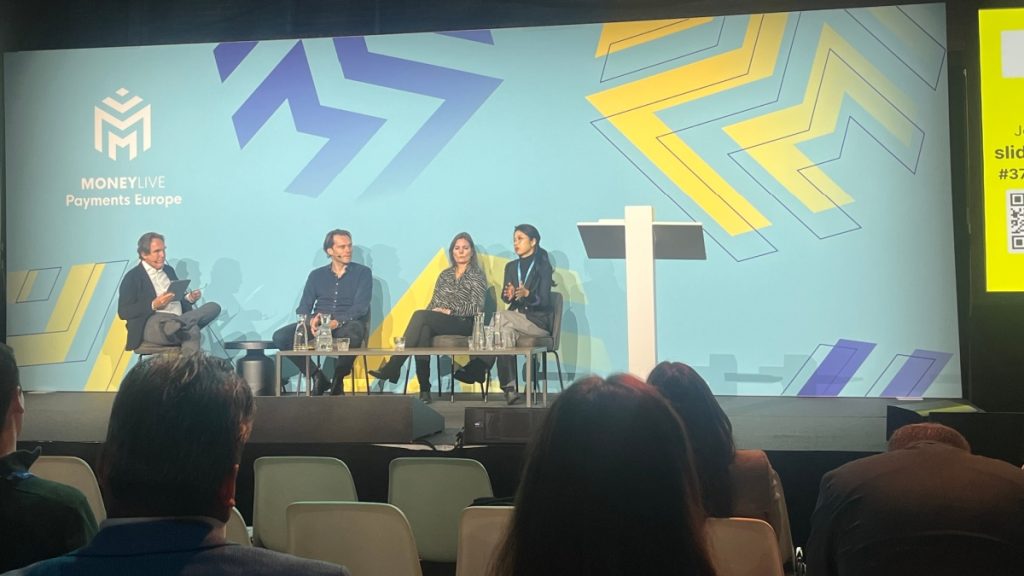
10:30 – The real cost conversation
Ye highlighted how cost considerations shape most payments decisions for retailers. She explained companies operating across Europe, like Boozt, maintaining local entities is essential. This local presence adds complexity upfront, but once implemented, the cost improvements can be significant.
Ye emphasised also stressed, from a merchant perspective, the ideal scenario is a fixed cost per payment method, giving businesses predictability and control as they scale.
10:20 – Complexity is crushing merchants
The next panel featuring Wendy Hompes, Global Head of Product Management Cards, Wholesale Banking at ING, independent payments strategist Bono Van Nijnatten, and Boozt’s Director of Payments & Orders, Hanui Ye, put merchant pain points under the spotlight.
Ye explained the past few years have been challenging for retailers. While many have successfully driven down payments costs, they’ve done so at the expense of increased complexity. The next challenge? Reducing complexity without losing the cost efficiencies they’ve already achieved.
Van Nijnatten added fragmentation is a major part of the problem. Merchants are sitting on abundant data, but it’s spread across systems, meaning everyone is working from “different versions of the truth.” He noted the industry is still burdened by too many integrations, and fewer, more unified connections would help lower costs while also restoring clarity.
09:30 – Is orchestration the way forward?
Day 2 at MoneyLIVE began with plenty of energy as Daniel van Delft, CEO of Currence, opened the morning sessions. The first big topic of the day is payment orchestration.
Bart Gijde, Global Head of Payments & Collections (VP, Operations) at IWG, shared how his organisation moved away from the PayFac model and the benefits which followed with adding an orchestration layer. The ability to switch between providers gives merchants far greater leverage, he said, enabling them to properly compare pricing, performance and overall value.
However, it’s not without challenges, as Gijde stressed the importance of selecting a “reliable orchestration partner,” noting that adding an extra layer can sometimes introduce performance issues.
He also flagged limitations around payment method support. Because IWG accommodates a wide variety of payment types, not all are immediately supported within orchestration platforms, meaning merchants may have to wait for their chosen partner to integrate them.
9:00 – Good morning from Day 2 of MoneyLIVE!
We’re back for the second and final day of MoneyLIVE. The agenda might be a little lighter, but there’s still plenty of sessions lined up, looking at digital wallets, CBDCs and what’s next for the industry.
If you missed anything from yesterday’s packed Day 1, you can catch up on all the live coverage in the blog.
Stay tuned, as later today as Payment Expert will be sitting down with Serhii Zakharov, Founder & CEO of PayDo, for an exclusive interview. There may even be a sneak peek in the live blog, with the full article coming next week.
But for now its time to grab a coffee.