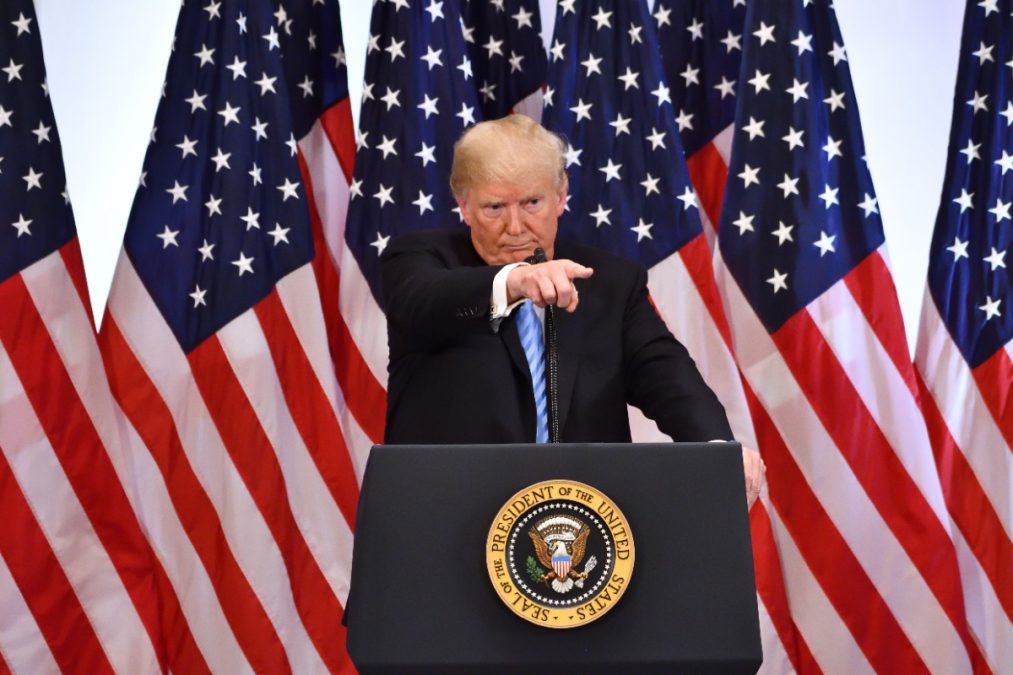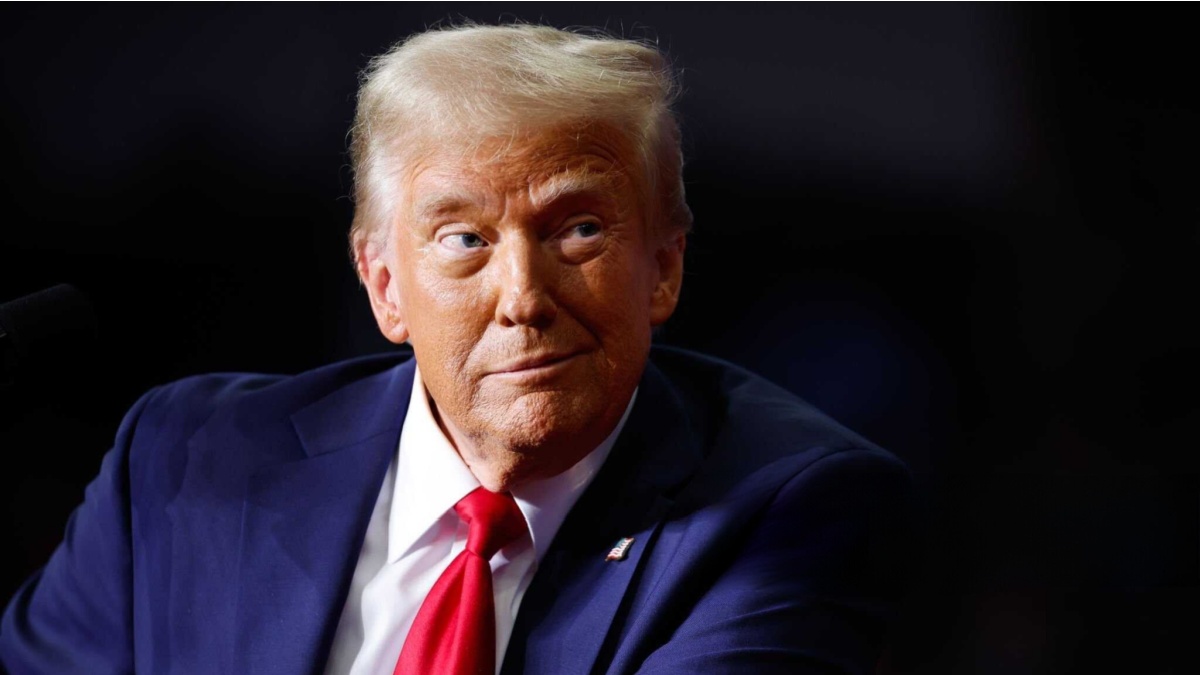
After weeks with no action, Brian Quintenz‘s nomination from President Donald Trump to serve as Chairman of the Commodity Futures Trading Commission (CFTC) has been pulled by the White House.
Trump put forth Quintenz as a candidate in February and the Senate Committee Agriculture, Nutrion and Forestry seemed poised to advance him to a full floor vote this summer, but the absence of a Senator needed for a Republican majority delayed the first vote. After that, a second vote was delayed without explanation.
Multiple outlets, including Politico and The Hill have confirmed with sources in the Trump Administration that the president will not be moving forward with Quintenz for the role overseeing the regulatory body.
Quintenz lost battle against the Winklevoss twins
The move comes after Quintenz publicly released a series of private messages between himself and crypto business owner Tyler Winklevoss regarding his company Gemini and a CFTC investigation into the organisation, which resulted in Gemini agreeing to pay a $5m settlement fee.
Gemini wrote to the Office of the Inspector General for the CFTC in June, officially filing a complaint claiming the settlement was based on fraudulent evidence and that the investigation was “abusive”. Winklevoss reached out to Quintenz to communicate about the complaint, even though Quintenz had not yet been confirmed to run the organisation.
Winklevoss and his twin brother, Cameron Winklevoss, had been vocally critical cirtical about Quintenz prior to his posts on X, expressing concern about Quintenz’s views on cryptocurrency being too conservative.
Sports contract remain a controversial CFTC topic
The Winklevoss brothers were not Quintenz’s only critics. The gaming industry loudly opposed opposition to Quintenz being appointed to the role. Quintenz is currently a member of the board of Kalshi, which is currently leading the charge to offer a growing catalogue of sports-related event contracts under CFTC self-certification. Groups like the American Gaming Association and the Indian Gaming Association wrote a letter formally opposing his appointment over concerns that he would allow the growth of the sports contract market with little pushback.
Kalshi is currently embroiled in lawsuits in five different states challenging the legality of sports event contracts, three it filed against state regulators and two where the company is the defendant. The crux of each lawsuit is whether or now the sports contracts offered by Kalshi are illegal sports bets under state law.
In those lawsuits, Kalshi has repeatedly argued it cannot abide by state gaming laws without potentially violating the Commodity Exchange Act (CEA) and jeopardising its standing with the CFTC. In its lawsuit in Maryland, a judge denied Kalshi’s request for an injunction to keep sports contracts online in the state while the case proceeds. That decision is currently pending appeal.
CFTC says it hasn’t reviewed sports-related contracts
However, communication from the CFTC sent on September 30 advised CFTC licensees to develop contingency plans as it relates to sports contracts. Those plans include how to geolocate out certain markets and how to handle pending contracts with customers in those states.
The memo came the day before a federal government shutdown in the US and aimed to address potential issues that might arise while the CFTC is not operational.
The memo also offered the first acknowledgement of sports contracts by the CFTC since Trump took office. In a footnote within the correspondence, there was a comment that reiterated that the CFTC has not reviewed sports event contracts and they continue to be offered by companies like Kalshi through the CFTC’s self-certification process.
CFTC and SEC mull ‘harmonisation’ opportunities
The subject of the growing scope of event contracts was not directly mentioned much during a roundtable between the CFTC and Securities and Exchange Commission (SEC). The two groups coordinated a day of discussion and content on ways for the two groups to collaborate more in the future to create “regulatory harmonisation” that included representatives from major investment firms, exchanges and upstarts like Polymarket and Robinhood.
The general tone of the discussion from those regulated by the two groups is a desire to create more flexibility in the rules to allow for faster development of technological advances and innovation. However, there were also concerns from some of the more traditional banks that the rules are applied fairly across both organisations.
Who will the next nominee be?
Trump has not put forth any official names in Quintenz’s stead, but the rumor mill in Washington D.C. has floated a couple of candidates.
One name repeatedly mentioned is Josh Sterling, a lawyer currently practicing at Millbank. Sterling is currently representing Kalshi in the company’s ongoing sports contracts lawsuits.
Another of Sterling’s clients is Sleeeper, a fantasy sports company seeking to expand into the event contract space. Sleeper applied for a Futures Commissions Merchant (FCM) licence with the National Futures Association (NFA) in May and was allegedly told they were set for approval no later than 4 September.
When the NFA did not grant approval, Sterling authored a letter on behalf of Sleeper to the Office of the Inspector General requesting an investigation into the CFTC, which he claimed was illegally intervening and pressuring the NFA to leave the application pending. In the days following that letter, Sleeper filed suit in federal court against the CFTC, alleging the regulator was violating due process laws and interfering in a matter that should be the sole discretion of the NFA.