The US President has recently signed two executive orders to modernise financial infrastructure and regulations by enabling fintech companies greater access to Federal systems, while also looking to stop bankroll and tax evasion for non-US authorised people.
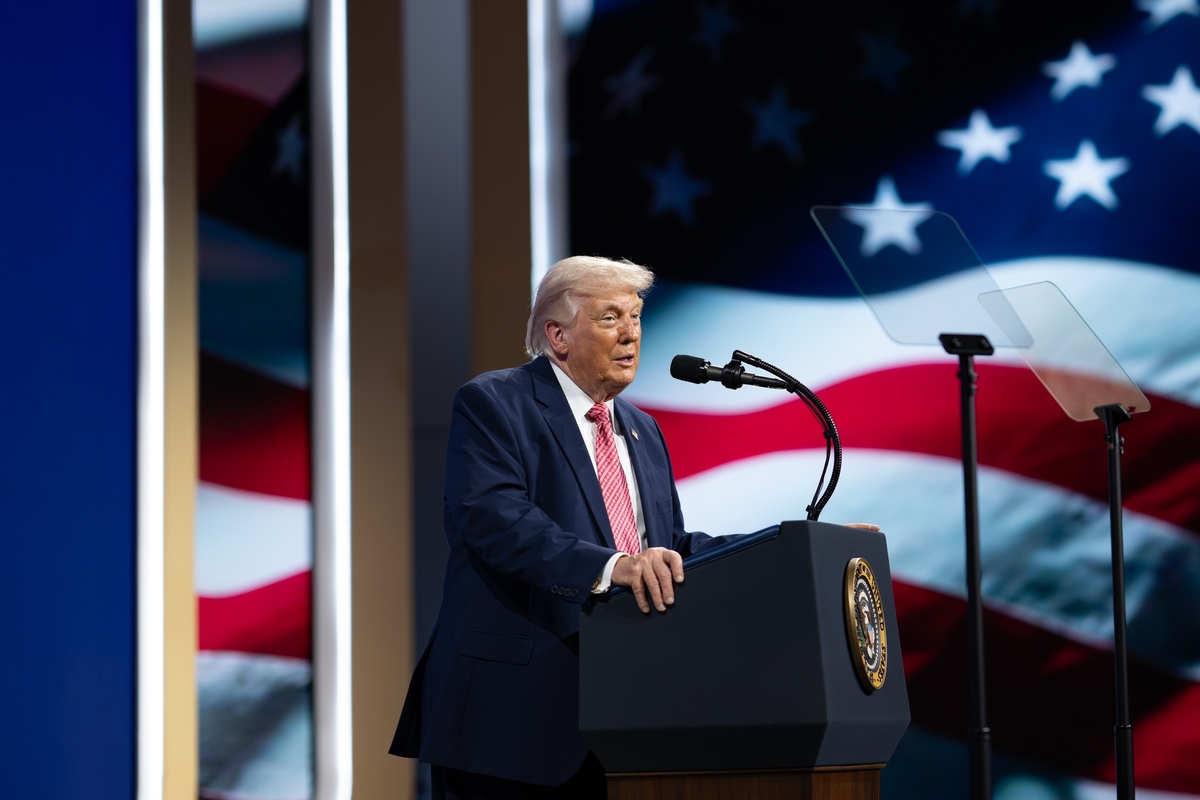
On 19 May, US President Donald Trump signed two executive orders designed to foster payment innovation and strengthen the due diligence of bankroll fraud.
The first executive order aims to integrate financial technology innovations into existing regulatory frameworks and update certain rules to allow emerging technologies, like blockchain, a more seamless integration with traditional financial and payments infrastructures.
Central to the US’ plans is the request for access to Federal Reserve Services to evaluate payment accounts and services of fintech and digital asset companies.
While access will be subject to risk management requirements, the 12 US Federal Reserve banks will be able to independently approve or deny access to Federal payment services. A transparent application process will also be available to relevant fintech and digital asset firms within the first 90 days of the executive order.
Some of the Federal financial and payment services that could be made available to fintech and digital asset firms include payment processing, lending, deposits, brokerage services and securities and commodities market activities.
Under its plans to streamline US regulations, the executive order outlines the head of each Federal financial regulator to review existing regulations to be updated to facilitate the introduction of new financial technologies to support new and emerging fintech firms.
The reviews will identify regulations, guidance documents, orders and no-action letters that block fintech firms from entering into partnerships with federally regulated institutions.
Regulators have also been ordered to review existing regulations, to streamline application processes for eligible fintech firms seeking bank charters, credit union charters, deposit or share insurance, and other Federal licenses.
This executive order comes following a significant increase in non-traditional finance and payment companies seeking banking licenses in the US.
After Trump deregulated the Office of the Comptroller of the Currency (OCC), companies such as Circle, Coinbase, Nubank, Paxos and Ripple have either been approved or conditionally approved a banking charter license to gain access to regulated banking and payment services.
Integrity risks prevention for non-working authorised US people
The second executive order passed by Trump yesterday was to establish a new ‘Federal functional financial regulator’ to “restore integrity to America’s financial system, safeguard financial institutions against structural risks, and deter fraud and abuse”.
The new regulator will be made up of Board Governors from the OCC, Federal Reserve System, Federal Deposit Insurance Corporation, and National Credit Union Administration.
In a bid to mitigate bankroll fraud and tax evasion from “non-work authorised populations and their employers”, the Secretary of the Treasury will issue an advisory to financial institutions to raise red flags and suspicious transactions.
Financial institutions have been advised to raise evidentiary patterns of payroll tax evasion, the utilisation of foreign-identity documents and accounts, the use of unregistered money services business, and evidence of the use of individual taxpayer identification numbers.
Within the first 60 days, the Consumer Financial Protection Bureau (CFPB) has been tasked with assessing if the “potential deportation and loss of wages are factors that could adversely affect a non-work authorised borrower’s ability to repay an extension of credit under the “ability-to-repay” standards”.
Federal financial regulators will also be asked to assess the potential credit risks associated with non-working authorised individuals and populations.
Industry Reaction

The US market is an incredibly valuable destination for fintech companies to break into not due to the scope and financial lucrative incentives it provides, but a market opportunity to scale its innovative financial technologies that have grown in adoption in regions such as Europe.
Dave Scola, US CEO at Form3, told Payment Expert decisions such as to raise the transaction limit for FedNow to $10m for firms was a “pivotal moment” in order to expand the real-time payment rail and gain interest from non-US-based fintech firms to enter the country.
“Instant payments are fast becoming table stakes in the United States,” said Scola. “FedNow’s decision to raise its transaction limit to $10 million is a pivotal moment, making these rails credible for high-value use cases like home buying for the first time and opening the door to the business-to-business market as well.
“It’s no surprise, therefore, that fintechs are wanting in. But the notion of framing this debate as banks vs fintechs is misleading. Long-established PSPs working with traditional payment flows have already demonstrated their value to the payment environment, and for the most part, with comparable levels of control and oversight to banks.”
With blockchain technology becoming increasingly implemented by US stock exchanges, traditional finance firms, and payment service providers, Scola is now calling on US policymakers to adopt these technologies but in a consistent manner that can be translated for traditional firms, creating a competitive level playing field for both fintechs and banks.
“If firms are seeking bank-like permissions, then consistent standards around capital, operational resilience, consumer protection and financial crime controls are critical,” said Scola. “A level playing field and proportionate supervision are what ultimately sustain confidence in the financial system while enabling innovation to scale responsibly.
“At the end of the day, the real question is whether payment systems are prepared for a more diverse set of participants and able to support them with secure, scalable and always-on payments.”