A new task force – uniting regulators, banks, and the state gambling monopoly – aims to disrupt payment flows fueling a shadow economy that now controls 41% of the Polish market.
Poland is set to raise concerns to the European Union (EU) on loopholes and ambiguities allowing online payments to be facilitated for illegal/unlicensed online gambling operators, threatening the status of national economies.
The development follows the first meeting of authorities, financial intermediaries, and state-owned gambling firms to form a task force on new enforcements against grey market gambling.
Warsaw’s renewed focus combatting illegal gambling reflects growing unease over the scale of grey activity operating beyond the control of the state. Since 2017, Polish law has required payment service providers (PSPs) to block transactions to domains listed in the national register of websites offering gambling in violation of the law.
As such PSPs have 30 days to comply once a domain is blacklisted. Yet enforcement has been inconsistent as unlicensed operators continue to thrive, aided by payment intermediaries willing—knowingly or not—to facilitate cross-border flows of funds.

The scope of the problem is no longer in doubt. “The target is clear,” says Dr Justyna Grusza-Głębicka, a legal expert on Polish gambling laws. “It is the estimated 41% of the market that remains outside the state’s regulatory reach.”
Black/grey market activities remain beyond the control of Totalizator Sportowy, the state-owned business with a legal monopoly over betting shops and online casino Despite its exclusive mandate, Totalizator’s position has been persistently undermined by offshore operators, who are deemed to have bypassed national restrictions to engage with Polish consumers.
The frustration of Polish authorities has sharpened into action. At the European Financial Congress held in Sopot in June, senior figures from the financial sector, regulators, and gambling operators convened to address the financial architecture underpinning illegal gambling. Among them were the heads of the Polish Financial Supervision Authority (KNF), representatives from the Polish Bank Association and BLIK mobile payments system, and executives from Totalizator Sportowy and leading betting firms.
The discussions led to the proposal of a dedicated task force aimed at closing the payment channels that sustain grey-market gambling. Shortly afterwards, the KNF began sending letters to selected PSPs, warning that some had been identified as providing services to gambling websites without the required Polish licences. In some cases, firms were allegedly working in coordination with one another. Regulators now expect immediate compliance: providers must audit their systems and cease all unauthorised gambling-related transactions.
The legal consequences may prove severe, Dr Grusza-Głębicka notes. “Even entities that do not formally hold a payment licence may be held liable, including under criminal or fiscal-criminal provisions,” she says, adding regulators are moving away from viewing payment providers as neutral infrastructure.
“Facilitating payments for unlicensed operators, even passively, is increasingly seen not as oversight but as complicity.”
Pressure is also mounting on fiscal grounds. Poland’s treasury is estimated to have lost out on $1.57bn (5.8bn Polish zloty) in unpaid taxes from grey-market gambling activity—an uncomfortable figure at a time of tightening public budgets. The matter was addressed bluntly at the European Economic Congress in Katowice in April, where government ministers conceded that “the online casino market in Poland is largely beyond the state’s control.”
Industry voices, meanwhile, continue to demand reforms. Operators who maintained licences post-2017 have long criticised the current tax model, which imposes a 12% levy on turnover. Lobbyists are advocating a switch to a gross gaming revenue (GGR)-based tax, which they argue would better reflect actual earnings and reduce incentives to operate illegally.
Furthermore, that market will require the government to end the monopoly of online casino by Totalizator Sportowy, viewed as an entitlement favouring the black market’s encroachment.
However industry lobbying, ruffles the sensitivities of Polish authorities as Dr Grusza-Głębicka, notes “that commercial pressure to liberalise the market may run counter to efforts to contain illegal operations—especially when those same operators blur the line between legal and illicit activity.”
Poland’s ambitions extend beyond its own borders. Since January 2025, it has held the rotating presidency of the Council of the European Union, giving it influence over the bloc’s legislative agenda for the first half of the year. Warsaw has made clear its intention to use this position to raise the issue of online gambling payments—and the EU-wide vulnerabilities created by inconsistent regulatory frameworks.
At present, there is no harmonised EU legislation governing online gambling. National rules vary widely, and enforcement is uneven. This fragmented environment has allowed offshore operators to flourish.
Many now accept cryptocurrency, bypassing traditional payment networks altogether. The EU’s Markets in Crypto-Assets Regulation (MiCA), which came into force in 2024, introduces standardised rules on digital assets and anti-money-laundering provisions. Whether it will have any real impact on illegal gambling, however, remains to be seen.
What is certain is that Poland’s approach has shifted. For years, authorities tolerated a degree of ambiguity. Which many view as complicity. “Operators, affiliates, and financial intermediaries who facilitate illegal gambling,” says Dr Grusza-Głębicka, “will no longer be given a pass.”
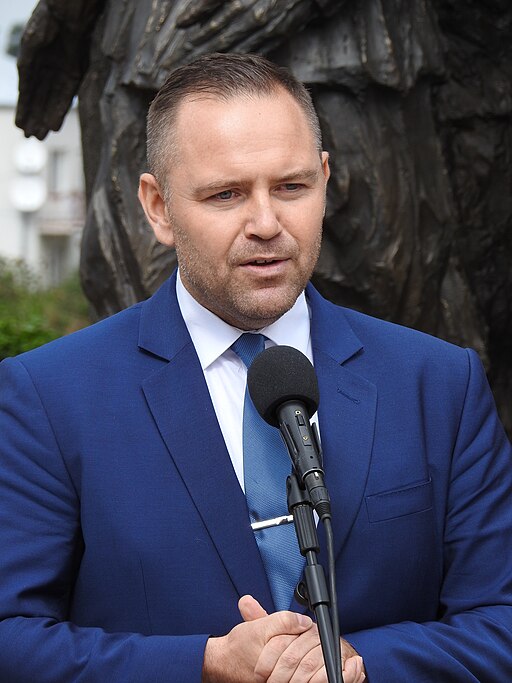
Yet politics plays in the backdrop of EU affairs, as Poland this morning swore in Karol Nawrocki as its new president of the nationalist Law and Justice (PiS) party.
Tensions are expected to escalate between Nawrocki and Polish Prime Minister Donald Tusk, whose pro-European Civic Coalition government is working to roll back former PiS-era laws and bring Poland closer in line with Brussels. Nawrocki, known for defending a conservative vision of Polish identity, is unlikely to support such moves.
The divide goes beyond symbolism. Sharp disagreements are emerging over immigration policy, the adoption of EU laws, defence spending, economic planning, and energy strategy. Brussels watches closely as political infighting combined with culture war dogmas threaten to reshape both the ambitions and identity of Europe’s fastest-growing economy and its ties with neighbouring states.