Banks would still need to settle who is liable when an agent acts within its mandate but causes a loss, Deutsche Bank and Ant Digital say.

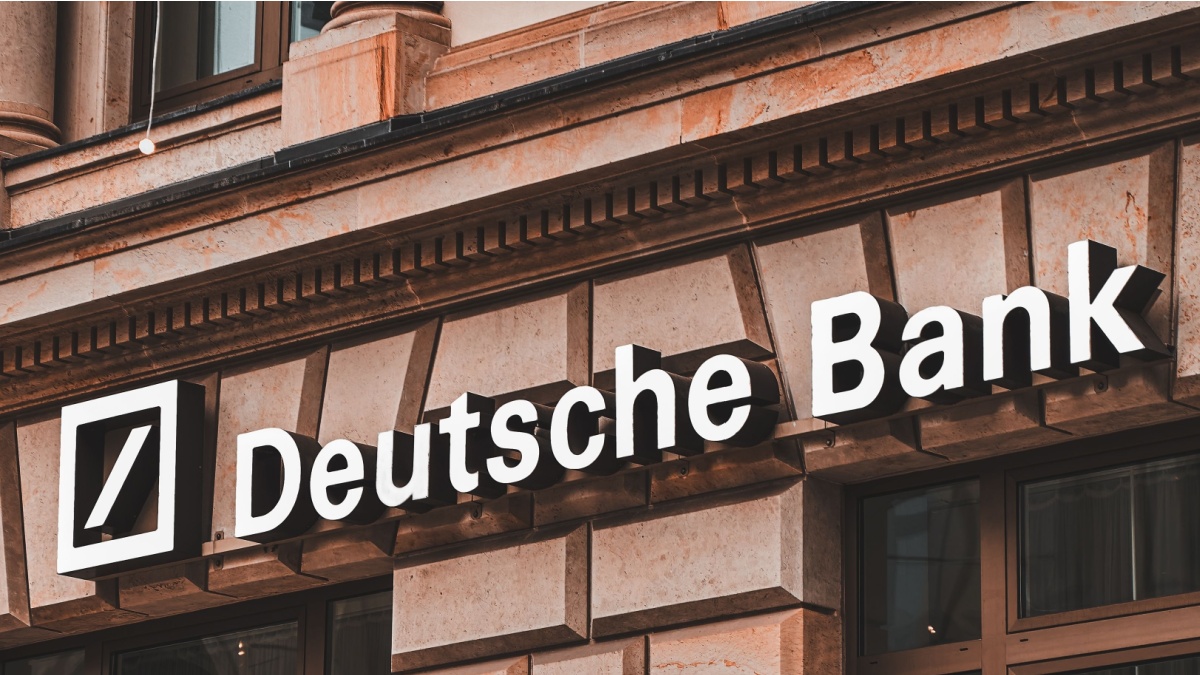
AI agents used in corporate treasury, cross-border payments and trade finance should not be able to approve and execute a payment on their own, Deutsche Bank and Ant Digital Technologies have said in a joint white paper.
The position aligns the two firms with the International Monetary Fund (IMF). The IMF argued in April that payment infrastructure should remain rule-based, with AI agents limited to deciding and coordinating transactions.
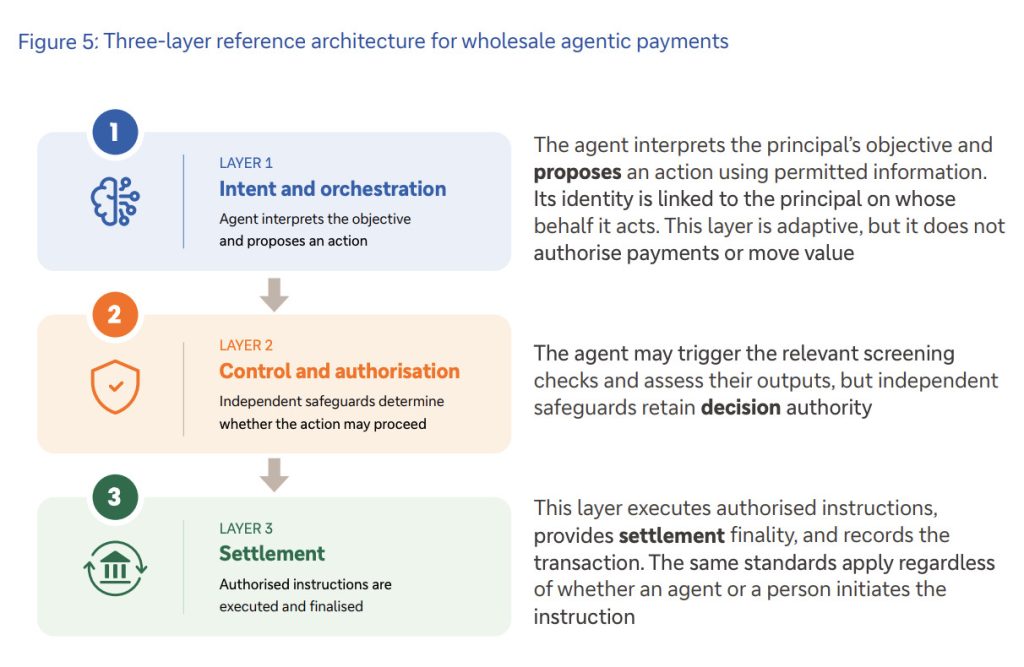
The paper, Agentic Payments in Wholesale Finance, adopts the IMF’s three-layer model. Under the model, an agent proposes a transaction and independent controls decide whether it goes ahead.
“The agent supplies judgement, while independent institutional safeguards supply permission,” the paper said.
AI agents: a mandate is not enough
When ING, Worldline and Mastercard completed an end-to-end agentic transaction in June, the payment went through only after the customer approved it. The Deutsche Bank and Ant Digital AI agent model would remove this step for routine wholesale payments which stay within an agent’s mandate and pass every control.
Because wholesale transactions involve large values and several counterparties, the paper argues a mandate granted once cannot cover every payment that follows.
Account eligibility, sanctions status, credit exposure and pricing can all change after an agent receives its authority.
Each payment it proposes would therefore be checked against current conditions at the moment of execution. Human approval would remain for high-value, high-risk and exceptional transactions.
The paper also warns banks against relying on an agent’s account of its own decisions. It cites research showing AI systems can mislead, leave out information or behave differently when monitored.
Deutsche Bank’s own AI agent deployments match the split proposed in the paper. In trade finance, the bank has rolled out AI vetting of bank guarantee wording in Germany, while sanctions, anti-money laundering and credit decisions stay with its control teams.
Sabih Behzad, Head of Digital Assets and Currencies Transformation at Deutsche Bank, said the paper’s three use cases “are value hypotheses to be assessed, not established outcomes.”
At present, no dedicated regulatory regime covers agentic payments; they all fall under existing rules on AI, payments, financial crime, data protection and operational resilience.
Banks would therefore have to work out for themselves when an instruction generated by an agent is legally attributable to the client.
They would also need to decide how responsibility splits between the client, the employee overseeing the agent, the agent’s operator, the executing bank and the settlement operator.
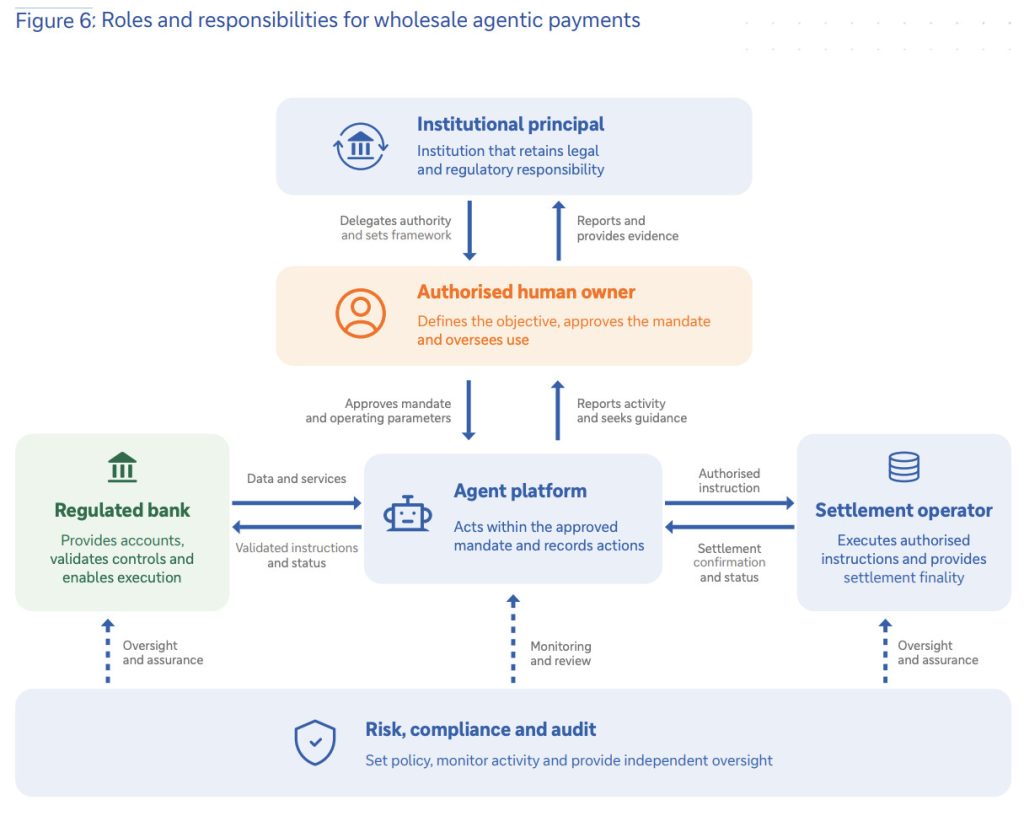
The report suggests these arrangements should also cover cases where an agent stays within its mandate but produces a commercially adverse outcome.
Ant Digital’s bank tests
For Ant Digital, the paper is its second collaboration with a global bank in a month.
The company tested its Anvita Flow agent-to-agent network with HSBC’s Tokenised Deposit Service in October.
Anvita Flow ties each agent to a verified institution and keeps signing credentials and settlement controls separate from the AI model. Its settlement is compatible with the x402 standard, and its mandates follow Google’s Agent Payments Protocol (AP2).
Zhuoqun Bian, President of Blockchain Business at Ant Digital Technologies, wrote in the foreword: “Decision-making, control, and execution must be separated, so that an agent may propose but cannot extend its own authority.”
The paper describes Anvita Flow as an example of how the architecture could work rather than a recommended platform.