Sarah Breeden says that stablecoins and tokenised deposits could offer the benefits of a CBDC to retail customers, as the Bank of England nears its 2026 decision
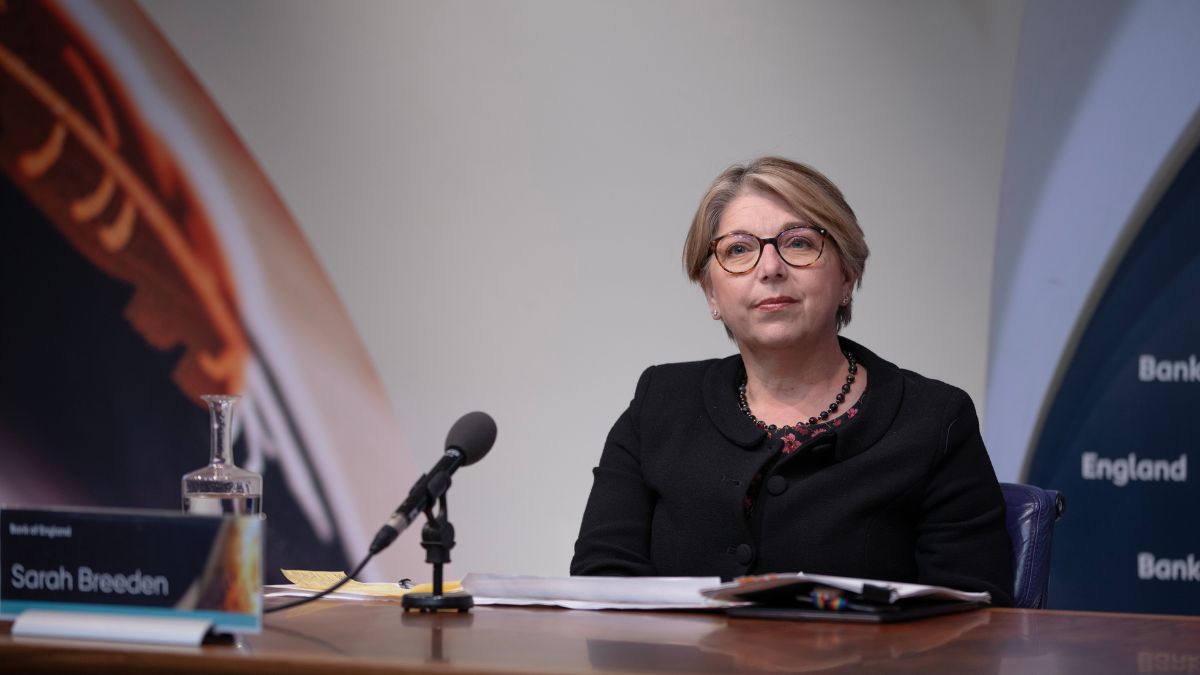
Sarah Breeden, Deputy Governor for Financial Stability at the Bank of England (BoE/The Bank), has said that the UK may not need a digital pound for retail users “that quickly”, as private forms of digital money could offer the same benefits.
Breeden made these remarks during an Atlantic Council event on the sidelines of the annual meetings of the International Monetary Fund (IMF) and the World Bank in Bangkok. She said that the need for a central bank digital currency (CBDC) for households depends on whether the benefits of tokenisation and innovation can also be realised in other ways.
Stablecoins denominated in British pounds issued by regulated firms and tokenised deposits issued by commercial banks could fulfil that role, according to Breeden. “Does it necessarily have to be central bank money that takes the lead?”, she asked.
The Bank of England and HM Treasury have been conducting a design phase for a digital pound since 2023. The Bank has indicated that it will announce its decision on whether or not to proceed with the project in 2026, alongside a blueprint for the digital pound and a joint assessment with HM Treasury. According to the Bank’s October 2025 update, Parliament would first need to pass primary legislation before the digital pound could be introduced.
The Bank’s most recent progress report states that the decision will involve weighing up whether to proceed with a digital pound or to place greater emphasis on other initiatives to modernise the UK’s payments system. The Bank has also indicated that neither it nor the government would be able to programme digital pounds or restrict how they are spent.
Bank of England: Share of central bank money falls

The share of central bank money has fallen from two-thirds of transactions in the UK economy to 8%, according to Breeden. “Does that matter? Is the UK monetary system now disconnected because central bank money no longer plays such a significant role?”, she asked.
Breeden said she is aiming for a “multi-currency system” in which cash, bank deposits, tokenised deposits, stablecoins and a CBDC – should one be issued – can be exchanged at par with one another.
She outlined the same model during City Week in London in May, when she said that the future retail payment system should include interchangeable forms of money: tokenised deposits, stablecoins and possibly a CBDC.
The Bank of England is working on an upgrade to its Real-Time Gross Settlement (RTGS) system so central bank money can serve as the settlement medium for transactions on the UK financial markets.T he change would ensure “24/7 instant settlement”, while central bank money remains at the heart of the process, Breedan said.
In May, the Bank proposed extended opening hours to support cross-border payments and securities settlement as tokenisation continues to develop.
Rules for stablecoins by the end of the year
Breeden said the Bank of England wants UK firms to develop successful stablecoins denominated in pounds sterling, so that domestic users are not reliant on dollar-denominated tokens.
“I don’t want citizens and businesses in the UK to only have access to innovative payment technologies by using dollar-denominated stablecoins. That would be madness,” she said. “I want to ensure that such innovation is also possible in our national currency.”
On 22 June, the Bank of England published its policy statement and draft code of conduct for pound-denominated systemically important stablecoins. The rules have removed the holding limits proposed in November 2025, which would have restricted individuals to £20,000 ($26,000) and businesses to £10m per stablecoin. These have been replaced by a temporary issuance cap of £40 billion per systemically important stablecoin.
Systemically important issuers may hold up to 70% of their cover reserves in interest-bearing government debt, an increase from the 60% in the previous proposal. The proportion that must be held as non-interest-bearing deposits with the Bank has fallen from 40% to 30%.
HM Treasury determines whether a stablecoin is systemically important, based on factors such as its size and use cases. Stablecoins used for non-systemically important purposes, including trading in crypto-assets, fall outside the Bank’s supervisory framework and are supervised exclusively by the Financial Conduct Authority.
The consultation on the draft rules closed on 22 September, and the Bank has indicated that it intends to finalise the code of conduct by the end of 2026.