EthioPay-IPS adds to Africa’s 36 instant payments systems, but converting 140m accounts into active usage remains the continent’s biggest challenge
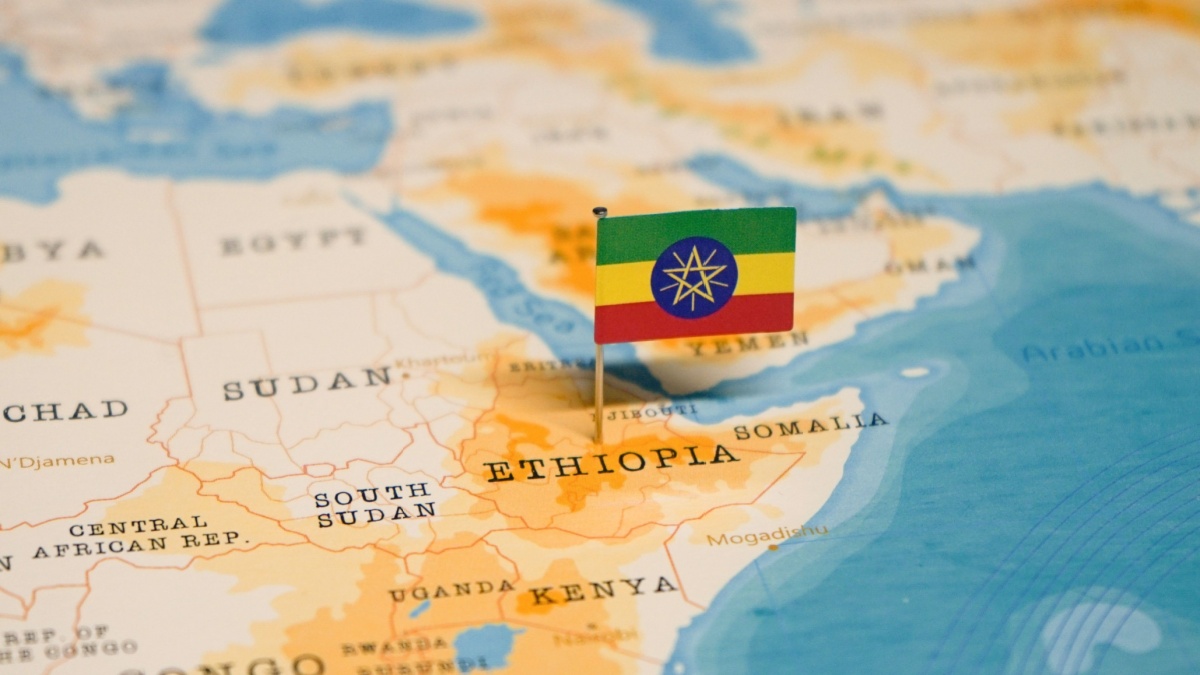
Ethiopia’s national switch, EthSwitch, has launched Ethiopay-IPS – the country’s first national instant payment system.
Unveiled at the Ethiopia Digital Payment Conference 2.0 in December 2025 but formally announced on 12 February 2026, Ethiopia-IPS connects 32 banks, 12 micro-finance institutions, and six other payment service providers on BPC’s SmartVista platform.
EthSwitch selected BPC, a Swiss-headquartered fintech firm, to power Ethiopay-IPS. BPS offers a ‘future-proven foundation’ which means international certification standards while addressing local market needs.

Instant payments is a significant development to Ethiopia’s infrastructure and will enable its population of 120 million to complete A2A transfers, QR payments, and recurring transactions.
“Our goal is to provide simple, affordable, secure and efficient digital payment infrastructure to every retail payment provider and through them, to every Ethiopian,” said Abeneazer Wondwossen, Chief Portfolio Officer at EthSwitch.
“With SmartVista, we have built an interoperable nation-wide ecosystem for instant payments that is locally governed, future-ready and open to innovation. This launch is a point of pride for Ethiopia and a milestone for our financial sector.”
Scaling Africa’s domestic instant payments systems
The launch comes as part of Africa’s rapidly scaling instant payment infrastructure.
According to AfricaNenda’s 2025 State of Inclusive Instant Payment Systems (SIIPS) report, the continent’s 36 active instant payment systems processed 64 billion transactions worth nearly $2tn in 2024. Per the data, transaction volumes have grown at an average annual rate of 35% since 2020.
Ethiopia now joins 30 other African countries in operating real-time payment rails, with five new systems launched in the past year alone.
Yet Ethiopia’s journey illustrates both the promise and complexity of digital payment adoption. Despite having EthSwitch infrastructure connecting its banks for years, the country’s financial inclusion progress has been modest – account ownership grew from just 46% to 49% between 2021 and 2024, according to Global Findex data.
Ethiopia’s challenge has been converting registration into usage: while the country boasts 140 million mobile money accounts, only 15% are active, according to the National Bank of Ethiopia.
Can Africa’s instant payment systems converge?
The more pressing question for Africa isn’t just domestic adoption – it’s whether these national systems can truly connect.
Cross-border payments in Africa still average 7.4% to 8.3% in fees, far exceeding the G20 target of 3%. Some corridors, like South Africa to Zimbabwe, see remittance costs as high as 12.7%, according to International Monetary Fund (IMF) diagnostics.
Settlement delays of 3-7 business days remain standard, tying up working capital that businesses often need to stay liquid.
Regional platforms are attempting to create local cross-border links, such as the Pan-African Payment and Settlement System (PAPSS), which now connects 17 countries and over 150 commercial banks.
Elsewhere, West Africa’s Central Bank of West African States (BCEAO) has launched real-time interoperability across eight West African Economic and Monetary Union (WAEMU) countries, allowing for bank-to-wallet and wallet-to-wallet transfers.
The Southern African Development Community operates the payments scheme Transactions Cleared on an Immediate Basis (TCIB) across six corridors using ISO 20022 standards. In July 2025, the East African Community and The Intergovernmental Authority on Development (IGAD) held a joint workshop in Addis Ababa focused explicitly on payment systems interoperability.
However, these initiatives must deal with interoperability issues, as licensing regimes vary widely across jurisdictions, compliance rules are inconsistent, and approval timelines can stretch up to three years.
Most critically, regulatory fragmentation means Africa’s 54 countries operate largely independent payment systems with limited interoperability, each requiring businesses to navigate separate frameworks.
“There is a clear divide between digitally mature payment ecosystems and markets still dependent on legacy banking infrastructure. East Africa has long been mobile-first,” says Walé Abidakun, Global Expansion Officer at Payfuture.
“West Africa, particularly Nigeria and Ghana, has aggressively expanded account-to-account instant systems. Southern Africa is modernising bank-led infrastructure. Meanwhile, several North African markets are accelerating digitisation through central bank-led reforms.
“At a continental level, initiatives like the Pan-African Payment and Settlement System (PAPSS) are designed to enable intra-African cross-border settlement without routing through USD correspondent banking. That signals there being political will for regional interoperability. But operationally, implementation is uneven.”