Cross-border payment processing involves multiple systems, currencies and financial institutions to move money between countries.
Sending money across borders means pushing funds through a web of regional systems and middleman institutions before anything arrives.
Technology has sped the process up, but moving money globally takes a lot more work than sending funds from one account to another.
There are foreign exchange (FX) rates, gateways, correspondent banks and compliance checks all running simultaneously, as well as different banking systems and local regulations that introduce extra fees and delays.
How does cross-border payment processing work?
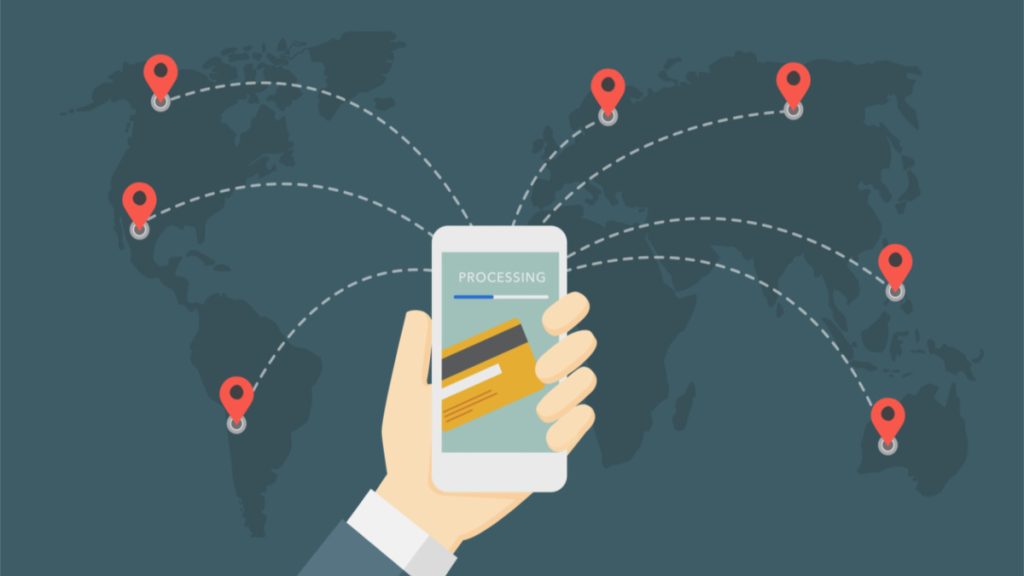
Cross-border payment processing is the underlying tech and financial infrastructure that lets money travel between a sender in one country, to a recipient in another.
This could look like taking an online card payment from a shopper in Europe, waiting on an invoice wire from a vendor in Asia, or collecting payouts through an e-wallet. The exact journey varies by payment method, but everything starts when a buyer hits pay on an online checkout, mobile app or virtual terminal.
Card payments head straight through a payment gateway, which encrypts the buyer’s details and passes the payload over to the payment processor.
The network routes the transaction to the cardholder’s issuing bank, which runs a check to verify available balance or credit lines, analysing suspicious activity and making sure security protocols match up before approving the charge.
An approval locks in the funds, but the money still hasn’t landed in the business account because the transaction has to pass through clearing and settlement, where the financial institutions involve trade batch files, reconcile the balance and send the funds over.
FX conversion adds another layer of work whenever two currencies are involved. A bank or broker steps in to convert the money into your payout currency, applying live FX rates and taking a cut through conversion markups.
Cards, wire transfers and local digital wallets all follow different paths depending on which jurisdictions and financial institutions sit along the route.
The key players in an international payment transaction
An international transfer can pass through half a dozen entities, each responsible for handling a different part of the process.
At the start stands the merchant selling the product, the buyer funding the order, and the issuing bank holding the customer account and authorising the charge. Beside them sits the payment gateway, acting as the plumbing between the checkout page and the financial network.
Deeper in the stack, the payment processor and acquiring bank route transaction data and settle the cash into the merchant account. Card networks and correspondent banks bridge the gap between financial systems in different countries and FX providers handle the currency swaps.
No two payment methods are the same, meaning a credit card payment through a global gateway moves through different rails than a SWIFT bank transfer moving through intermediary accounts.
Working with the right processing partners dictates which countries a business can sell into, which local currencies they can take and how many days they have to wait to get paid.
Challenges and costs of cross-border payment processing
Selling internationally opens up global demand, but also brings a plethora of operational hurdles and hidden costs compared to domestic payments.
Selling in one currency and getting paid in another means conversion rates affect revenue, especially when banks inflate the exchange rate with added fees.
International processing also brings a long tail of line items, including cross-border card surcharges, acquirer fees, correspondent banking deductions and intermediary routing costs that change depending on the region and payout route.
Settlement speed is another friction point as a credit card authorisation takes a split second, but the actual payout can sit in limbo for days while different time zones, central banks and networks clear the funds.
Traditional correspondent banking wires are known for this, usually taking several business days to move from point A to point B.
Compliance and risk controls add even more drag because processing partners have to run automated sanctions checks, verify anti-money laundering (AML) protocols and comply with local data residency laws for each jurisdiction they pass through.
Varying rules around chargebacks, consumer rights and fraud liabilities across borders can also make dispute management much more complex to handle.