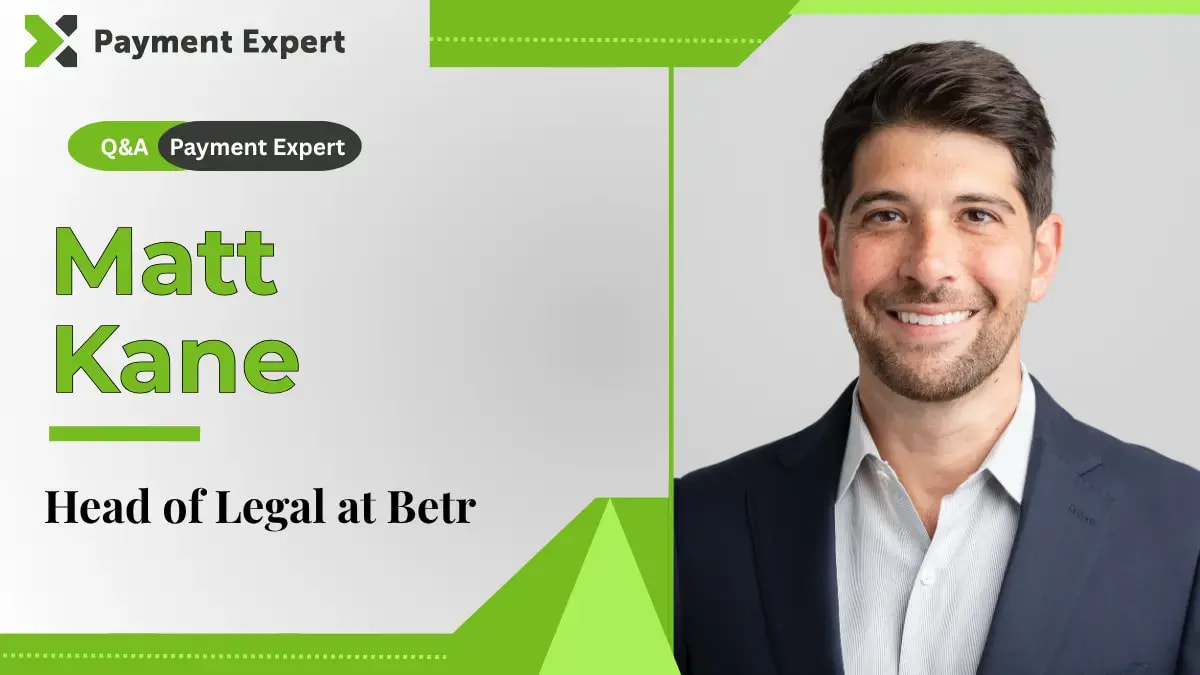
Ahead of speaking at SBC Summit 2026 in Lisbon, Matt Kane, Head of Legal at Betr, explains how some of its dual-currency and other gaming products need alignment of correct regulatory controls.
Should betting and gaming operators that sit outside the traditional norms either alter or lower their AML, KYC and fraud controls?
Matt Kane, Head of Legal at Betr, explains why a foundational sports betting compliance framework has become the bedrock for Betr to offer alternative gaming products, such as Gold/Sweeps Coins, while modernising card schemes and protecting payment rails with additional compliance controls.
Kane also explains why card networks can often misjudge alternative gaming products as potential fraudulent transactions, why payment and acquiring banks should be aware of risk-based underwriting, and how operators like Betr can create sustainable, long-term authorisation rates to balance out the payment partner relationship.
Betr spans social gaming, arcade formats and prediction markets. How complex is it to manage payments and banking across products that fall outside traditional gambling definitions?
It’s definitely complex, but I think we came into it with an advantage. Betr’s compliance program was built first in the regulated online sports betting world, where the standards around licensing, KYC, AML, payments, responsible gaming and regulatory oversight are extremely high.
When we expanded into other verticals, we made a conscious decision not to lower that bar just because the regulatory framework was different. The product classification may change, but a lot of the underlying risks don’t.
So our approach has been to start with the standards we know from regulated gaming and then determine how they should apply to each product. Robert Warren, our Head of Compliance, and his team deserve a lot of credit for turning that philosophy into processes that actually work across the business. It gives us a strong foundation when we enter a new vertical instead of having to reinvent our approach each time.
Emerging formats like sweepstakes face hesitation from tier-one acquirers. What’s the biggest misunderstanding when educating payment partners on these business models?
I think the biggest misconception is that a different regulatory framework necessarily means a less sophisticated compliance environment. It doesn’t have to.
A sweepstakes operator can have strong KYC, AML, sanctions, fraud and transaction-monitoring controls even if the law doesn’t mandate all of them in exactly the same way it would for a sportsbook.
That’s the conversation we try to have with our banking and payments partners: don’t judge the risk simply by the product label – look at the operator and the controls behind it
Dual‑currency models like Gold/Sweeps Coins create extra AML risks. How can operators monitor speed, flow and suspicious patterns without ruining onboarding conversion?
It comes down to being risk-based. Good AML shouldn’t mean making every legitimate customer jump through unnecessary hoops. It means knowing where the risk is and applying more scrutiny when the activity warrants it.
At Betr, we start with customer identification and KYC, but the work doesn’t stop at onboarding. You need to understand how the account is actually being used – things like the velocity and pattern of purchases and redemptions, rapid cycling of funds, or activity that simply doesn’t make economic or behavioral sense.
That lets you keep the experience relatively seamless for the vast majority of customers while focusing compliance resources where the actual risk is.
Chargebacks are a major headache for alternative gaming products. How do your legal and payments teams work together to protect card rails while keeping approval rates high at checkout?
Legal, Compliance and Payments really can’t operate in silos here. Protecting payment rails means balancing the customer experience with the risk being taken by the processor or acquiring bank.
We’re constantly looking at where fraud and abuse are occurring and combining what each team sees – compliance has customer behaviour and financial crime data, payments has authorisation and processor data, and legal makes sure the overall framework works for the product and our obligations.
And I don’t think the goal should simply be the highest possible approval rate. If you maximise approvals but create excessive fraud, disputes or chargebacks, you’ve won the wrong battle. The goal is sustainable approval: make it easy for legitimate customers to transact while identifying the activity that puts the payment relationship at risk.
How would you like to see card schemes and payment networks update their risk frameworks to better support hybrid gaming models?
I’d like to see more risk-based underwriting and less reliance on broad product labels.
Two operators can offer products in the same category and have completely different risk profiles.
One can have sophisticated KYC, transaction monitoring, sanctions screening, fraud controls and experienced compliance personnel, while another may have very little of that infrastructure. It doesn’t make much sense to treat them identically just because they sit in the same product category.
I also think companies like Betr, which came into these newer verticals from a highly regulated gaming environment, have an opportunity to help set that standard. Emerging products shouldn’t mean emerging standards of compliance.
You’re speaking on “AML Readiness for Emerging Game Formats” at SBC Summit. What is the main takeaway you hope payment and compliance leaders get from your session?
The main takeaway is pretty simple: an emerging game format shouldn’t mean an emerging compliance program.
We built Betr’s compliance culture first in online sports betting, where we had to operate under rigorous standards around licensing, internal controls, KYC, AML, responsible gaming, audits and regulatory reporting. As we expanded into daily fantasy sports, sweepstakes, and skill-based games – with prediction markets and other products on the horizon – we made a deliberate decision to bring that discipline with us.
I’m also speaking on a panel at SBC about prediction markets and the debate over whether they constitute gambling. There’s an interesting connection between the two conversations. We can debate how a particular product should ultimately be classified, but operators shouldn’t use uncertainty around classification as a reason to apply a lower compliance standard. Whether it’s sweepstakes, prediction markets or another emerging format, the question should be: what are the actual risks, and are you building the controls to address them?
That’s really the broader lesson I’d like the industry – particularly operators in emerging categories – to take away: your regulatory classification shouldn’t determine the quality of your compliance program. There’s real value in adopting the discipline of regulated gaming before somebody forces you to do it. It protects customers, strengthens banking and payment relationships, builds credibility with regulators and, ultimately, creates a more sustainable business.
Held in Lisbon from 29 September to 1 October 2026, SBC Summit is one of the world’s largest gatherings of betting and gaming professionals.
The event will bring together 40,000 attendees from across the industry for three days of learning, networking, and discussion, alongside a major exhibition featuring leading brands from around the globe.
For more information and tickets, visit sbcevents.com/sbc-summit.