The stablecoin issuer’s reported engagement with KPMG marks a shift beyond attestations, placing its reserves and governance under full audit scrutiny for the first time.
Tether has reportedly appointed KPMG to conduct its first full independent audit, a move that would mark a significant departure from the stablecoin issuer’s long-standing reliance on periodic attestations.
In a statement published on March 24, Tether said “this audit marks a defining moment not only for Tether, but for the evolution of modern finance itself.”
If completed, the audit would represent the most comprehensive external review of Tether’s finances to date, covering not only the composition of reserves backing USD₮ but also the internal controls and systems underpinning its operations.
Tether has also reportedly brought in PwC to help it ready its internal systems for the audit.
For years, Tether has published quarterly attestations on its reserves, typically signed off by accounting firms but limited in scope. These reports confirm asset balances at a specific point in time, rather than offering the broader assurance associated with a full financial statement audit.
While attestations have become the norm across stablecoin issuers, they have not carried the same weight as audits in traditional finance, where firms are subject to ongoing scrutiny of controls, risk management, and accounting practices.
The company stated it had formally engaged a Big Four firm to undertake a full audit, describing the process as one of the most complex ever attempted given the scale of its operations and the mix of assets involved.
“This milestone reinforces Tether’s role as the category leader and its commitment to delivering the highest level of transparency, stability, and assurance available in global finance,” Tether stated.
In its latest attestation report, at the end of Q3 2025, Tether’s year-to-date net profit surpassed the $10 billion mark.
“This reconfirms Tether as one of the most profitable and financially sound privately controlled businesses,” the company said at the time. Excess reserves at $6.8 billion continued to act as a strong buffer.
Q3 2025 marked another milestone quarter for Tether, with over $17 billion in new USD₮ issued, representing one of the Company’s strongest performances to date, and bringing the total circulating supply to over $174 billion.
A balance sheet under the spotlight
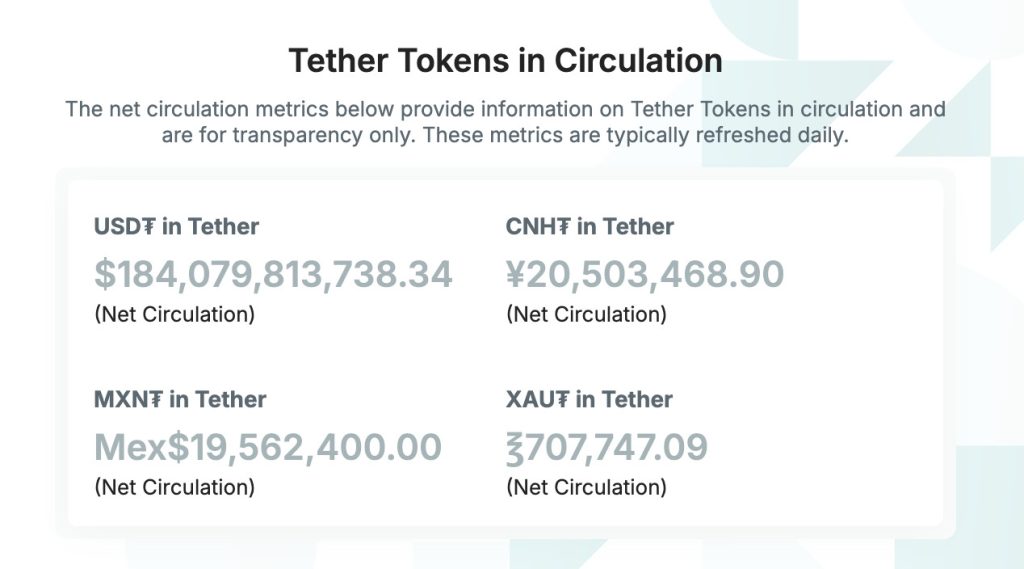
The company said USD₮ now exceeds $184bn in market capitalisation, with hundreds of millions of users globally.
Unlike traditional financial institutions, Tether’s reserves span a combination of short-term securities, cash equivalents, and other assets, alongside liabilities issued in the form of stablecoins. This structure has drawn sustained attention from regulators and market participants, particularly during periods of market stress.
Past disclosures have shown a gradual shift in reserve composition toward more conservative assets, including US Treasury bills, as the company sought to reinforce liquidity and reduce perceived risk. Tether has also highlighted retained earnings within its broader group as an additional buffer supporting stability.
The planned audit is expected to provide a more detailed view of how those reserves are structured and managed over time, rather than at a single reporting date.
A long-running transparency debate
Tether’s relationship with external scrutiny has evolved over the past decade.
The company has previously faced questions from regulators and critics regarding the backing of its tokens and the quality of its disclosures. Settlements with US authorities earlier in the decade led to commitments around improved reporting, including the publication of regular reserve updates.
Since then, attestations have become more frequent and detailed, forming part of a broader effort to demonstrate the robustness of its balance sheet.
However, calls for a full audit have persisted, particularly as stablecoins have become more embedded in global payments flows, trading infrastructure, and cross-border transactions.
In that context, moving to a full audit aligns Tether more closely with expectations placed on systemically important financial institutions, even if stablecoins themselves remain outside many traditional regulatory frameworks.
Regulatory pressure and market positioning
The timing of the reported KPMG engagement also reflects wider shifts in the regulatory landscape.
Authorities in the US, UK and EU have all advanced proposals or frameworks aimed at bringing stablecoins under formal supervision, with requirements typically centred on reserve quality, redemption rights, and disclosure standards.
At the same time, competition within the stablecoin market has intensified. Rivals have sought to differentiate themselves through regulatory alignment, transparency measures, or integration with banking partners.
Against that backdrop, a full audit could strengthen Tether’s position as the largest issuer, particularly if it provides the level of assurance institutional users and regulators have been seeking.