Nearly half of Gen Z and millennial scam victims lose money, against a third of boomers, LSEG’s survey of 21,000 adults across 14 markets finds
Younger consumers are losing money to scams more often than their parents and grandparents. London Stock Exchange Group’s (LSEG) Risk Intelligence global fraud survey of 21,000 adults across 14 markets found 49% of Gen Z and 47% of millennials lost money when targeted by a scam, against 32% of baby boomers.
Gen Z’s constant presence on digital channels gives scammers more openings to reach them, which LSEG identifies as the driver rather than any lack of savvy. Greater familiarity with technology does not translate into spotting scams when the volume of attempts is higher.
Where Gen Z lose money
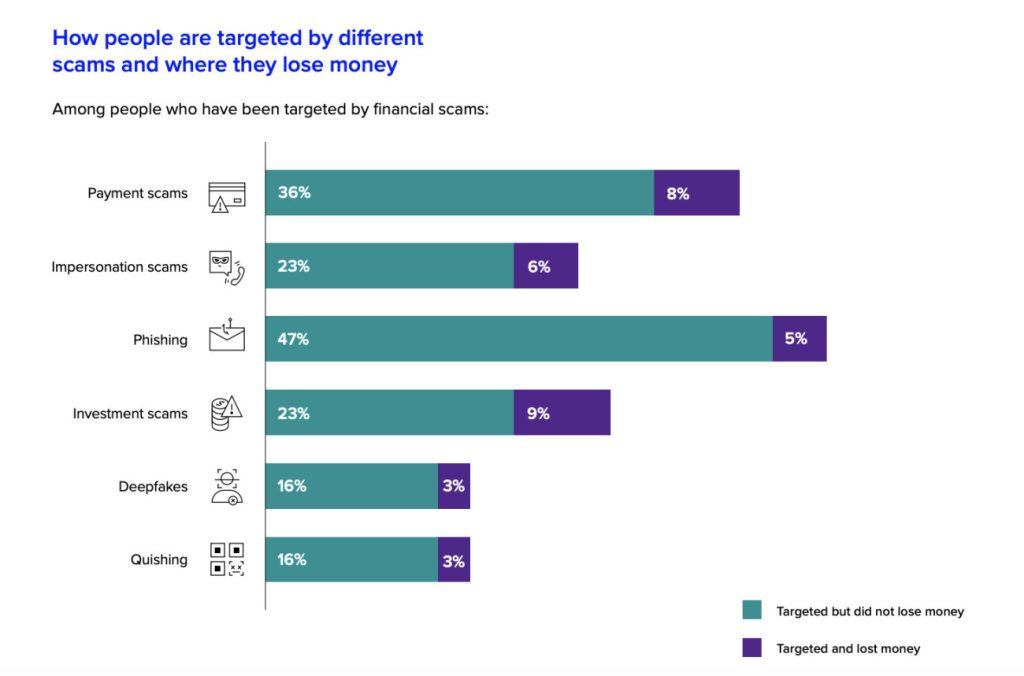
Gen Z records a 10% loss rate on payment scams, against 6% for boomers, and around 34% of those targeted encounter investment scams, which carry high loss rates across every age group. Younger respondents are also the most exposed to newer formats, with 25% reporting deepfakes and 23% quishing, the QR-code scams routing victims to fraudulent sites.
Millennials and Gen X face the steepest losses on investment offers, both recording 10% loss rates when pitched high-return opportunities. Boomers are targeted heavily, with 57% reporting phishing and 46% payment scams, but they convert those attempts into losses less often, a sign caution still counts even as it slows their use of newer channels.
Few victims know their rights
For payment providers, the most telling finding sits in how little consumers know about their own recourse. Just 13% of adults say they fully understand the protections or reimbursements available to them if scammed, and 28% are unaware of any protections at all. Among people scammed in the past two years, only 17% felt fully aware of their entitlements.
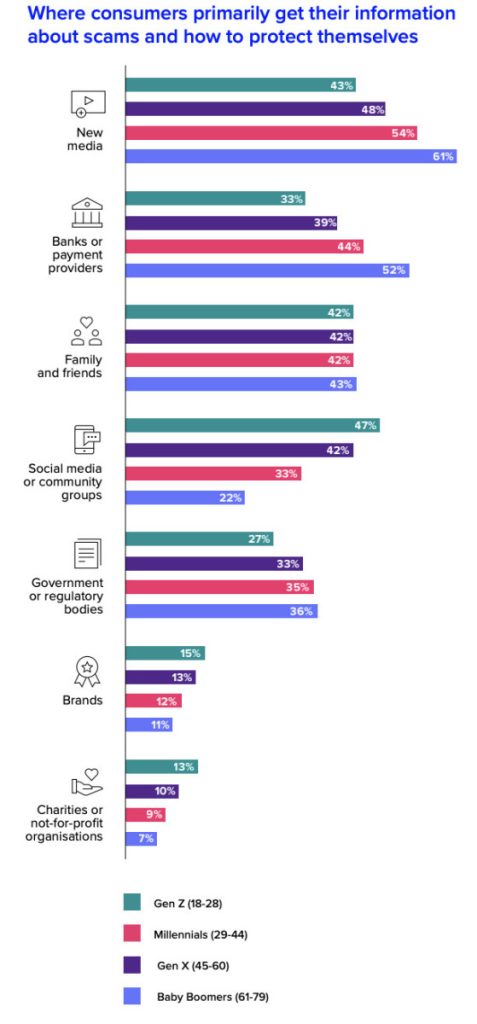
Of those who lost money, 58% described themselves as poorly educated about scams. Generations learn about fraud through different channels. 47% of Gen Z turn first to social media or community groups, while banks and payment providers are cited by 44% of Gen Z and 52% of boomers. Financial institutions therefore hold a direct line to older customers and a weaker one to the group losing money most often.
A mainstream threat eroding trust
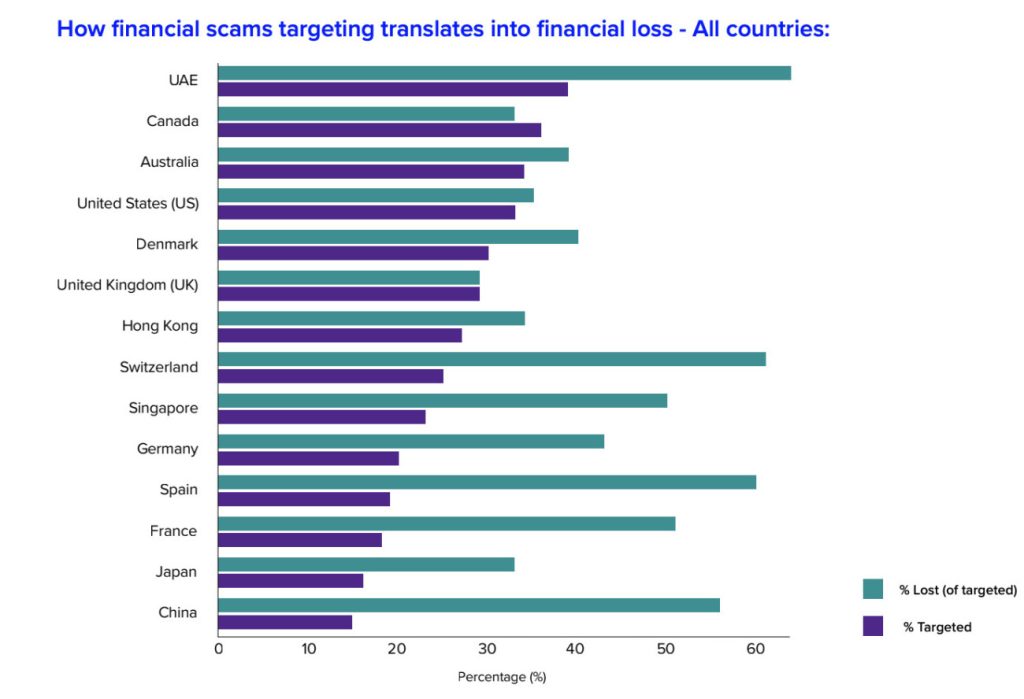
More than a quarter of adults (26%) say they were personally targeted in the past two years, and roughly one in nine worldwide has lost money in the same window. Exposure to fraud varies by market. Respondents in the UAE (39%), Canada (36%) and Australia (34%) were most likely to be targeted, while loss rates after targeting peaked in the UAE (64%), Switzerland (61%) and Spain (60%).
More than one in five adults, and two in five Gen Z, have encountered AI-generated images, voice clones or deepfakes, and 15% of victims took over a year to realise they had been scammed. 44% of people now trust calls from unknown numbers less after exposure to AI-generated content, complicating how banks and processors reach customers through established channels.
97% of victims say their habits changed after a scam, with 46% more cautious about online payments and 41% more guarded about sharing financial details. Anger and frustration were the most common emotional response (52%), and a third reported embarrassment or shame.
Banks, payment processors, fintechs, regulators and platforms should tailor education by generation and make reimbursement rights far more visible, according to LSEG’s recommendations. On the report’s own numbers, the customers losing money fastest are the least likely to hear the message through the channels institutions currently rely on.