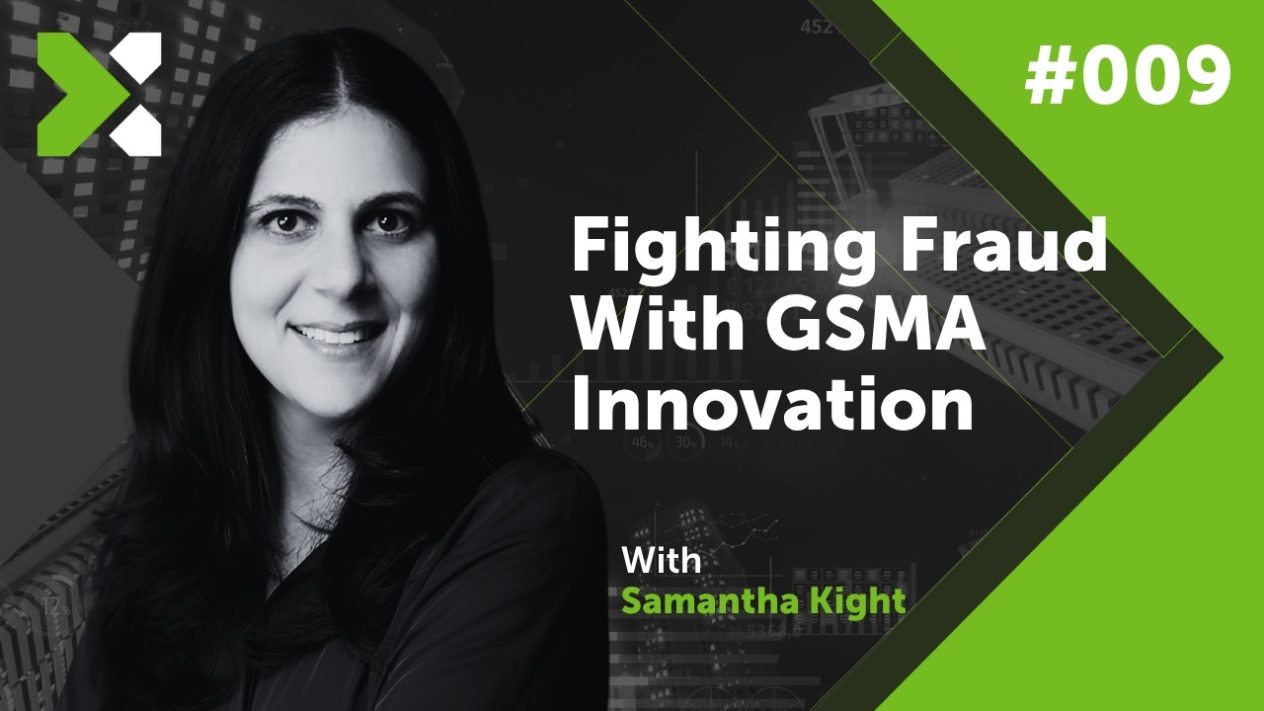
The Payment Expert Podcast is joined by Samantha Kight, Global Head of Industry Security at the GSMA, to discuss how mobile network intelligence is emerging as a powerful new layer in fraud prevention – and why cross-industry collaboration remains the industry’s biggest challenge
Fraud has never lacked for ingenuity. What it has increasingly found is infrastructure – industrial-scale tooling, democratised access to attack technology, and the kind of cross-border coordination that legitimate industries are still working to replicate on the defence side.
As APP fraud, SIM swap, and AI-enabled social engineering continue to scale, and the speed at which scammers move compared to how fast defenders can respond has become an urgent structural problem across industries. It’s an issue the GSM Association (GSMA), as the global association representing mobile network operators worldwide, believes the mobile ecosystem is uniquely placed to help close.

In the latest Payment Expert Podcast, Samantha Kight, Head of Industry Security at the GSMA, sets out how the mobile industry is working alongside banks, fintechs, and technology platforms to build a more joined-up defence.
The centrepiece of that effort is the GSMA’s Open Gateway initiative and its flagship anti-fraud API, Scam Signal.
Launched several years ago to give banks and fintechs access to standardised signals drawn from mobile network data, Scam Signal operates in real time: if a customer is on a phone call while simultaneously attempting a banking transaction – one of the most common hallmarks of an authorised push payment scam – the bank receives an immediate signal to assess whether to pause the interaction.
The system has gained particular traction in the UK, Brazil, and South Africa, and Kight argues it is most effective when combined with the bank’s own risk controls rather than used as a standalone decision engine.
GSMA: The interoperability challenge facing fraud defence
SIM swap detection and number integrity checks extend the API’s reach further up the fraud chain, helping institutions identify elevated-risk scenarios before a transaction is ever initiated. Kight says the signals are great informers, rather than a tool for determinate decisions, and is also clear about their value in strengthening the decision-making layer at the moment it matters most.
The GSMA’s innovation arm, the Foundry, is where newer concepts are being tested before they reach the network at scale. Kight highlighted two proofs of concept at different stages of development. One is Open Verifiable Calling, which would attach a verified business identity to incoming calls – the equivalent of a blue tick on the voice channel – so that consumers can trust that the entity calling them is legitimate.
The other is a digital identity authentication project developed with Telefónica Tech, which replaces knowledge-based verification at call centres with a SIM-linked digital ID check, cutting authentication time from four to five minutes down to roughly 30 seconds.
A third initiative, the Scams Data Exchange, extends collaboration explicitly to large technology platforms, using mobile-specific indicators to track how scams migrate from telecoms networks onto social media and messaging services.
Collaboration between sectors has improved markedly in recent years – the Global Fraud Forum, which drew a few hundred participants at its first edition, attracted over 1,300 at the most recent UN-hosted iteration – but the pace of scammer innovation continues to outrun institutional response times.
“I actually think the innovation part is key because scammers are always innovating,” Kight says.
SIM farms, SMS blasters, and phishing-as-a-service kits have lowered the barrier to entry for fraud so dramatically that the UN has estimated scams are now more lucrative than the drugs trade.
For Kight, the biggest structural obstacle is not technology or even willpower, but rather data-sharing regulation. Scammers operate across borders without friction; defenders are constrained by the question of what data can be shared, with whom, and under which legal framework.
Until that constraint loosens, she argues, cross-industry collaboration will continue to outpace the regulatory architecture designed to govern it.
The latest episode of the Payment Expert Podcast is available now on Spotify, YouTube, Apple Podcasts, and all major podcast platforms. Subscribe to the Payment Expert newsletter to make sure you don’t miss an episode.