The CLARITY Act cleared its first major Senate hurdle last month. Whether it clears the next depends on whether the crypto industry is willing to hold its regulators to the same standards it builds into its own technology

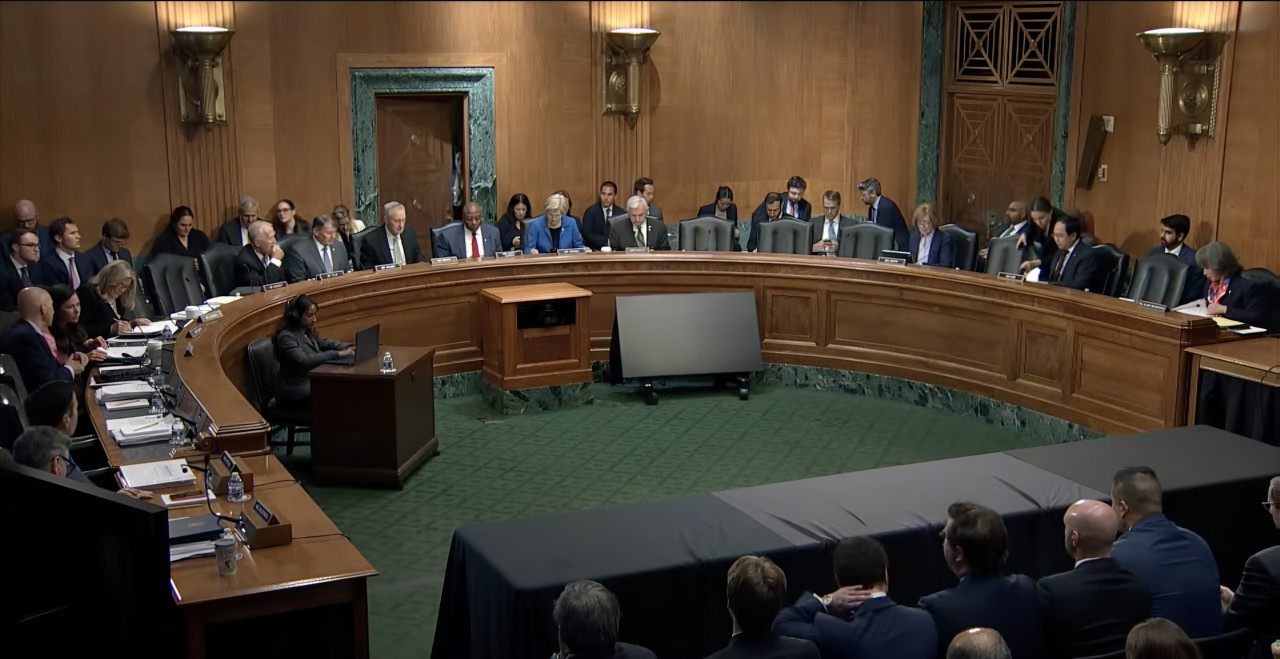
The 15-9 Senate Banking Committee vote on the CLARITY Act on 14 May was, by any measure, a landmark moment. For the digital assets industry, which has spent years navigating a fog of regulatory ambiguity, the sight of senators from both parties moving towards workable digital asset legislation felt like a hard-won vindication.
While Senator Warren’s opposition was largely anticipated, a quieter, more consequential story emerged in the aftermath. The bipartisan support that carried the bill was a conditional arrangement.
Senators Ruben Gallego and Angela Alsobrooks did not sign on out of enthusiasm for the technology. They signed on because specific commitments were made. And those commitments are precisely what the coming weeks will test.
The technical arguments are largely settled, with legislators and regulators now broadly grasping the distinction between a truly decentralised protocol and a centralised entity merely using the label. The debate around stablecoin yield has also moved meaningfully towards a workable compromise.
The agreement reached this spring, backed by the White House, bans passive yield paid simply for holding a dollar-pegged token, while allowing exchanges to offer rewards that are not the economic equivalent of bank deposit interest. That resolves one of the longest-running points of contention in digital asset regulation.
These are significant wins for developers and founders. But they are only one half of a larger structural shift currently underway in Washington.
Digital assets enter a new policy era
The Executive branch has fundamentally changed its position on the role of technology in finance. The recent Executive Order on integrating financial technology innovation into regulatory frameworks, signed on 19 May, signals a move from a policy of containment to one of active enablement.
The most consequential directive in the Executive Order is the instruction to the Federal Reserve to review access to payment accounts and settlement services for non-bank innovators. For those of us building the underlying rails, that is where the real opportunity lies.
It is a recognition that the contemporary financial landscape is no longer built around brick-and-mortar infrastructure.
As a former federal prosecutor, formal integration has always struck me as the more defensible long-term position. You cannot properly oversee what you have deliberately kept at arm’s length.
By bringing digital assets and stablecoins into the regulated core of the US financial system, we are moving towards an environment that is opportunity-rich precisely because it is governed by clearer and more sophisticated guidance.
For a network like Algorand, the decision to anchor our foundation in Delaware was a deliberate bet on regulatory clarity as a competitive advantage. The policy landscape now taking shape suggests that bet was well placed.
At the state level, Delaware’s pending legislation to license stablecoin issuers, Senate Bills 16 and 19, shows that states now compete to offer certainty. Capital follows the jurisdictions that provide it and ambiguity redirects it elsewhere.
What remains unresolved heading to the Senate floor is a governance question that the industry has been reluctant to confront because it is politically uncomfortable. The sticking point is the ethics provision Senator Kirsten Gillibrand is demanding, which would bar government officials from profiting from the digital asset industry. She has said there will be no bill without it.
Every other regulated sector operates within a framework of institutional credibility that includes conflict-of-interest standards for those overseeing it. A sector built on transparency should welcome the same standards for the officials who will oversee it, not resist them.
The White House has signalled a viable path to a presidential signature by the Fourth of July, and Senator Gillibrand has suggested a vote could come before the August recess. However, the clock is ticking faster than the calendar suggests. The legislative window has not widened.
If the Banking and Agriculture committees fail to announce a formal merger of their respective bills in the coming days, the window for a summer floor vote will effectively close. Senators Lummis and Moreno have already warned that failure now could push the next viable legislative window to 2030.
The CLARITY Act is not a perfect piece of legislation. No bill of this complexity, negotiated across this many competing interests, ever is. But it provides the developer protections and jurisdictional clarity that the industry requires for long-term planning, and it deserves to be fought for on those terms.
Aligning our political advocacy with our technical principles is the most credible argument we can make for blockchain’s role in the future of finance. We have built technology that is transparent by design and auditable by default. The regulatory framework now taking shape around it should meet the same standard. The coming weeks will determine whether the people advocating for this technology can show the same rigour in Washington that they demand from their code.
Jennie Levin is Chief Legal and Operating Officer at the Algorand Foundation and a former Assistant United States Attorney.