Delaware is updating its financial laws to modernise corporate and digital asset regulation, less than a year after Coinbase relocated to Texas.
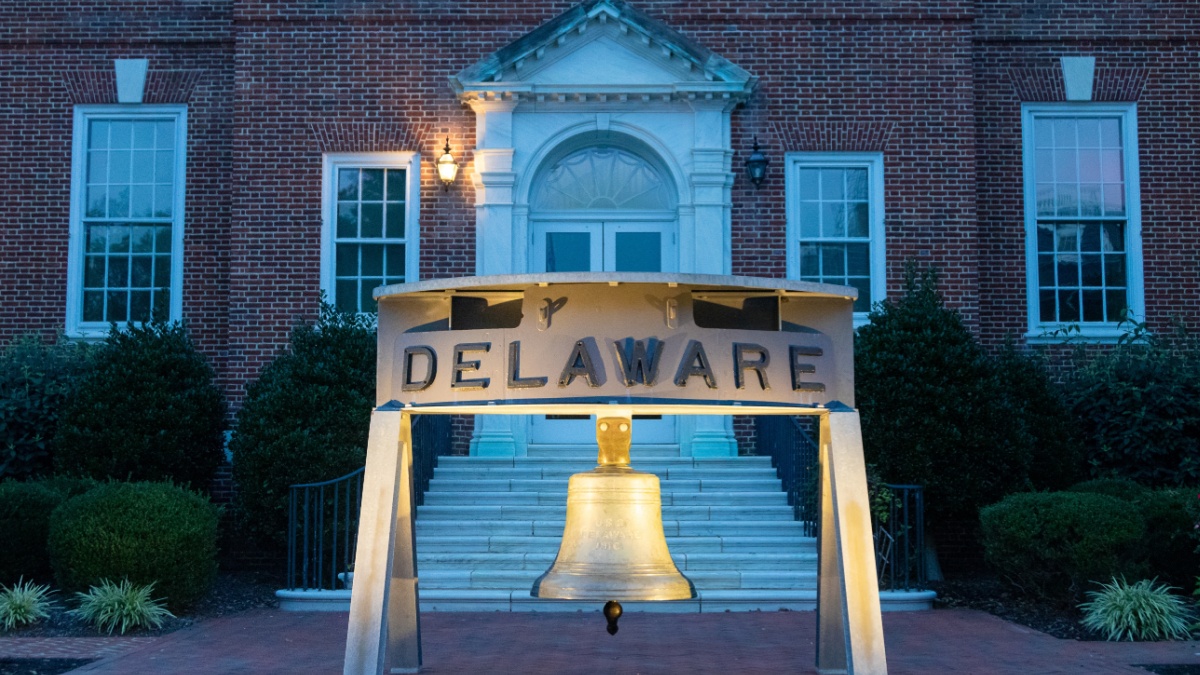
Delaware lawmakers have introduced two new bills to revamp the state’s banking framework and establish a regulatory regime for payment stablecoins.
Senator Spiros Mantzavinos, Senator Brian Pettyjohn, Representative William Bush and Representative Jeffrey Spiegelman are sponsoring the proposals, which were released on 23 March and will require approval before becoming law.
The first bill, SB16, titled the Delaware Banking Modernization Act of 2026, focuses on updating Delaware’s existing banking code, including new definitions for digital assets and expanded authority for the State Bank Commissioner.
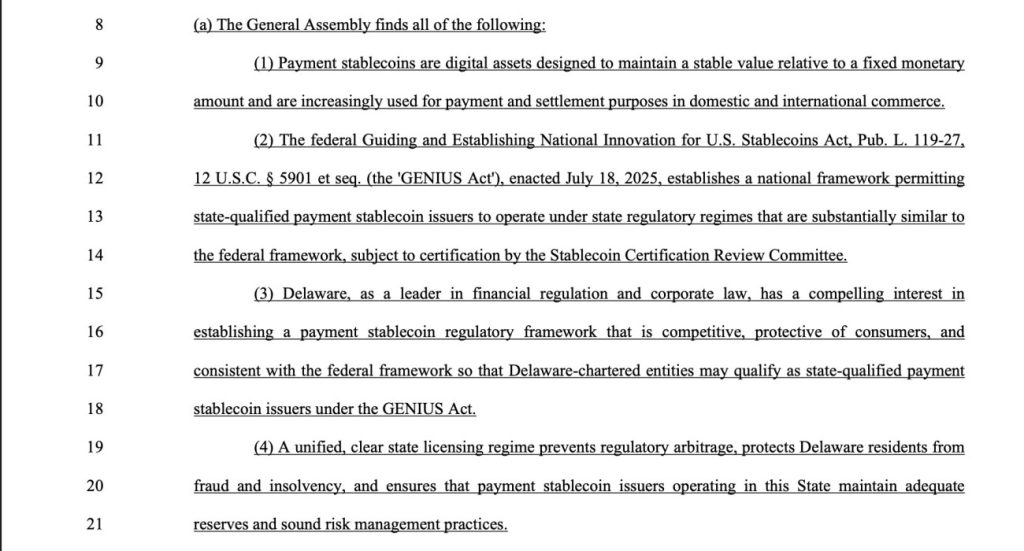
The second bill, SB19, would establish a new chapter in state law known as the Delaware Payment Stablecoins Act. It lays out the General Assembly’s intent to align Delaware’s approach with the federal GENIUS Act and to create a licensing and supervisory regime for payment stablecoin issuers and digital asset service providers.
Updating banking and digital assets
SB16 updates Title 5 of the Delaware Code, which covers banks and trust companies chartered in Delaware.
The bill adds new definitions for “Digital Asset” and “Virtual Currency.” A digital asset is defined as “any digital representation of value which is recorded on a cryptographically‑secured distributed ledger,” while virtual currency is described as a digital representation of value used as a medium of exchange, unit of account or store of value.
The law also gives more power to the State Bank Commissioner, allowing the office to “contract for and procure… consulting, legal and other technical and professional services” when needed. This provides the regulator with more flexibility in overseeing companies involved with digital assets.
Another significant change is “personal property includes digital assets.” This is aims to provide support for trust companies and custodians which manage digital assets within Delaware.
The bill also seeks to simplify the process for out‑of‑state trust companies to merge with or convert into Delaware entities.
A full regulatory regime for payment stablecoins
SB19 is a much more expansive proposal, establishing a licensing and supervisory framework for payment stablecoin issuers and digital asset service providers operating with Delaware residents.
The bill defines a payment stablecoin as a digital asset used for payments where the issuer is “obligated to convert, redeem, or repurchase for a fixed amount of monetary value.”
It also creates three licence categories: a Payment Stablecoin Issuer Licence, a Digital Asset Service Provider Licence, and a Combination Licence for firms operating in both activities.
According to the legislation, issuers would be required to maintain 1:1 reserve assets, comply with anti‑money laundering rules, undergo cybersecurity and smart‑contract audits and meet redemption timelines of two business days under normal conditions.
The bill also gives the Commissioner the power to regulate and overrides any conflicting local laws, with the aim of providing a clear and consistent system for stablecoin operations.
If it sounds awfully familiar to the federal GENIUS Act, that’s because SB19 is designed to align with it. The proposal enables Delaware‑licensed issuers to qualify as state‑approved stablecoin issuers under federal standards.
Delaware’s history with crypto firms
The legislative push comes less than a year after Coinbase relocated its legal home from Delaware to Texas in 2025.
At the time, the company noted regulatory unpredictability as the main reason for its decision. “Texas’ corporate legal framework offers the right mix of efficiency, predictability, and fairness to be our home for incorporation,” said Coinbase’s Legal Officer Paul Grewal.
Delaware had historically been known as the leading state for corporate and financial services, making this relocation a significant setback.
Coinbase wasn’t the first headline departure, however. Elon Musk, who recently entered the payments space with X Money launching in April 2026, moved his companies from Delaware to Texas after a judge at Delaware’s Court of Chancery denied his $56bn pay package in 2024.
“Companies should get the hell out of Delaware,” Musk wrote on X at the time.
The introduction of SB16 and SB19 can be seen as part of Delaware’s effort to rebuild its reputation as a business-friendly state.
As SB19 states: “Delaware, as a leader in financial regulation and corporate law, has a compelling interest in establishing a payment stablecoin regulatory framework that is competitive, protective of consumers and consistent with the federal framework.”