A bipartisan agreement on stablecoin incentives has moved the Digital Asset Market Clarity Act closer to Senate markup, though banking groups warn the language still falls short
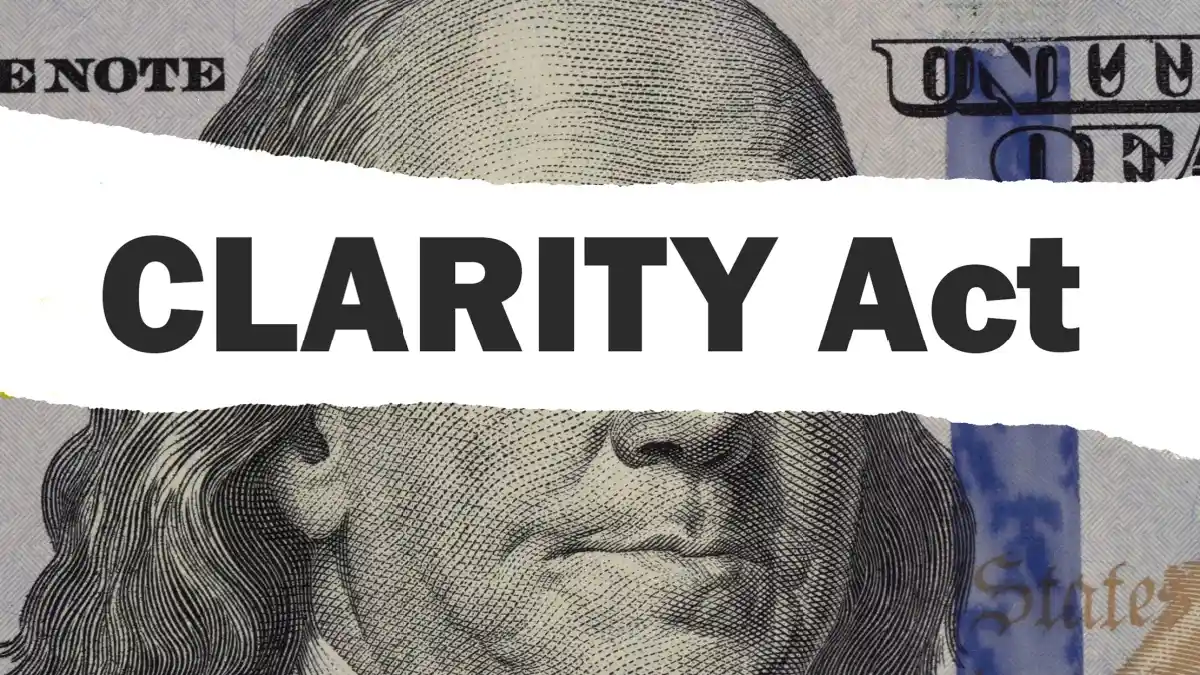
The Digital Asset Market Clarity Act has moved closer to passage after a bipartisan compromise on stablecoin yields resolved a key sticking point between lawmakers and the banking industry.
Senators Thom Tillis and Angela Alsobrooks reached an agreement which would prohibit stablecoin rewards from resembling interest on bank deposits, while still allowing crypto firms to offer alternative forms of incentives.
The breakthrough has cleared the way for the Senate Banking Committee, led by Tim Scott, to consider the bill in a markup session expected as soon as mid-May, following the House’s passage of its own version last year.
Tillis said the compromise reflected months of engagement with stakeholders across the financial system: “@Sen_Alsobrooks and I have worked on a bipartisan basis with all stakeholders to address the banking industry’s concerns about deposit flight. They have had a seat at the table and have been directly sharing their feedback and ideas for months to inform the final product.”
He added: “The result is a substantially improved, consensus-based product. Our compromise prohibits stablecoin rewards from resembling interest on bank deposits, our core concern over deposit flight.
“Our compromise also allows crypto companies to offer other forms of customer rewards. Most importantly, it helps put us on a bipartisan path to pass the CLARITY Act, providing the regulatory certainty needed to foster innovation. Some in the banking industry may not want either of these things to happen, and we respectfully agree to disagree.”
Why has yield been the sticking point?
The issue of yield-bearing stablecoins has emerged as one of the most contested elements of the legislation, with banks warning that such products could draw deposits away from traditional institutions and impact lending activity.
In a joint statement, the American Bankers Association, Bank Policy Institute, Consumer Bankers Association, Financial Services Forum and Independent Community Bankers of America said they supported efforts to address these risks, but warned the proposed language remains insufficient.
“We appreciate the work by Senator Tillis and Senator Alsobrooks to address the concerns from banks of all sizes around the risk of deposit flight from paying yield on stablecoins,” The groups stated.
“Now that their proposed language is public, we are working to provide feedback that balances both the innovation and the community lending necessary to ensure that America’s economy is the strongest and most resilient in the world.”
They added the current proposal does not fully meet the policy objective. “Senators Tillis and Alsobrooks are seeking to achieve the correct policy goal – prohibiting the payment of yield and interest on stablecoins; however, the proposed language falls short of that goal. It is imperative that Congress get this right,” they said.
Banking groups have pointed to specific provisions within the draft text which they argue could undermine the intent of the restriction. Among the examples cited, Section 404 could permit exchanges and other intermediaries to offer yield through membership or loyalty programmes, provided the payments are not structured in the same way as bank interest.
The proposal also allows rewards to be calculated based on factors such as duration, balance and tenure. Critics argue that linking incentives to how long and how much users hold in stablecoins could encourage prolonged holding, effectively replicating yield-like behaviour and weakening efforts to limit deposit flight.
Citing industry analysis, the groups warned: “Research demonstrates that yield-earning stablecoins could reduce all consumer, small-business, and farm loans by one-fifth or more, making it essential for the prohibition to be clear and transparent.”
They said they would continue to engage lawmakers as the bill progresses: “We will be sharing our detailed suggestions for strengthening the proposed language with lawmakers in the coming days, and we will continue to work in good faith to help Congress embrace innovation while protecting the deposits that drive local lending and economic activity in their communities.”
What do people think?
Supporters of the legislation have framed the compromise as a necessary step toward providing regulatory clarity for the digital asset sector.
Senator Cynthia Lummis said: “The digital asset industry has waited long enough. Businesses are making decisions where to build RIGHT NOW, and without clear rules, too many will go overseas. We must get Clarity done now. America’s financial future depends on it.”
The bill, which aims to define the regulatory treatment of digital commodities, expand oversight for the Commodity Futures Trading Commission (CFTC) and provide a framework for decentralised finance, has gained renewed momentum following the agreement.
However, questions remain over how regulators will implement the framework in practice. Christopher Perkins, CEO of 250 Digital Asset Management, raised concerns about provisions that could limit flexibility for the Securities and Exchange Commission.
“I’m increasingly concerned about Section 505 of the CLARITY Act as it may impose rigid restrictions on the ability of the @SECGov to provide regulatory relief or innovative exemptions,” he said. “Markets move faster than technology, and this type of regulatory flexibility has been invaluable in helping the U.S. maintain its leadership and technological edge.”
Anil Oncu, CEO at Bitpace notes the resolution to the yield debate marks a “critical step forward” in passing the Clarity Act.
“The yield tension has signalled a deeper structural mismatch: we are trying to govern 21st-century financial instruments with 20th-century regulatory architecture. Stablecoins don’t fit neatly into existing categories. They are not quite deposits, not quite e-money, not quite money market funds, and the regulatory gaps are showing.
“This is why the Clarity Act needs to centre around adding assurance and control, not picking winners. Yield-bearing stablecoins can offer efficiency and transparency advantages, but only where they are fully backed by high-quality liquid assets and subject to clear supervisory oversight.
With bipartisan backing building and a key point of contention addressed, lawmakers now face the challenge of refining the bill’s language as it moves through the Senate, while balancing competing priorities between financial stability and digital asset innovation.