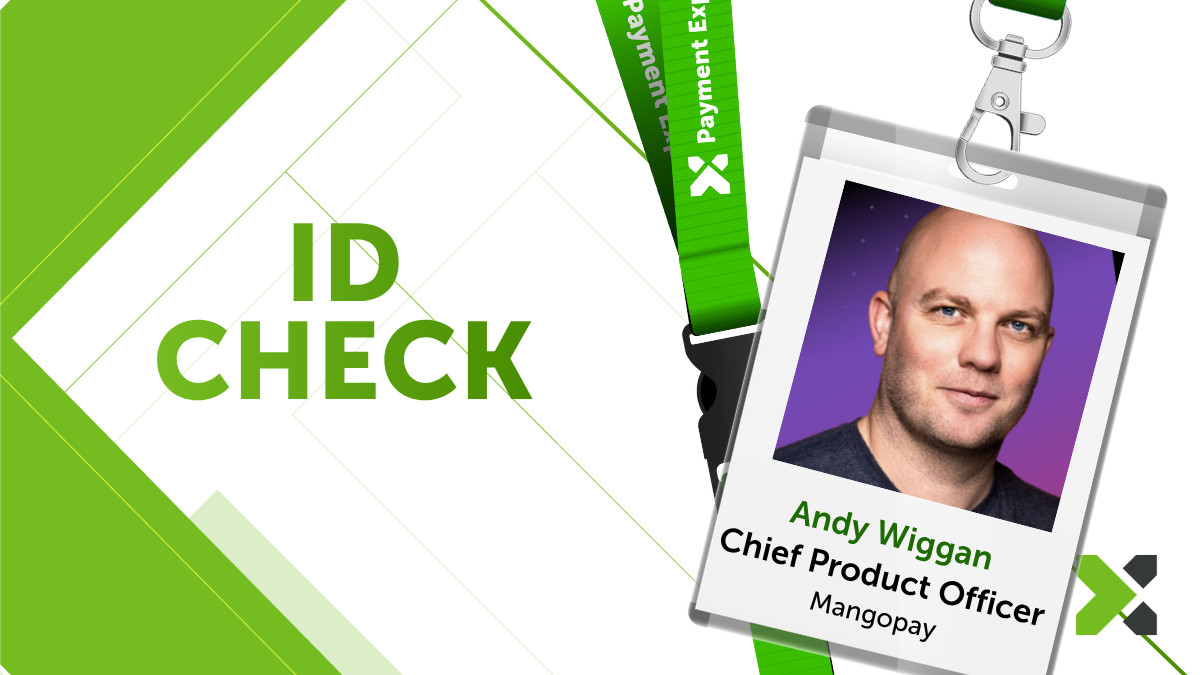
Payment Expert’s ID Check: Payments Professionals offers insight from industry leaders and experts on how they got their start in the financial industry, from their early years in education, to how they have been able to climb the corporate ladder.
This week, Andy Wiggan, Chief Product Officer at Mangopay, recalls how his time at Spotify helped morph his understanding of working in payment processing teams across the world, and why new local payment methods remain a challenge as more continue to birth.
Where did you go to university and what did you study? What impact did this have on your current journey?
I was lucky enough, as somebody from a non-private school background, to attend Cambridge University to study Engineering. It was quite a big course to undertake but an incredible (if quite intense) experience. While I enjoyed most of the course as it was very systems and maths intensive, much of the practical applications were in the physical engineering world.
What made me pause at the end of the degree was the fact that in most physical engineering projects, the lead times were in years, sometimes decades, and this felt too drawn out for me. I chose instead to go into the world of software, where you can think about a problem and deliver the solution within days. Since coding wasn’t my sweet spot, I started in sales.
What first drew you to the payments industry and why have you stayed?
I worked in sales for a small payment gateway and an acquiring business after graduating. While I didn’t join the domain, I soon realised that payments sit at the heart of global e-commerce and digital marketplaces. I was therefore exposed to all facets of doing business online, while I marched around the office with my Britney Spears headset on, prospecting to hundreds of different businesses (and selling to a few).
What fascinated me early on was how complex the infrastructure behind seemingly simple transactions really is. The moment you move from a simple merchant payment model to a platform or marketplace environment, the complexity increases dramatically. You need to think about splitting funds between multiple parties, managing payouts to sellers and maintaining compliance across jurisdictions.
Once you start understanding how global money movement works, along with the commercial opportunities it creates, it becomes a difficult industry to leave, both from a learning and a business perspective.
Are there any lessons from your first role in the industry which you still draw on?
Payments are complicated, and it requires a very systematic mindset to flourish in the industry. From thinking about end-user experiences to reconciliation, compliance and the fragmentation of payment systems across markets. There are a lot of moving parts.
I have always loved, and still love, the complex nature of global payments. The main lesson for me from that first entry into the industry was really to embrace that complexity and try to simplify it for non-payments specialists.
That challenge is still very relevant today, particularly in the platform economy, where marketplaces and digital platforms need to manage complex payment flows across a large user base, and various markets. Simplifying that complexity remains one of the central challenges of payments product design, and it sits at the heart of how I think about building payments products to this day.
When was your first big break in the industry? Why was this such a significant moment for you?
I was lucky enough to be on the growth train at Spotify from quite early on. This was my big break, working with some amazing people and helping to take Spotify across the world.
I gained experience across over 100 geographies and touched many different internal teams at the company, and was lucky enough to also work alongside some of the fast-growing payments suppliers across the world.
Working on a global consumer platform also exposed me to the operational reality of scaling payments internationally. Every market has different payment methods, regulatory requirements and settlement processes, and building infrastructure that can operate reliably across those environments is incredibly challenging.
That experience gave me a strong appreciation for the types of payments infrastructure that platforms need today, particularly those that allow businesses to manage global pay-ins and payouts, handle multiple currencies and automate reconciliation processes across different markets.
Having that ‘client side’ experience has been a great advantage, as I have never lost the customer perspective and what’s most important in payments: simplicity, cost-effectiveness, low maintenance, and the ability to operate globally while respecting local nuances.
Was there a moment you faced in the industry which really challenged you? How did you overcome this?
There have been many moments in this industry that have challenged me! The common factor has really been about change, growth and how much payments continue to evolve across all markets. As more local payment methods appear, infrastructure and licensing evolve and this changes the goalposts for moving money in a fast and secure way, while maintaining a good user experience.
As a result, understanding local nuances is the biggest challenge by far, for merchants, payments companies and fintechs alike. To bring value in a competitive market, you need to be able to build expertise everywhere you want to operate.
This is particularly true for platforms operating in multiple countries. They need to support local payment methods, different regulatory requirements and local payout mechanisms for sellers and service providers. As the platform economy has grown, many companies have chosen to rely on specialised payment partners that provide this infrastructure through a centralised system, rather than building their own payments stack from scratch.
Understanding those local differences while maintaining a consistent user experience is one of the hardest challenges to fully get right in payments.
What are some of the skills you deem essential to starting in your industry and how have yours developed over the years?
I think having a product mindset is essential. I learned how to be a product manager and a product leader at Spotify by working alongside some world-leading product teams. This teaches you how to think ‘problem-first’ before rushing into solutions – a trap I see many tech organisations falling into.
While it’s important to apply expertise and past knowledge, teams should treat each problem on its own terms to avoid making assumptions and jumping into the solution space too early.
In payments specifically, the best product teams understand both the user experience and the infrastructure that supports it. For example, designing something as simple as a payout experience for marketplace sellers requires deep thinking around wallet structures, transaction flows, reconciliation and compliance obligations.
Who was your biggest role model – inside or outside of your industry – who continues to inspire you in your current career?
There are many people that I look up to, some of whom I worked for and some who worked for me. Some of the early teams at Spotify were exceptional, in particular, Patrik Falk and Gustav Gyllenhammar, who are both still at Spotify today.
I also very much enjoy working with great sales leaders who understand the market and see me as an extension of their team.
At home, corny as it sounds, I’m inspired mostly by my kids. They insist that I remain humble, have perspective and focus on what’s actually important.
If you didn’t work in the industry, what other career option would you have pursued?
I was never good enough at Rugby to go anywhere near professional, but I would have loved to have had a career there, or in sports more generally. The combination of physical performance, strategy, and decision-making under pressure is something I’ve always found fascinating.
My dream job would be to coach a professional rugby team, but since I don’t have the qualifications and connections in the field, I’m happy coaching and building product teams instead. In some ways, it’s not that different. We just scream on the inside.
Lastly, what advice would you give to someone looking to start in this industry?
Don’t be afraid to be in the ‘learning space’ forever. It’s what builds resilience and being confident to say I don’t know everything has really helped me work alongside and lead some fantastic teams.
I would also advise those starting out to learn how to code and understand API design. It doesn’t matter if you’re the head of compliance or the CTO, payments products are still technical.
Having a deep appreciation for how payment infrastructure actually works, whether that is API-driven payment flows, wallet architecture or scheme connectivity, is incredibly valuable in this industry.