How a fragmented market built a fintech powerhouse
In the UK, open banking arrived with a regulatory roadmap. Banks were instructed to open up customer data through standardised APIs under PSD2, while the Competition and Markets Authority pushed the country’s largest lenders towards implementation.
The US took a different route.
There was no single framework, no nationwide rollout plan, and no equivalent to Europe’s regulatory structure. Yet despite that, the American market has become home to some of the world’s most influential financial data and connectivity firms, helping to power everything from digital wallets and brokerage accounts to lending platforms and account-to-account payments.
For many consumers, the term ‘open banking’ still feels abstract. In practice, however, millions of Americans already interact with it every day. Connecting a bank account to Venmo, verifying balances through Cash App, funding a Robinhood account, or using a budgeting app like Rocket Money all rely on the ability to securely access and share financial data between institutions.
What emerged in the US was not open banking as policymakers in Europe envisioned it, but a commercially driven ecosystem built by fintech firms, data aggregators and payment providers filling gaps left by a fragmented banking market.
That distinction continues to shape how open banking develops across the country today.
America built open banking without a rulebook
Part of the reason the US market evolved differently lies in the structure of its banking system itself.
Unlike many European countries, the US does not operate around a concentrated group of national banks working within a unified payments framework. Thousands of financial institutions operate across the country, ranging from Wall Street giants to regional banks and local credit unions. That fragmentation made standardisation significantly harder.
In the absence of a formal open banking framework, fintech companies began building their own infrastructure to connect banks, consumers and applications together.
Initially, much of this connectivity relied on screen scraping, a process where consumers shared their online banking credentials with third-party applications, allowing those firms to collect account information directly from banking interfaces. While effective in expanding financial connectivity, the approach raised concerns around security, data ownership and liability.
Over time, many institutions began moving towards API-based connections instead. APIs allow financial data to be shared more securely and selectively between banks and third parties without exposing full login credentials.
The firms facilitating those connections became some of the most strategically important players in modern fintech.
Plaid is perhaps the clearest example. Founded in 2013, the company positioned itself as the connective layer between banks and financial applications, allowing consumers to link accounts with apps ranging from Coinbase and Venmo to Chime and Robinhood. Visa’s attempted $5.3bn acquisition of Plaid in 2020, later abandoned following a Department of Justice antitrust challenge, demonstrated how valuable financial data infrastructure had become within the wider payments ecosystem.
Plaid was not alone. Firms including MX, Finicity and Yodlee also expanded rapidly as demand for financial connectivity grew among lenders, personal finance platforms and digital payment providers.
What developed was effectively an open banking ecosystem, even if the US rarely described it that way.
Section 1033 and the battle over financial data
While the market evolved commercially, regulation arrived far more slowly. The closest equivalent the US has to a formal open banking framework sits within Section 1033 of the Dodd-Frank Act, a provision granting consumers the right to access financial information held by providers.
For years, however, the rule remained largely dormant. That began changing as the Consumer Financial Protection Bureau (CFPB) moved to formalise how consumer financial data could be shared between banks, fintechs and third-party providers. In proposals released by the Bureau, regulators argued consumers should have greater control over their own financial information, including the ability to transfer data between providers more easily.
The proposals also attempted to address long-running tensions between banks and fintech firms around data access, liability and compensation.
Many banks have argued unrestricted data sharing creates security and operational risks, particularly where third parties aggregate large volumes of sensitive financial information. Some institutions have also pushed back against the idea that fintech firms should access banking infrastructure without compensation agreements.
Fintech companies, meanwhile, have warned that restrictive access policies could reduce competition and entrench the position of incumbent financial institutions. The debate is not simply about technology and reflects a broader struggle over who controls customer relationships in digital finance.
This tension has become increasingly important as financial services move beyond basic account aggregation towards wider ‘open finance’ models encompassing investments, lending, payroll and broader financial data portability.
The push towards account-to-account payments
Open banking’s commercial significance in the US increasingly centres on payments rather than data aggregation alone.
For merchants and payment providers, account-to-account payments have long represented a potential alternative to card rails, particularly as interchange costs continue to rise across ecommerce.
Yet despite years of discussion, pay-by-bank adoption in the US remains relatively limited compared to some international markets. Part of the challenge lies in the structure of the US payments ecosystem itself.
Cards remain deeply embedded in American consumer behaviour, supported by reward programmes, credit availability and established dispute protections. ACH transfers, while widely used, were not originally designed around real-time retail payment experiences. Settlement times, refund handling and user experience have historically limited broader consumer-facing adoption.
This infrastructure picture has started changing.
The Federal Reserve launched FedNow in 2023, allowing participating financial institutions to process instant payments around the clock. Alongside The Clearing House’s RTP network, the US now has expanding real-time payment infrastructure capable of supporting faster account-to-account transactions.
Payment providers and fintech firms have increasingly explored how open banking connectivity can support instant account verification, balance checks and real-time payment flows layered on top of those rails.
Merchants have also shown growing interest in account-to-account payment models as pressure around card processing costs continues.
However, the transition away from cards remains gradual. Unlike some European markets, where debit transfers became embedded through regulatory intervention, the US remains heavily tied to card-based consumer incentives. Credit cards continue to offer rewards, fraud protections and familiarity that newer payment models still struggle to replicate consistently.
As a result, open banking in the US has evolved less as a direct replacement for cards and more as an additional layer within a broader payments ecosystem.
From open banking to open finance
The conversation surrounding open banking in the US is also beginning to widen.
Rather than focusing solely on bank account connectivity, many firms and policymakers increasingly discuss ‘open finance’, a broader concept covering consumer permissioned access across investments, savings, pensions, payroll and other financial products.
This expansion reflects how financial data itself has become central infrastructure within digital commerce.
Lenders use banking data to support underwriting decisions. Personal finance applications aggregate transactions to provide budgeting insights. Payment firms rely on account connectivity for onboarding and fraud prevention. Crypto platforms and brokerages use linked bank accounts to move funds more efficiently between ecosystems.
The same infrastructure underpinning open banking increasingly touches almost every corner of digital finance. New technologies could further complicate that landscape. AI-driven financial assistants, programmable payments and stablecoin-based settlement systems are already beginning to overlap with discussions around financial data portability and payment initiation.
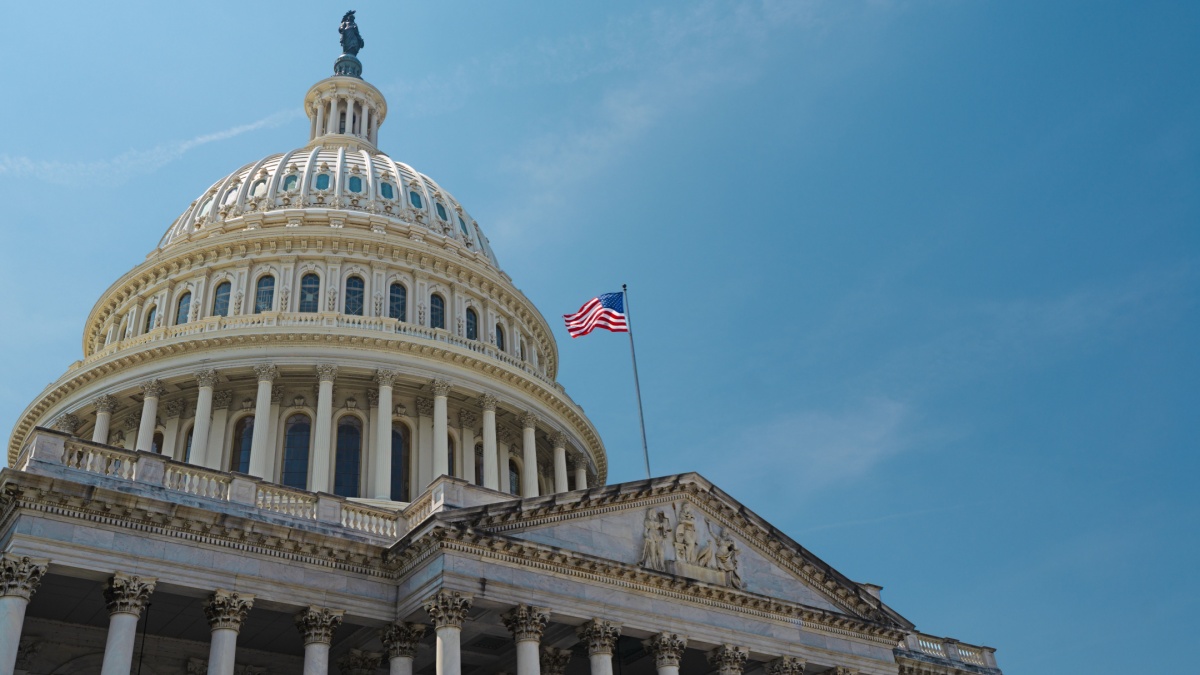
At the same time, regulatory uncertainty remains. Questions surrounding liability, cybersecurity, consumer consent and data ownership continue to shape policy discussions across Washington and the wider financial sector. Political shifts could also influence how aggressively regulators pursue formal open banking implementation in the coming years.
What remains clear, however, is that the US has already built one of the world’s most commercially influential financial connectivity markets, even if it arrived there differently from Europe.
Open banking in America was not launched through a single regulatory event or coordinated national strategy. It emerged through market demand, fintech expansion and the growing commercial value of financial data itself.
This fragmented development may have created tensions around regulation and standardisation, but it also helped produce an ecosystem that now sits at the centre of modern digital finance.