Payment Expert’s ID Check: Payments Professionals offers insight from industry leaders and experts on how they got their start in the financial industry, from their early years in education, to how they have been able to climb the corporate ladder.
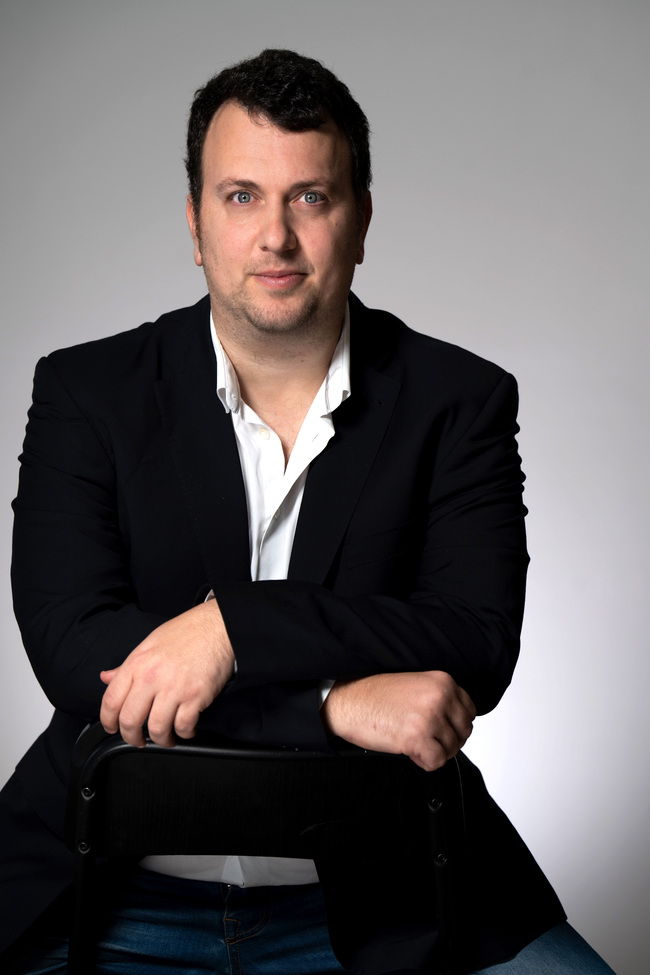
This week, Gaby Diamant, CEO and Co-Founder of BridgeWise, reveals the discipline and determination of starting an investment firm, how COVID-19 shook the industry and why leaning on experienced professionals can lead to new opportunities.
Where did you go to university and what did you study? What impact did this have on your current journey?
Before university my passion for investing began early on in my life. At 15, I took part in an investment competition and finished 29th out of over 10,000 participants – this really helped to cement my desire to pursue a career in the field.
I went on to study Economics at the Technion Israel Institute of Technology, one of Israel’s leading academic institutions. The programme placed quite a strong emphasis on maths and the theoretical foundations to investing which really helped to shape the analytical and structured way I like to approach problem-solving now.
This academic background helped to become a foundational cornerstone of my professional career, influencing both my early work in financial advisory roles and the data-driven mindset behind BridgeWise.
What was the first job you had in the industry and are there any lessons from this you still draw on?
I got my start in finance pretty early, at age 21. I became one of the youngest licensed investment advisers in Israel when I began my career at IBI Investment House. I then moved on to serve on the investment committee of a larger professional organisation, and during that time I managed a portfolio of close to $50m. This responsibility meant I was handling real-life funds from day one, making decisions that affected clients and learning how portfolio management works in practice, not just in theory.
One of the biggest lessons I had from that period was learning to separate the industry’s glossy image from its day-to-day reality. It widened my perspective and pushed me to explore corners of finance and entrepreneurship previously unfamiliar to me which ultimately led me to my first startup and now, to BridgeWise.
Who is your biggest role model – inside or outside the industry – and how do they continue to inspire your work today?
Without a doubt, my biggest role model is my wife. She’s the youngest of six, and everything she’s achieved has come from the pure determination and hard work she’s dedicated. She graduated summa cum laude from Technion and today she’s the CFO of a major shipping company.
Watching her build her career step by step has been genuinely inspiring to me. What I admire most is her resilience, she’s constantly raising the bar for herself and leading with steady drive and quiet strength.
When was your first big break in the industry? Why was this such a significant moment for you?
My first real break came when a senior mentor saw something in me and offered an opportunity many in the industry don’t get so early. I was offered the chance to complete my investment-advisor internship at a much younger age than usual.
This early start meant I was able to earn my license sooner, and get hands-on industry experience well ahead of my peers. When I look back, it’s a defining moment in my career and fast-tracked my path in finance, setting the course for everything that came next.
Was there a moment you faced in the industry that really challenged you? How did you overcome this?
One of the toughest moments for me was in the early days of the hedge fund we built around our algorithm – the same core technology that later evolved into BridgeWise.
When COVID-19 hit, the market was moving with volatility, almost 5% daily. This volatility was on a level we’d never experienced, and sticking with the model in the middle of that took a lot of confidence and conviction. Our market-neutral approach did exactly what it was designed to do, in a month when the market fell roughly 30%, we held strong and delivered a 6% return.
When Pfizer announced the COVID-19 vaccine it triggered the largest one-day shift from growth to value stocks ever recorded. Our algorithm took a big hit, it would have been easy to panic and walk away from the strategy but we held strong. Within three weeks the model had fully recovered the losses.
Those moments were pretty defining for us, they proved that our technology could hold up under extreme conditions, and gave us the confidence to build BridgeWise using these foundations.
What are some of the skills you deem essential to starting in your industry and how have yours developed over the years?
One of the most essential skills to survive in this industry is enjoying your wins more than you suffer your losses, because in the world of investing and entrepreneurship, losses happen frequently and maintaining resilience is key.
Beyond that, building an investment company requires significant discipline, emotional resilience, the ability to seek help, trustworthy partners, and the capacity to keep learning and adapting. Over the years, I’ve learned to embrace ambiguity, stay grounded in data, and build teams that complement my strengths and weaknesses.
If you didn’t work in the industry, what other career option would you have pursued or would have loved to?
I would definitely still be working in the investment industry. I always enjoyed being close to the markets, and becoming a hedge fund manager would have been the most natural alternative for me. It aligns closely to the work I have done throughout my career and the way I like to think about investing.
What is some advice you would give to an aspiring person looking to get a start in your respective industry?
Ask for a lot of help.
A great lesson I’ve learned is seeking out people who have already walked the path I wanted to take and learning from their experiences, and mistakes. Above all, finding the right partners and having the right people around you can make all the difference in whether your journey feels sustainable, becomes scalable, and ends up truly successful.