The Bank of Japan has launched a blockchain sandbox to test settling central bank money, as Governor Kazuo Ueda sets out a vision for a tokenised financial system
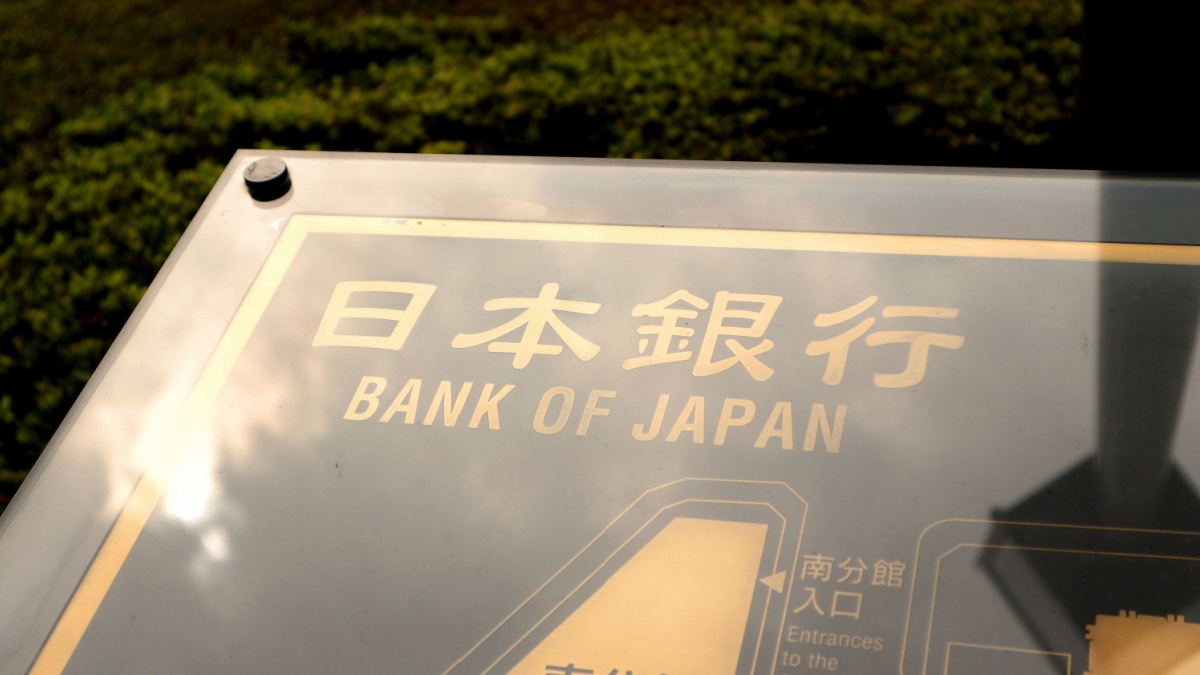
The Bank of Japan (BoJ) has unveiled a sandbox project to test whether blockchain technology can be used to settle central bank money, including domestic interbank transfers and securities transactions.
Governor Kazuo Ueda announced the initiative during a keynote address at FIN/SUM 2026, the tenth edition of Japan’s flagship fintech conference, held this week in central Tokyo.
Co-organised by the Financial Services Agency and Nikkei Inc., this year’s event was themed around the convergence of artificial intelligence and blockchain. Ueda used the platform to set out how the central bank sees its own role within whatever new financial architecture emerges.
The sandbox will use the BOJ’s current account deposits – the reserves that commercial banks hold at the central bank – as the basis for settlement experiments on a distributed ledger.
The goal is to test whether those reserves can function reliably within blockchain-based systems, and to examine how such a setup might connect with existing infrastructure such as BOJ-NET, the interbank funds settlement network the central bank operates.
“We intend to make further progress while gaining the support of external experts, exploring methods of connection with the existing system as well as examining use cases such as domestic interbank settlement and securities settlement,” Ueda said.
The trust anchor question
Ueda’s remarks placed the sandbox within a broader argument about the enduring role of central bank money. As new payment rails proliferate – whether built on public blockchains, permissioned ledgers, or some hybrid of both – the risk is that different systems become isolated from one another, with no reliable mechanism for converting value between them.
Central bank money has historically been designed to solve exactly that problem, acting as the common settlement asset that connects commercial bank deposits across institutions and preventing any one bank’s money from trading at a discount to another’s.
Without that shared foundation, Ueda pointed to the wildcat banking era of 19th-century America, when the absence of a unifying settlement asset caused people to perceive variation in the value of deposits between banks, with damaging consequences for payments and economic activity.

The challenge now is how to extend that function into a world where assets are increasingly held and transferred on-chain. The possible mechanisms, as Ueda outlined them, involve “settling assets with tokenised central bank money on the blockchain or by connecting the existing system for central bank money with a new system for transactions on the blockchain.”
Central bank money, in his framing, fulfils its role as “the anchor of trust for an economy by serving as the foundation that connects all payment instruments and by functioning as the safest and most liquid settlement asset” – and the question the sandbox is designed to answer is whether that anchor can hold in a distributed ledger environment.
Moving stablecoins from concept to prototype
The domestic initiative runs alongside Japan’s participation in Project Agorá, an international experiment co-ordinated by the Bank for International Settlements (BIS) that has brought together seven central banks – including the Bank of England, the Federal Reserve Bank of New York, and the Bank of France on behalf of the Eurosystem – along with major private-sector financial institutions.
The project moved into its prototype-building phase last year and is investigating whether central banks can issue tokenised reserves on shared ledgers, using smart contracts to settle cross-border payments atomically, meaning all legs of a transaction complete simultaneously or not at all. “If this project comes to fruition, it may bring innovation in terms of streamlining cross-border payments,” Ueda said.
The BOJ’s retail CBDC pilot also continues in parallel, with the bank running technical experiments through a forum that draws on private sector expertise. Ueda suggested the forum will be restructured in its next phase, widening its remit beyond technical design to consider the future shape of payments more broadly.
The efficiency case for smart contracts – automating complex transaction chains without manual intervention – is not lost on the BOJ, but Ueda cautioned that when “the design of the smart contracts is inadequate, there is a risk that the stability of financial markets and payment systems will be threatened due to fraudulent use.”
The sandbox, testing use cases against real infrastructure rather than in the abstract, is an attempt to surface those tensions before they become widescale problems.