Payment Expert’s ID Check: Payments Professionals offers insight from industry leaders and experts on how they got their start in the financial industry, from their early years in education, to how they have been able to climb the corporate ladder.
This week, Radi El-Haj, CEO of RS2, details his journey from Project Manager to CEO, how his mindset shifted from execution to vision, all while laying out the keys to succeed in the payments industry.
Where did you go to university, what did you study, and what impact did this have on your current journey?
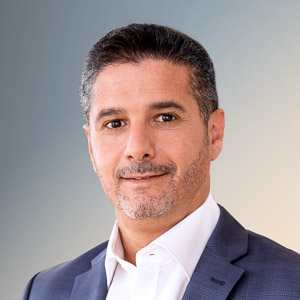
I studied law in Germany. At first glance, it might seem far removed from payments, but it shaped how I think. Law forces you to analyse complex systems, solve problems logically and understand how different rules connect. That mindset became invaluable when I entered the payments world, where regulation, business models and technology are constantly colliding.
It also instilled discipline and a habit of continuous learning. In this industry, you cannot rely on previous success. You have to stay curious and question how things work and how they could work better. That mindset still drives how I lead RS2 today.
Were you part of any sports clubs or societies at university, and has this influenced your educational and professional development?
Before university, I played football in a professional league for more than a decade. Sport teaches you things no textbook can.
On the pitch, you learn very quickly that talent alone is never enough, you need teamwork, discipline and resilience. Those lessons stayed with me. Whether you are building a platform or launching in a new market, payments is a team sport. You need engineers, banks, regulators, clients and operations people moving in the same direction.
Sport also teaches you how to recover fast. You lose a match, analyse why and come back stronger. In payments, you test, fail, iterate and scale. That rhythm has shaped the way I lead.
What was your first job in the industry, and are there any lessons from it that you still draw on today?
I joined RS2 in 1997 as a Project Manager working with Tier-1 European banks on corporate card programmes. I had to bridge technology, regulatory requirements and business goals, while understanding how our clients ran their operations.
Three lessons stayed with me:
- You cannot just understand your component. You must see the entire value chain from issuing and acquiring to settlement and reconciliation.
- Technology means nothing if it does not solve a real business problem for the client.
- If you do not build for scale and cross-border complexity from the beginning, the system will eventually break.
Those fundamentals still guide how we design RS2’s platform.
Who is your biggest role model inside or outside of the industry, and who continues to inspire you in your career?
I don’t anchor to a single person. I am inspired by people who looked at payments not as a back-end function but as a strategic global infrastructure, long before it became obvious.
Outside the industry, I value leaders who combine vision with integrity and who build organisations that empower people rather than control them.
My biggest source of inspiration today comes from two places: my team at RS2 who challenge and innovate every day, and the new generation of fintech founders who constantly ask, “Why is it still done like this?”
Curiosity, humility and the courage to rethink established models are the traits I respect most.
When was your first big break in the industry, and why was it significant for you?
A defining moment was moving from project-focused roles into leading Sales and Implementation in 2004 and ultimately being appointed CEO of RS2 in 2013.
Becoming CEO was pivotal because it shifted me from execution to vision. Suddenly I was responsible for shaping RS2’s long-term direction, understanding where global payments were heading across digitalisation, consolidation, alternative payment rails and cross-border expansion.
It was also a strong vote of confidence from the board and stakeholders. That trust pushed me to grow beyond product, into governance, investor relations and building a global business. It was the moment I moved from technical problem solving to strategic decision making.
Was there a moment in the industry that really challenged you, and how did you overcome it?
A major turning point was when RS2 evolved from being seen purely as a software provider to becoming a full payments processor and acquirer. That transition required changing how clients, investors and internal teams viewed the company.
We had to integrate new acquiring capabilities, adapt to multiple regulatory environments and expand into new regions, while keeping core operations running smoothly.
We got through it by grounding every decision in our values: innovate with purpose, collaborate openly and empower people. We focused heavily on culture and communication, making sure teams understood not just what we were building, but why. And we stayed agile, shaping a modular platform that could flex with client needs rather than forcing them into rigid structures.
It pushed us to mature fast, but it also made RS2 stronger and more globally positioned.
What skills do you think are essential for starting in the payments industry, and how have yours developed over the years?
Payments sits at the intersection of technology, regulation and commerce, so you need a mix of technical curiosity and business awareness.
Key skills include:
- Understanding how a payment really moves from initiation to settlement.
- Interpreting regulation not as a constraint but as a framework to innovate safely.
- Thinking in terms of client value, not just features.
- Communicating across technical, financial and regulatory teams.
- Staying adaptable, because the industry never sits still.
Over the years, my work evolved from understanding systems to shaping ecosystems. The better you grasp each part, the stronger your strategic decisions become.
Lastly, what advice would you give to someone looking to start a career in the payments industry?
Be curious and get close to the mechanics. Ask why things are done a certain way and who benefits or loses from that process.
Do not start your career from the balcony. Get hands-on experience in implementation, risk, operations or support – that is where you really learn how the industry works.
Understand the ecosystem: issuers, acquirers, merchants, schemes, regulators. The real power lies in how these players connect.
Be ready to adapt. Embedded finance, digital wallets, cross-border real-time payments and new digital currencies are constantly reshaping the landscape.
And finally, never compromise on integrity. This industry is built on trust. If people know they can count on you, opportunities will follow.