The Bank of England will consult this year on revised rules allowing systemic stablecoins to hold some high-quality liquid assets, as Deputy Governor Sarah Breeden outlines RTGS–DLT integration, Digital Pound testing and new retail payments governance to anchor innovation in an interoperable “multi-money” system.
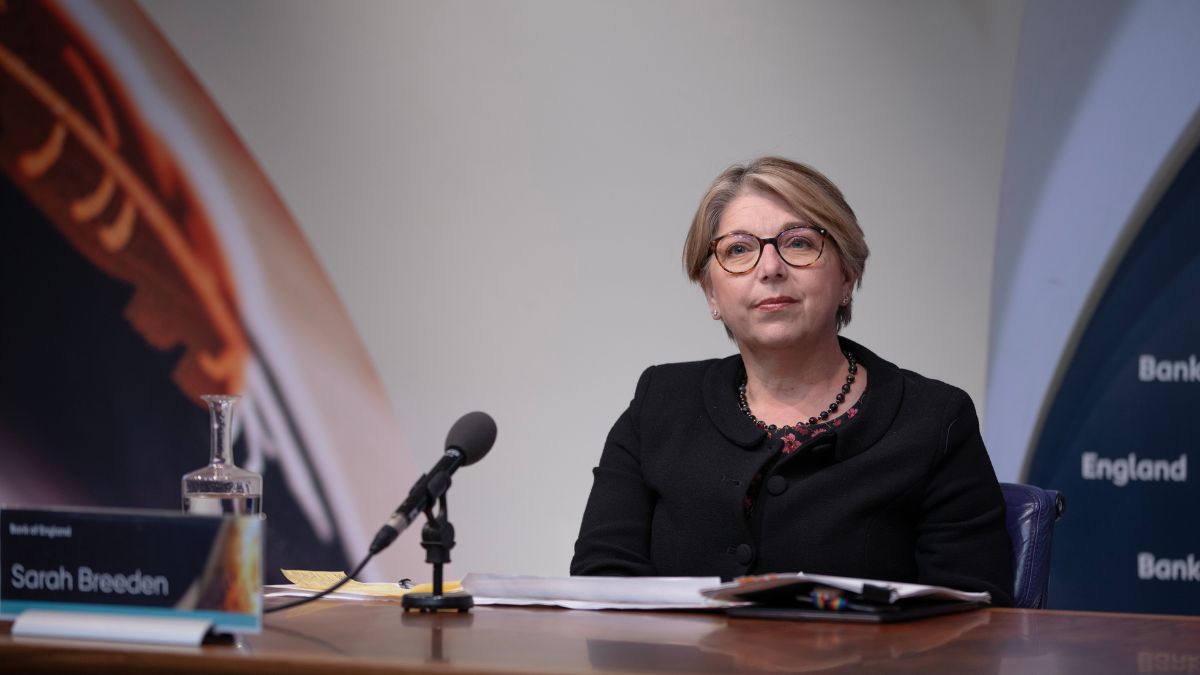
The Bank of England signalled a notable shift in its stance on stablecoins, with Deputy Governor for Financial Stability Sarah Breeden confirming the central bank will consult “later this year” on revised rules for systemic stablecoins.
The proposals would “allow systemic stablecoins to hold a portion of their backing assets in a subset of high quality liquid assets,” she said in a speech on September 3 at the BoE and Warwick Business School Innovation in Money and Payments Conference.
Breeden framed the change as a response to industry feedback on the Bank’s 2023 framework work, aiming to avoid a cliff-edge between the Financial Conduct Authority’s rules and the additional requirements on systemic issuers, while preserving safety. The Bank and Financial Conduct Authority will engage further through consultation before finalising the regime.
Breeden set out a broader architecture for innovation across infrastructure, regulation and strategy and underscored the launch in April of the upgraded real-time gross settlement service, RT2, which can already support settlement in central bank money for transactions executed on external ledgers, including programmable and distributed ledgers.
A “synchronisation lab” will follow next year to integrate central-bank settlement with transactions on other ledgers end-to-end.
On retail money, Breeden said the Digital Pound project’s design phase will produce a blueprint next year. In parallel, the Digital Pound Lab – launched in August and expected to run to July 2026 – provides a hands-on environment for industry to test digital money capabilities, though not with live transactions.
She also highlighted the Digital Securities Sandbox, a live regulated environment run with the FCA, where the authorities intend to explore using tokenised deposits and stablecoins as the cash leg to settle securities issued in the sandbox.
While private money will have roles in settlement, Breeden reiterated that central bank money should remain the settlement asset for systemically important markets to avoid unnecessary financial-stability risk.
Strategically, Breeden pointed to the governance model announced in July under HM Treasury’s National Payments Vision: a Retail Payments Infrastructure Board chaired by the Bank (in its capacity as systems operator) to translate strategy into design, alongside an industry-led delivery company, with Pay.UK continuing to run today’s schemes during the transition.
The Payments Vision Delivery Committee will publish its strategy and a Payments Forward Plan later this year.
Breeden’s overarching vision is of a “multi-money” payment landscape in which cash, traditional and tokenised bank money, stablecoins and a potential digital pound are interoperable and exchangeable at par, anchored by harmonised technical and regulatory standards to maintain the singleness of money and safeguard trust.