Financial regulators have outlined a joint vision for tokenisation in UK wholesale markets, signalling a shift from experimentation towards live deployment as regulators seek industry feedback on future infrastructure and rules.
The Financial Conduct Authority (FCA) and the Bank of England have set out a shared long-term vision for tokenisation in UK wholesale markets, as regulators seek to give financial firms greater certainty around the use of distributed ledger technology (DLT) across capital markets.
Announced on 18 May, the joint initiative outlined how UK regulators intend to support the adoption of tokenised assets in areas such as securities issuance, trading, settlement and collateral management. The move comes as policymakers attempt to position the UK as a leading jurisdiction for digital asset infrastructure while balancing concerns around resilience, prudential treatment and financial stability.
Tokenisation refers to the process of creating digital representations of real-world assets, such as bonds, shares or currencies, on blockchain-based ledgers. The FCA and Bank said the technology has the potential to make wholesale markets “faster and more efficient”, while lowering operational costs and improving market resilience.
The regulators acknowledged that firms have been seeking greater clarity around how tokenised financial products would be treated under existing regulation and market infrastructure rules. In response, the FCA and Bank outlined their approach to areas including prudential treatment, tokenised collateral and settlement instruments.
Simon Walls, Executive Director of Markets at the FCA, said: “Tokenisation has the potential to transform wholesale markets – reshaping how assets are issued, traded and settled.”
He added that the FCA wanted to support firms in adopting the technology “to lower costs, reduce risk and unlock new services”.
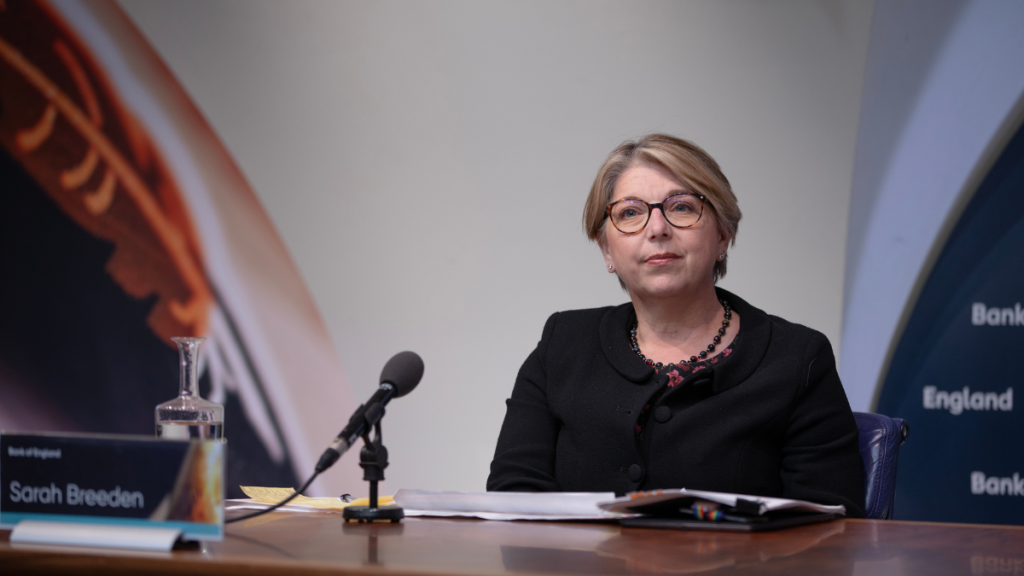
Meanwhile, Sarah Breeden, Deputy Governor for Financial Stability at the Bank of England, stated that the focus was now shifting from pilot schemes towards production-level implementation.
“The task now is for public and private sectors together to build on these strong foundations, moving from pilots to production to support financial stability and sustainable growth,” Breeden said.
Industry eyes shift from pilots to production
The announcement was welcomed by parts of the digital assets industry, which has long argued that tokenisation could modernise legacy financial infrastructure.
Dan Moczulski, UK Managing Director at eToro, said the development showed how digital asset infrastructure was beginning to influence traditional finance.
“Today’s announcement from the FCA and Bank of England shows tokenisation is going mainstream, and is a clear example of how crypto is starting to influence traditional markets,” Moczulski said.
“Institutions are likely to welcome this direction of travel, given tokenisation’s potential to make markets cheaper, faster and more efficient.
“In many ways, retail investors have embraced this shift faster than institutions, with digital assets shaping expectations around access, transparency and immediacy. Traditional markets now need to catch up, and tokenisation could be one of the ways they do that.”
The UK’s latest push also reflects broader international momentum around tokenisation, with major banks, exchanges and asset managers increasingly experimenting with blockchain-based settlement systems and tokenised securities.
The FCA and Bank confirmed they are seeking industry feedback on where existing rules or infrastructure may support or constrain tokenisation adoption, with responses due by 3 July 2026.
FCA softens approach to tokenised asset custody
Industry observers also pointed to a notable shift in the FCA’s approach to custody rules for tokenised securities. Reacting to the announcement, Joe Thomas, Director for Regulatory Assurance at EY, highlighted that the regulator had stepped back from earlier proposals to place specified investment cryptoassets (SICs), such as tokenised equities and bonds, under the proposed Crypto Custody (CASS 17) regime.
“The FCA had proposed applying the new Crypto Custody (CASS 17) regime to SIC custody however following industry feedback, that proposal is not being taken forward,” Thomas said.
Instead, firms providing custody services for tokenised securities will continue to be assessed under existing CASS 6 requirements for traditional safe custody assets, alongside relevant safeguarding authorisation requirements.
Thomas noted that the FCA’s latest Call for Input suggested the policy direction remained under development as regulators continue assessing how existing safeguarding rules apply to tokenised market structures.
“The FCA is now seeking further industry views on how the safeguarding framework should adapt to reflect the specific risks of SICs and support the development of tokenised market structures,” he said.
“Firms active in this space should stay close to the policy debate as it develops.”
Wider infrastructure changes underway
Alongside the tokenisation roadmap, the Bank of England also published a consultation on extending RTGS and CHAPS settlement hours towards near 24/7 availability. The staged proposal includes weekend operations and longer daily settlement windows, subject to industry readiness.
The BoE said the changes could support emerging payment and settlement models linked to tokenisation and cross-border payments.
Separately, the Prudential Regulation Authority (PRA) issued updated guidance on the treatment of tokenised assets, stablecoins and other cryptoasset exposures.
The regulators also confirmed ongoing work through the Digital Securities Sandbox, where 16 firms are currently testing the live issuance and settlement of tokenised assets.
Further initiatives include plans for a live synchronisation service targeted for 2028, alongside work to enable tokenised versions of eligible assets to be used as collateral in central bank operations and at central counterparties.