“If you really want visions of the future, you need to ask artists,” David Birch told Payment Expert on the sidelines of Money20/20 Europe earlier this year.
Years ago, digital finance commentator Birch ran a workshop with art students, asking them to imagine the future of payments. Their ideas were funny, strange and oddly prescient. One student envisioned a world where people were paid by making hand gestures, in which different flicks or poses would trigger different outcomes.

That future isn’t far off.
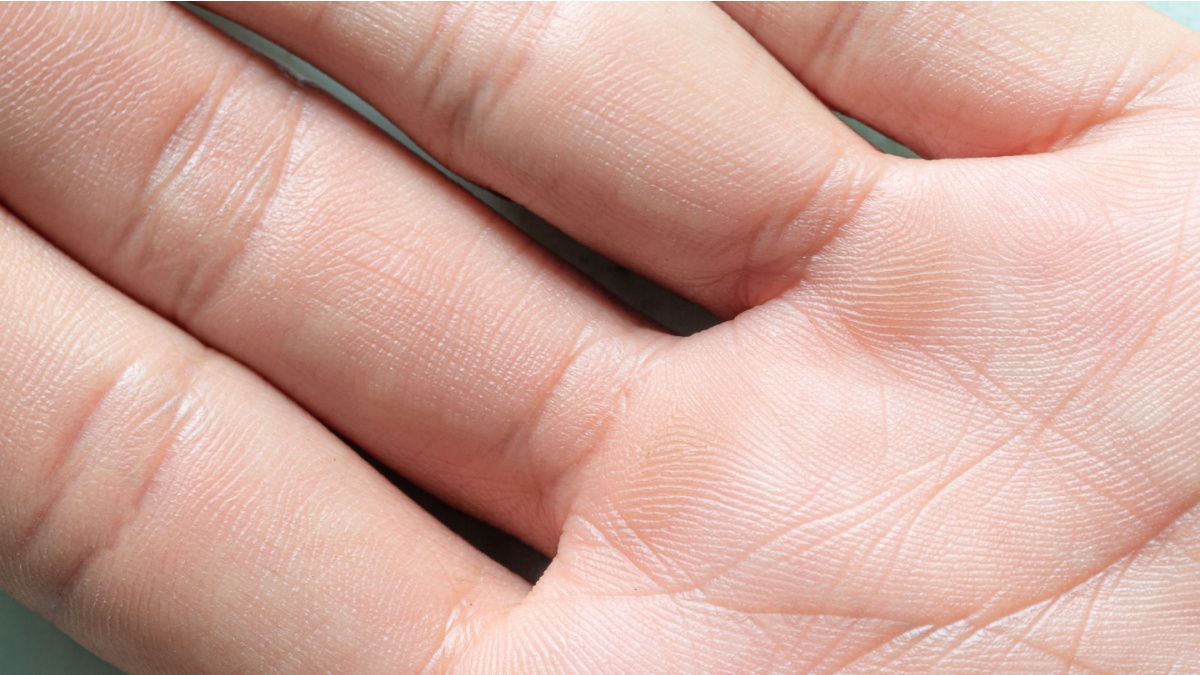
In Thailand, Tencent is trialling palm scan payments at convenience stores and retail outlets, hoping to leapfrog QR codes. In China, Alipay has integrated its payment tech into AR glasses, allowing users to look at a product label and confirm payment with a voice command.
As fintechs chase embedded finance and frictionless user experiences, biometrics are emerging as the ultimate interface. Whether through hands, faces, or gestures, the payments sector is entering an era where paying may require little more than showing up.
Biometrics as the new interface
One of the key drivers behind Tencent and Alipay’s recent innovations has been to replace QR payments, or at least streamline the customer experience even further.
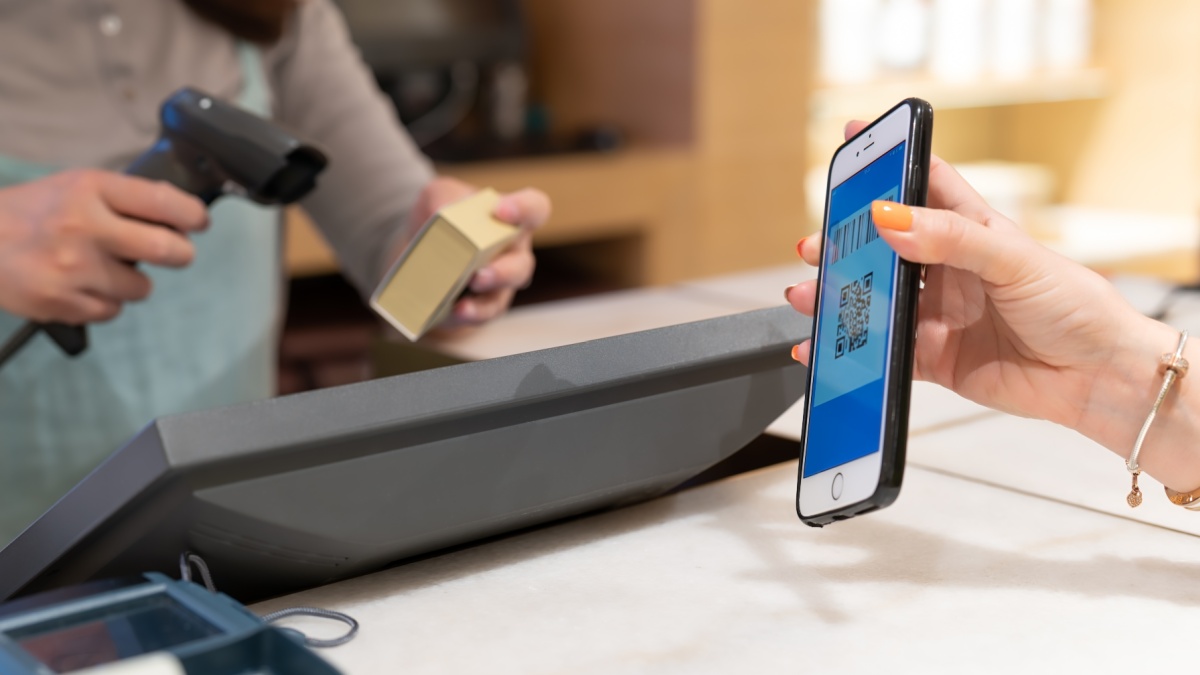
QR codes have become a central part of digital payment infrastructure around the globe, praised for ease of use and low cost.
In markets like Brazil, Pix has shown how QR-based solutions can dramatically expand financial inclusion and offer an effective alternative to traditional card or point-of-sale infrastructure.
As of March 2025, Pix processed around 6.3 billion transactions monthly, with a record daily volume of 252.1 million transactions worth $22.75 bn (BRL 124.4bn) on its busiest day in December 2024. With 182 million active users, about 87% of Brazil’s adult population, Pix’s success highlights how QR-based payments are preferred and can drive financial inclusion.
However, the payments industry has always sought ways to remove friction.
Alipay has now embedded payments into augmented reality glasses through a partnership with Chinese tech firm Rokid. After linking their Alipay account to the Rokid app, users can scan a merchant’s QR code and then confirm purchases using voice verification. Alipay says the process takes seconds compared to an average of 20-30 seconds for phone-based QR payments.
Tencent, meanwhile, is going a step further by eliminating QR codes altogether. Its cloud computing unit is bringing contactless palm scan payment technology to Thailand, adapting a system already widely used in China.
Challenges and adoption in Western markets
These two examples are being deployed in Asia, but like many futuristic technologies, Western markets often face barriers to replicating the same success among consumers. This is particularly true with some biometric payments.
Neville Pattinson, CEO of PSI Consulting, told Payment Expert that security and regulatory challenges play a significant role. He explained how biometric payment systems require robust privacy policies to comply with the tight legislative requirements in some regions, including possible bans or restrictions on their use.

“The privacy policy for these systems must take into account the tight legislative requirements of some States and must ensure high security for the biometric system and protect from cyber attacks. Sharing of biometrics is also a lightning rod outside of a closed system,” he said.
However, there are some use cases emerging in the West. Pattinson highlighted how several companies have tried and piloted biometric payments.
“A current example is Whole Foods (Amazon One) in the US, which is operating a palm biometric payment device at stores where the users’ Amazon accounts are linked to their biometric data for checkout discounts and payments.
“Shoppers are adopting it, although some remain cautious about enrolling. The good thing is that it is opt-in, and good policies for opting out are available.”
While biometric tools like palm scanning and voice authentication are pushing payment methods toward a more seamless user experience, they’re not the only innovations aiming to simplify transactions. Wearables, such as smart rings, charms and even fingernail chips, are being explored.
Birch said these tools are not just functional but increasingly fashionable.
“Wearables have evolved from being like simple rings, now they’ve become more of fashion items. So now you have metal rings that are more jewellery-like bracelets and charms,” he said.
He added that his own wife uses a Curve-enabled key ring mapped to a John Lewis card, a simple, low-effort solution which suits her needs.
The appeal goes beyond looks, however. Some chips are so small they can be implanted into fingernails, a use case Birch said has seen adoption in Switzerland and Brazil.
“You’re going on holiday, you get your nails done, you get the chip put into one of your nails, you load your card into it and then when you’re at the beach, you’re not carrying anything,” he explained.
However, as Pattinson expressed, the West’s more cautious approach means implants like these are not widely embraced yet.
Pattinson noted that wearable payments appeal to consumers who prefer a “top of wallet” card that can be easily presented via a wearable device.
“These consumers are less inclined to carry payment cards and accept the device’s convenient nature. It is also sometimes a status symbol or fashion accessory,” he explained.
Therefore, fashion appears to be the key driver for the adoption of these types of payments.
Leading this trend are tech and luxury brands like Meta, Prada and Oakley, which are creating smart glasses that integrate payments, highlighting how people gravitate towards solutions that fit naturally with their lifestyle and personal style.
Balancing innovation with trust
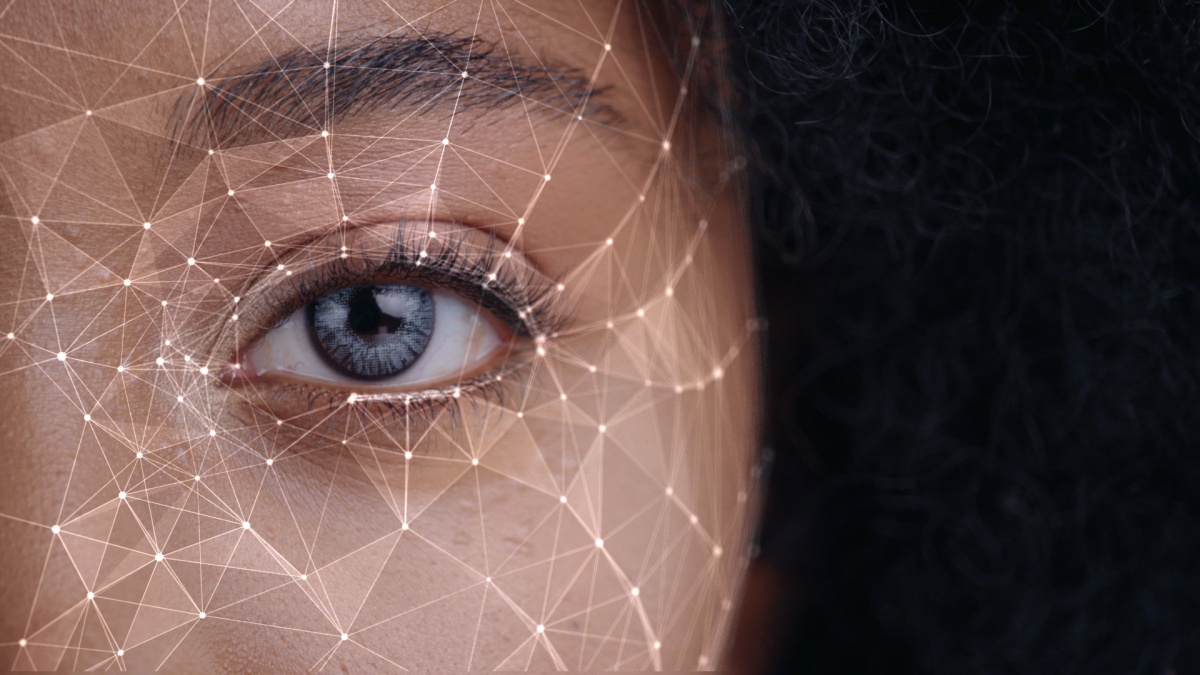
Biometrics often get mixed up with the idea of identity, but that’s not really where they’re most useful. As Birch explained, biometrics work best when you’re confirming something you already know. In other words, the real value is in authentication rather than identification.
That difference matters. Identification means figuring out who someone is, often from a large group of unknown people, for example, cameras scanning faces in a stadium or trying to pick someone out of a crowd.
Authentication is much simpler; it is the art of confirming someone is who they say they are. That’s where biometrics are most effective. Whether it’s unlocking a phone with your face or approving a payment with your fingerprint, these systems work because they are verifying a known user.
Trustly is moving in this direction with the launch of Trustly ID in April, a biometric authentication tool designed to set a new standard in login experiences. Piloting in Finland, it aims to speed up access by remembering verified customer details for future use.
Biometric data is powerful when combined with secure hardware, encryption and the user’s consent. It’s not just about recognising a face or a finger. It’s about doing it safely, within a system the user can trust.
“Personally,” Birch said, “I think most people would prefer having a thing they have control over.” That “thing” could be a smartcard, a ring, a bracelet, a phone or even a fingernail. The principle is to keep the credentials local and under the user’s control.
The technology to identify people without their knowledge already exists. Birch gave the example of an AI camera at the entrance to a press lounge that could recognise everyone in the room instantly. But the real question isn’t whether we can do it. It’s whether we should.
A future where you just walk into a shop, grab what you want and walk out might sound impressive, but trust still matters. Trust is built on transparency, consent and systems that people feel in control of. Not silent surveillance.