Kenya’s formal financial inclusion rate for adults rose from 26.7% in 2006 to 84.8% in 2024 as M-Pesa grew into a platform handling KSh41.68trn a year.
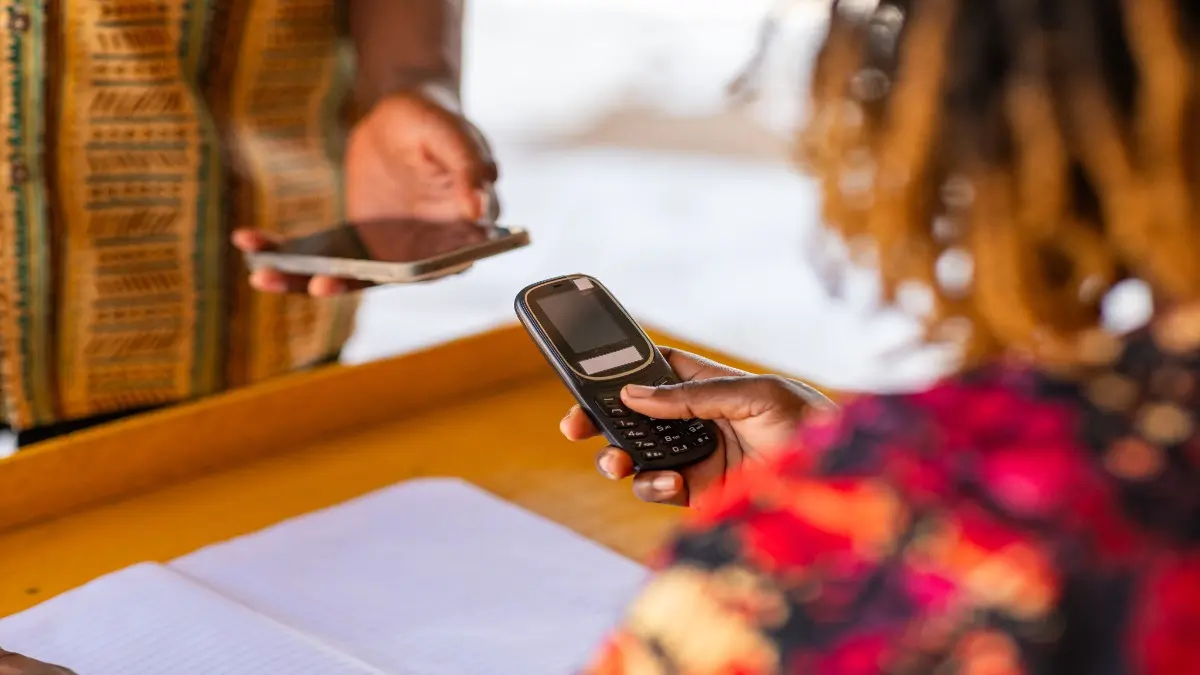
When Safaricom launched M-Pesa in Kenya in March 2007, customers could do little more than deposit cash with an agent, send it to another phone by text message and have the recipient withdraw it at the other end.
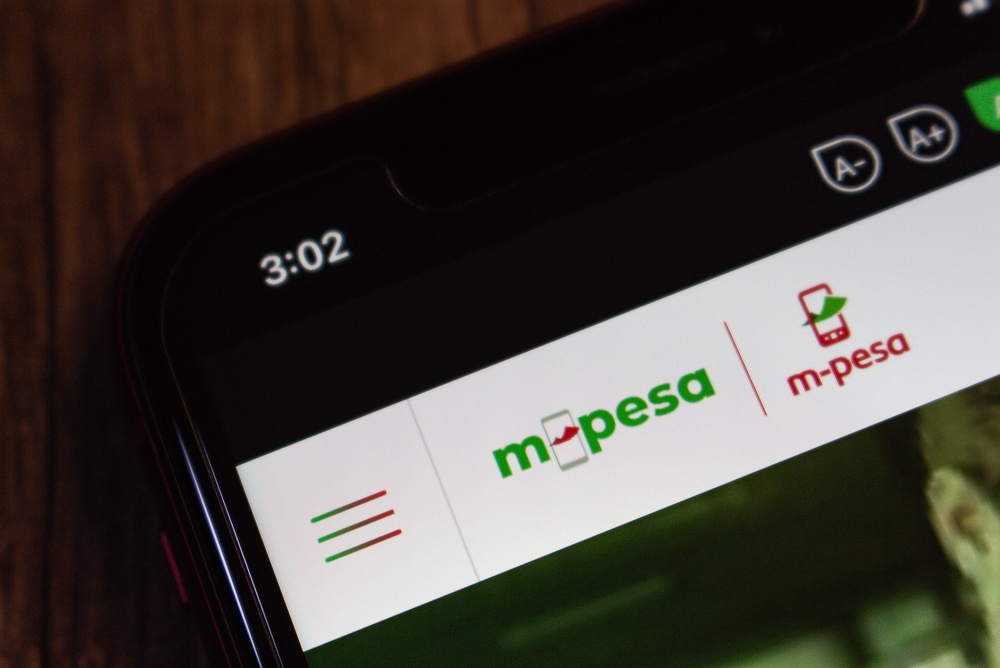
Nineteen years later, M-Pesa is Africa’s largest mobile money service by transaction value. In Kenya alone it handled KSh41.68trn across 46.41bn transactions in Safaricom’s 2026 financial year, with volumes rising almost three times as fast as value. Its KSh182.7bn in revenue accounted for almost half of the operator’s Kenyan service revenue.
M-Pesa: From loan repayments to “Send Money Home”
M-Pesa was not originally designed as a money transfer service. It began when Vodafone won a grant from the Financial Deepening Challenge Fund, run by the UK’s Department for International Development. Its Kenyan affiliate, Safaricom, then ran a pilot from October 2005 with microfinance institution Faulu Kenya and the Commercial Bank of Africa, built around borrowers repaying loans by phone.
By the time of its commercial launch, Safaricom had refocused its offering and marketed M-Pesa to urban workers supporting families elsewhere in the country under the slogan “Send Money Home”. The service reached 1.6 million customers in its first 12 months.
The height of its early customer base gave Safaricom a platform for bill payments, savings, credit and merchant payments through Lipa na M-Pesa, which counted 3.13 million businesses by March 2026. The merchant network has drawn international processors such as PayRetailers, which connected to M-Pesa during its expansion into African markets.

Measuring M-Pesa’s impact
Formal financial inclusion in Kenya rose from 26.7% of adults in 2006, the year before the service launched, to 84.8% in 2024, according to the FinAccess household survey run by the Central Bank of Kenya, the Kenya National Bureau of Statistics and FSD Kenya.
Women stood out in research on M-Pesa’s economic effect. Economists Tavneet Suri and William Jack estimated in the journal Science in 2016 access to M-Pesa lifted 194,000 Kenyan households, or 2% of the total, out of poverty, with the largest gains in households headed by women.
Since its inception, Safaricom has also lowered the cost of using the service. It waived fees on small transfers in March 2020 to reduce cash handling during the Covid-19 pandemic, and free transactions made up 57.8% of its volumes in the 2026 financial year.
The platform’s reach has also made it an enforcement channel for the Kenyan state. In July 2019 the Betting Control and Licensing Board ordered Safaricom to stop processing payments for 27 betting firms whose licences had not been renewed. Safaricom said the order would affect about 12 million customers.
Who controls M-Pesa?
M-Pesa’s growth outside Kenya has run largely through Vodacom. Vodacom took joint ownership of the brand and platform with Safaricom in 2020 and operates the service in markets including Tanzania, Mozambique, the Democratic Republic of Congo and Lesotho. Including Safaricom, Vodacom’s mobile money platforms processed $525.6bn in the year to March 2026 for 103 million financial services customers.
Vodacom then sought control of M-Pesa’s home market. It completed the purchase of an additional 20% stake in Safaricom on 30 June 2026, lifting its effective holding to about 55%.
“Acquiring majority ownership in Safaricom strengthens our position as a market leader, unlocking new opportunities to drive digital and financial inclusion at scale in Kenya and Ethiopia,” Vodacom Group CEO Shameel Joosub previously said.
The deal has since been challenged in Kenya’s courts. The High Court ruled in September 2026 the government’s sale of a 15% stake to Vodacom was unconstitutional, and Vodacom remains the registered holder of the 55% stake while the Court of Appeal hears the case.