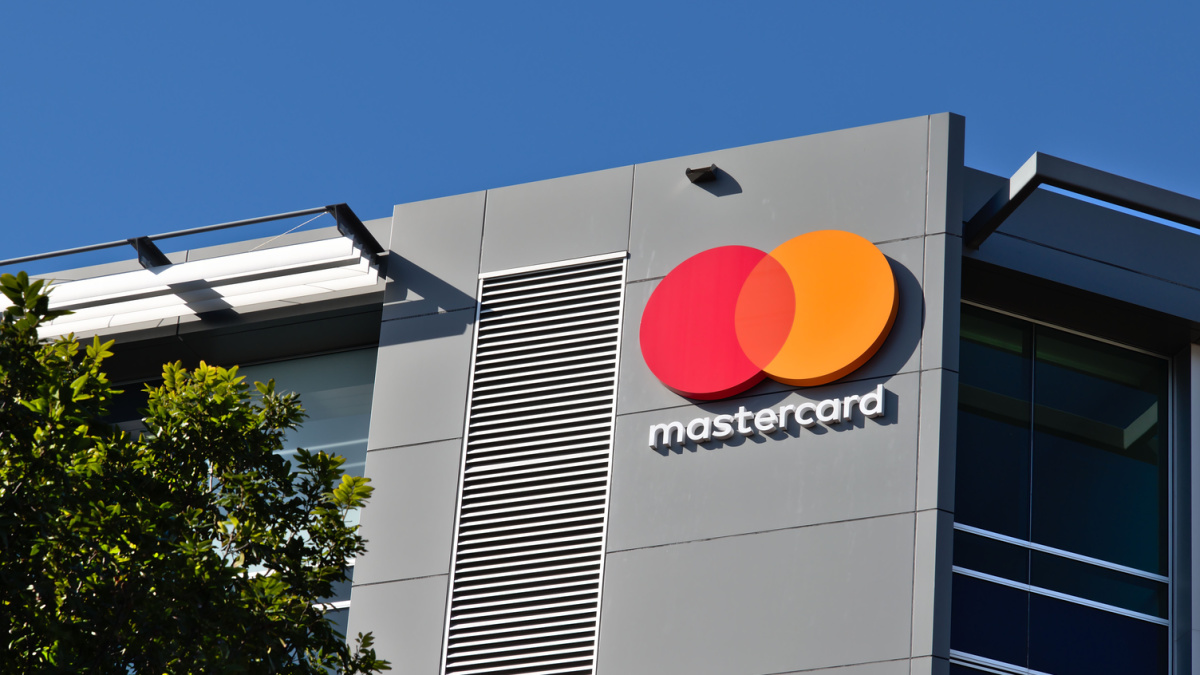
Mastercard is extending its Agent Pay service to enable AI agents to pay for digital services through the Mastercard network.
Announced at Cloudflare Connect yesterday (20 October), Mastercard Agent Pay for Machines uses the x402 open protocol to let agents purchase digital services on behalf of the user or business.
Companies such as Cloudflare, Ant International, BVNK and Coinbase were part of a pilot prior to the launch which tested end-to-end, agent-to-agent transactions using APIs to build Agent Pay for Machines.
Mastercard said in a press release that the key focus of Agent Pay for Machines is not necessarily the payment aspect, but the authority behind the payment to ensure the transaction is completed with the right permissions.
“AI agents are becoming more capable, reliable and able to work with one another,” said Mastercard in its release.
“Increasingly, they also need to pay for things. An agent might buy data from one provider, use an AI model from another and pay for computing power from a third. In other words, AI agents are becoming economic actors.
“Payments aren’t the hard part. Authority is. The challenge is making sure the right agent can complete the right transaction with the right permissions.”
How Mastercard Agent Pay for Machines works
Mastercard is deploying agents to businesses to deliver a job, whether that’s initiating or completing a transaction, billing or prepaid credit, within a spending limit.
When the agent encounters a paid service, the service responds with “402 Payment Required,” a trigger to signal that a payment is needed in order to continue the life cycle.
The agent then creates a digitally signed payment voucher that encodes the spending limit with a promise to perform the payment. The provider verifies and then delivers the service.
These interactions between agents occur off-chain at machine speed, as vouchers can be combined by providers and then redeemed later, as those humans overseeing the process can ensure that spending is within the confines of their pre-established limits.
In a pilot of Agent Pay for Machines, Hype launched a task for agents to plan a campaign for a protein bar. The agents discovered Agent Pay for Machines providers to conduct a social media research campaign and create images.
Hype approved a spending limit and the service responded with “402 Payment Required” through Cloudflare Monetisation Gateway. The agent signs a voucher, the seller verifies it and the work continues.
The Coinbase Developer Platform provides the wallet infrastructure used to fund the agent, while its Base blockchain network provides the on-chain settlement network. BVNK then acts as the agent wallet, using Mastercard Global Money Platform to handle the payment and settlement on both sides, in fiat or stablecoins.
A new call for agentic AI standards?
Agentic commerce and payments have surged in usage among some of the leading payment and financial institutions in recent years, with the likes of Visa, Stripe and Worldpay developing their own standards.
While Visa and Mastercard continue to develop their agentic AI strategies, a recent report from the Financial Stability Board (FSB) called for greater human oversight of agentic AI models and agents after uncovering “worrying risks”.
The FSB listed 12 best practices advising financial institutions on responsible agentic AI governance, which included: governance and accountability, incorporation of AI risks, and human oversight.
In an episode of the Payment Expert Podcast, the Payment Expert team explored if these standards can be enforced on a global scale, and how successful the UK’s governance for agentic AI can be, as the Financial Conduct Authority (FCA) is aiming to launch a dedicated team by 2028.