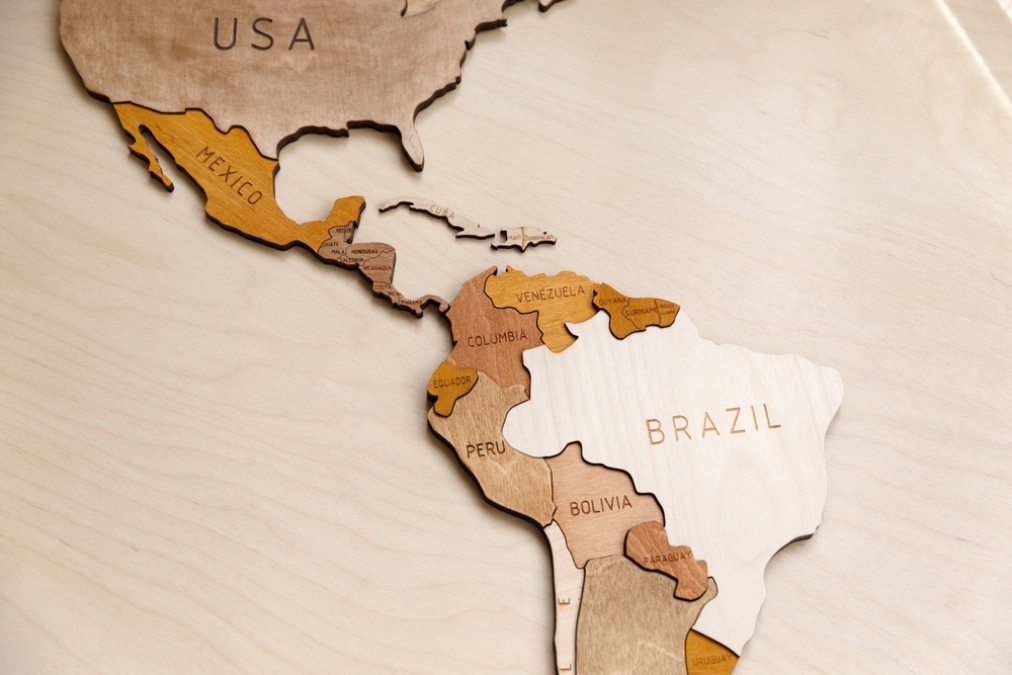
Latin America (LatAm) has undergone a significant digital transformation in payments, with a new focus on bringing new financial inclusion opportunities to underbanked demographics.
Countries such as Brazil have empowered populations to send and receive payments via Pix, Argentina has a wealth of digital wallet payment opportunities with its range of digital wallets, and Mexico is bringing credit access to consumers’ phones quicker and more efficiently than traditional norms.
Payment Expert breaks down five payments companies from five different countries who are delivering financial inclusion opportunities in a digital-native, yet efficient and compliant manner.
Kueski (Mexico)
Primary offering to bolster financial inclusion: Micro-loans
In Mexico, almost 50% of the population do not have a traditional bank account, therefore, are unable to have access to digital banking services such as payments, lending and credit.
Kueski, a Mexico-based financial services company, uses its proprietary technology for its digital platforms to offer short-term personal loans that can be issued digitally for the underbanked population.
This is done via Kueski Cash with small-to-medium sized loans available to first time borrowers which can be approved in minutes and deposited either directly into a Kueski bank account or for cash pickup.
Kueski uses AI underwriting for customer credit checks to be completed in seconds. It analyses non-traditional signals used for ‘credit invisible’ customers who are first time borrowers.
The application process also requires minimal documentation and paperwork. Kueski seeks to streamline the process as the customer does need a credit or debit card to settle an online purchase.
Repayments can be made using cash at local convenience stores, or via direct bank transfers from debit accounts.
This creates a credit history for many Mexicans they previously did not have and if paid on time at the relevant deadline, it can boost their credit scores and future chances of being accepted for larger loans or borrowings.
MercadoPago (Argentina)
Primary offering to bolster financial inclusion: Digital wallets & QR code payments
MercadoPago is not only one of the most popular digital payments companies in Argentina, but the whole of Latin America.
This is primarily due to the company’s digital wallet offerings. Customers can access MercadoPago digital wallets by verifying their identity with biometric technology from their smartphones.
Once verified, users can be accepted to a MercadoPago digital wallet which comes with no upfront fees, minimum balance requirements and without the need to visit a physical banking branch, serving underbanked demographics.
MercadoPago digital wallets support the Argentina Central Bank’s Clave Virtual Uniforme (CVU) payment data code, which is directly embedded into digital wallets and comes with a 22 unique identification code that can link to other digital cards and fintech firms.
This helps remove barriers for financial inclusion offering digital alternatives to traditional banking which requires more stringent KYC and AML checks. The CVU code also acts as a connector to send digital payments to users who use different wallets or bank accounts.
MercadoPago’s QR payments help both consumers and merchants with financial inclusion by unlocking a digital payment alternative to traditional card payments. This helps both consumers and merchants by offering significantly cheaper processing fees, simplified hardware integration and reduces payment delays.
A QR code payment is processed within the MercadoPago digital app at the point-of-sale. The customer then scans the QR code onto the hardware supported by the merchant to settle the payment, as funds deposit into the merchant’s MercadoPago account.
Customers can also top up their MercadoPago digital wallet account by using cash to cash-to-network physical stores.
Nequi (Colombia)
Primary offering to bolster financial inclusion: government subsidiary mandates
In Colombia, digital finance platforms like Nequi have leveraged government-backed mandates to incentivise financial inclusion via their offerings.
Nequi offers reduced barriers to access digital banking and payments by leveraging Colombia’s low-amount electronic accounts mandate, also known as Depósitos de Bajo Monto.
This allows companies like Nequi to conduct simplified KYC checks for first-time bank account users. The requirements involve a national ID and valid mobile phone number. Accounts can be set up in minutes and do not come with maintenance fees, while government funds also come with no attaching fees.
Using the Colombian government’s prosperity agency, Prosperidad Social, Nequi offers welfare management programs to support digital planning of welfare payments and other services.
The service identifies the Nequi user by their national ID number to access three services. The first involves the transferring of national treasury funds directly into a user’s Nequi account by bypassing physical distribution networks to receive funds automatically.
Users can also access instant notifications and SMS messaging when funds are settled into their Nequi account. The third service allows users to make digital payments, as well as being able to withdraw funds from Bancolombia ATMs.
These welfare services provided by the government and supported by fintech firm’s like Nequi can become many people’s first entry point into digital banking and payments.
Nubank (Brazil)
Primary offering to bolster financial inclusion: free credit cards
Brazil’s financial landscape before Nubank was launched in 2013 was dominated by its traditional banks which made gaining a credit card extremely difficult due to the fees and lack of credit history many simply did not have.
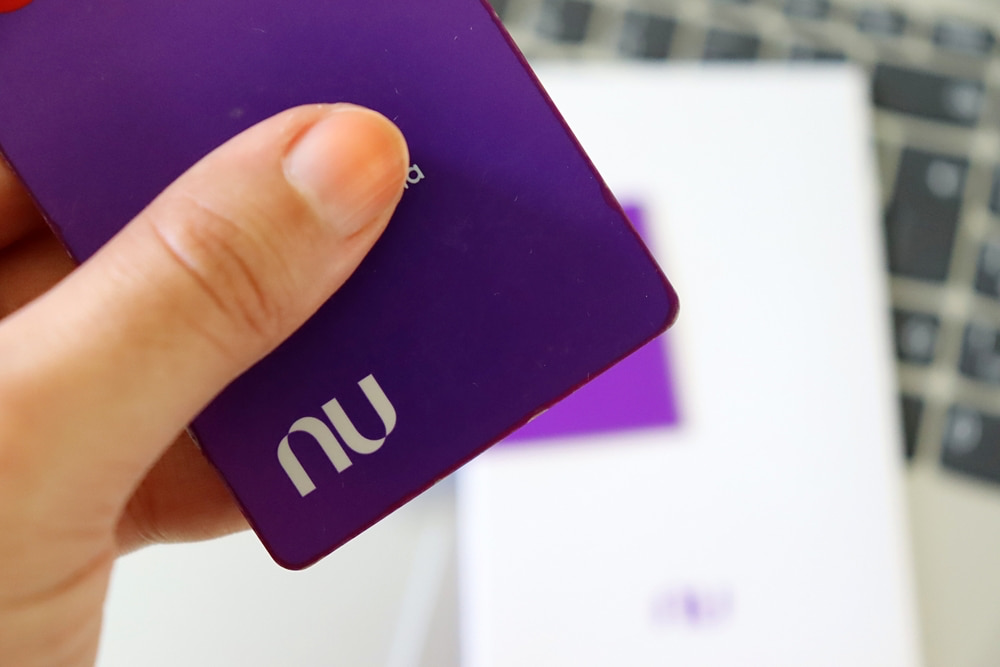
That was until Nubank introduced the ‘Little Purple Card’, or Roxinho, to serve as many Brazilians’ first credit card which came with zero annual fees and cost nothing to hold.
The Brazilian and LatAm digital bank sought to improve financial inclusion by offering its credit card as digitally compatible with its platforms, primarily the Nubank mobile app, so this would become available to all Brazilian municipalities with internet connection and with a lack of nearby traditional banking branches.
For those who became first-time credit card holders, Nubank handled this by embedding a credit limit in the users’ digital accounts. This was to ensure overspending could not be possible and users had clear dates on when to pay off credit each time a bill is processed.
This is enabled by immediate push notifications to the users’ smartphones which automatically updates which repayments need to be made via the digital banking app.
In a bid to avoid paying out hidden fees, Nubank handles the interest calculation for balances that can not be paid on time, working out how much the total repayment will cost with interest attached and when a user needs to repay the credit, with real-time insight on the rising cost.
This transparent and digital-native approach to credit cards and lending has seen Nubank issue credit cards to five million first-time owners in Brazil. This has also served to help the underbanked and rural communities with low-cost onboarding and financing.

VentiPay (Chile)
Primary offerings to bolster financial inclusion: buy-now-pay-later (BNPL)
Chile is a Latin American market where many of its population does not suffer from being underbanked, but does have limited access to gaining credit.
BancoEstado’s universal banking account has contributed to 80% of its adult population holding a basic account and debit card, but credit cards are often harder to obtain due to predominantly being available to the higher-income demographics.
Buy-now-pay-later (BNPL) has been widely used as an alternative to credit cards, and this is especially true with VentiPay’s offering in Chile.
VentiPay offers instalment-based payments at the point-of-sale without the time-consuming manual documentation required for traditional credit cards. Users can select VentiPay’s BNPL method at an online checkout and then add their card details.
The user then opts for which payment plan in order to repay the monthly instalments, either up to three or four months. The first payment is done immediately using their debit or virtual card.
VentiPay handles the debt underwriting and debit the remaining instalments into monthly, or even bi-weekly, payments in accordance with the payment plan to the payee selected.
Traditional credit card purchases often come with high maintenance fees, fluctuating interest rates and significant penalties for late payments. VentiPay offers zero interest attached to the instalments, as well as transparent payment plans for when each payment will be taken out of their bank account.
This also ensures that merchants can offer a more flexible payment experience for users who can pay for goods and services, whilst potentially retaining the consumer down the line for future purchases.