Four of Latin America’s most active gambling markets share a continent and little else when it comes to payments. Operators who treat the region as a single strategic problem will find the reality on the ground tells a different story
Latin America’s gambling market is at different stages of payment maturity, and those differences are complex. For operators building across the region, getting it wrong is expensive.
While the gambling industry is growing in the region, projected by Grand View Research to reach $10.4bn by 2030 at an 11.9% CAGR – these figures don’t explain the fragmented payment landscape. Nor do they reflect that these differences are not gaps to close, but the product of decades of economic, regulatory and consumer dynamics operators must navigate.
Leonardo Baptista, CEO and Co- Founder of Pay4Fun Payment Services, has spent 21 years in the sector, first as an operator and then as a provider. “Regulatory frameworks, banking infrastructure and local consumer behaviour still vary considerably between markets,” he says.
“While similar technologies may be emerging, their operational implementation and adoption c a n differ significantly.”
André Boesing, General Manager for South LatAm at OKTO Payments, adds Latin America is not closer to a single payments paradigm, “it’s dividing into distinct behavioural and infrastructure clusters that require operators to start playing differently.”
For operators, the task is not to build one regional payment proposition but to understand why each market accepts the one it has.
Brazil: What centralised looks like
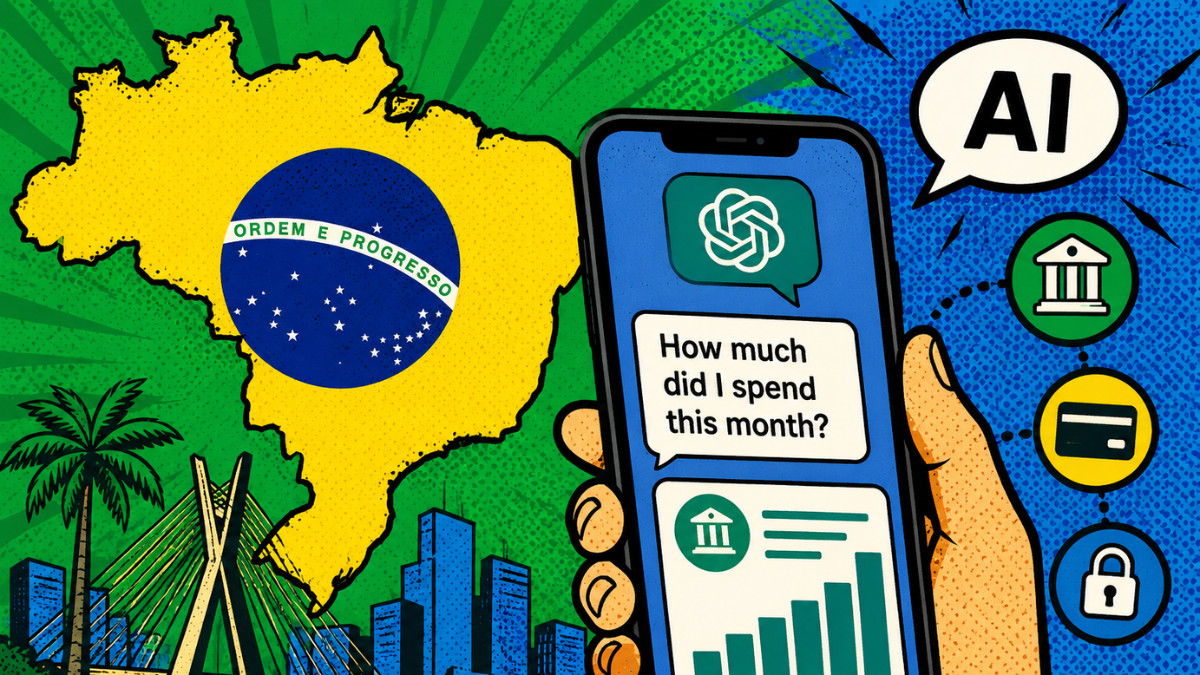
To understand why LatAm markets are solving different problems, consider one that solved its own. Pix, launched by the Central Bank of Brazil in 2020, is an instant, free, QR-enabled payment system backed by mandated banking participation. Its success stems from strong central coordination and conditions which enabled rapid adoption, reaching 16.5% of Brazilians in its first week, according to Jaroslav Glisnik, Business Development Lead for LatAm at RTGS.global.
“With the introduction of Pix by the Central Bank, Brazil developed what is arguably the most efficient and scalable instant payment infrastructure in the region,” says Baptista. “In many ways, Brazil is currently setting a benchmark in Latin America for how instant payments, regulatory clarity and industry scale can coexist.”
For gambling operators, this has produced a market with clear expectations. Carolina Franchini, Product Manager for Open Finance at Celcoin, goes as far as saying there is no real alternative. “You only need to pay with Pix – there is nothing else you need,” says Franchini.
“If you want to be a player in Brazil, you need to adapt to Pix, or you are not a player.”
Peru and Colombia: Converging, but not there yet
Peru and Colombia are the markets most frequently described as following a Pix-adjacent trajectory, and the data lends some support t o that. Research from the Bank for International Settlements (BIS) published in early 2026 shows Yape and Plin together accounting for more than 50% of all cashless transactions in Peru, with Yape dominant in transaction volume. NORBr data from 2023 shows Colombia processing 40% of e-commerce through bank transfers, against a credit card penetration of just 16% among adults.
However, Franchini says there is a gap in the direction of travel and operational reality. “The market in Peru is still dominated by a closed ecosystem,” she says. “The banks can talk to one another, but the users cannot.”
Yape was launched by Banco de Crédito del Perú, one of the country’s main commercial banks, and its penetration was enabled largely by the concentration of the national banking industry within four or five main players. Colombia is more fragmented still – digital wallets, QR code payments and PSE already existed before Bre-B (the Central Bank’s instant payment initiative) arrived.
“Without legislative backing it will be much harder to achieve similar results to Pix,” says Glisnik.
Esteban Sarubbi, Head of Latin America at Paysafe, takes the positives from early momentum in both markets – strong early adoption of Bre-B in Colombia, and comparable momentum in the usage and popularity of major mobile- centric wallets in Peru – but the broader point stands.
“Each Latin American market is unique, with distinct consumer behaviour and, by extension, payment needs, as well as regulation. There’s no single payment model that can be seamlessly replicated across all countries in the region,” he says.
Mexico: Where retail filled the gap
Mexico is where the regional narrative breaks down most clearly. Despite a relatively developed banking infrastructure by regional standards, around half of Mexico’s adult population remains unbanked as of 2024, and Astute Analytica‘s 2024 data shows 41% of gambling deposits flowing through OXXO, the convenience store chain with around 20,000 locations across the country.
Cash vouchers generated at OXXO checkouts function as a de facto payment rail, and this arrangement did not emerge from regulatory design. It emerged because retail infrastructure was accessible in ways t h a t formal financial services were not, and behaviour followed.
“We may have the most technologically advanced solution, but it can still be outperformed by a local brand that has been doing the same thing for decades,” says Glisnik. Nubank, one of the largest neobanks in the world, recently chose to expand in Mexico by partnering with OXXO rather than competing against it – a decision, as Glisnik says, that speaks for itself.
Argentina: A different kind of permanence
While Mexico’s payment landscape is a product of its retail infrastructure, Argentina’s is more so a product of its monetary conditions. PCMI’s 2024 payments data shows Mercado Pago used by 74% of the marhet as a regularly used digital wallet, but the more defining characteristic is the role crypto has come to play.
Chainalysis data covering July 2023 to June 2024 shows stablecoins accounting for 61.8% of Argentina’s crypto transaction volume – well above the global average of 44.7% for the same period – with the country receiving an estimated $9lbn in total crypto inflows, t h e highest in LatAm.
“The strong adoption of crypto and stablecoins is not simply a technological preference but rather a macro-economic response to long-standing monetary instability,” says Baptista. “Because of this, the crypto-adjacent behaviour seen in Argentine wallets increasingly looks like a structural characteristic of the market rather than a transitional phase.”
Franchini adds: “If you want to heep your money stable and be assured that it will be safe, and that you will not lose the power of consumption, you vote for crypto. Nowadays, if we took crypto from operating in Argentina, especially for acquiring services, it would be like removing a credit card from Europe.”
Rankingslatam research shows 19.8% of Argentinians own cryptocurrency – more than any other Latin American country, including Brazil. “Consumer adoption is far more mainstream and way beyond a niche,” says Sarubbi.
More than in any other market, digital wallet usage and crypto preferences are converging, with wallets increasingly embracing stablecoins as a means o f preserving value. The shift comes after years of hyperinflation and multiple exchange rate regimes that nearly exhausted the country’s currency reserves. So choosing stablecoins pegged to the US dollar has become a rational response for many in the country.
“Until the country stabilises economically and people regain trust in institutions, this behaviour can be seen as permanent rather than transitional,” says Glisnik. The current government’s broadly supportive stance on crypto only reinforces that trajectory.
Two strategies, not four
For operators, t h e practical implication is that LatAm does not require four entirely separate market strategies, but it does require at least two.
Peru and Colombia are converging around A2A and bank-transfer infrastructure. Operators are increasingly partnering with multi-market payment service providers that offer single integration platforms connecting cashiers to local payment methods – a pragmatic response to fragmentation that avoids rebuilding the stack from scratch in each market.
Mexico and Argentina sit outside that pattern for entirely different reasons, each anchored in conditions that predate modern fintech and show no sign of resolving quickly.
“The question is no longer whether to standardise or localise – it’s how to orchestrate across markets with very different payment behaviours, regulatory frameworks and user expectations,” says Boesing. Payments, he argues, have moved from a back-end function to a front-line competitive lever.
“Competition won’t be defined by odds or product alone, but by who can deliver seamless experiences in critical moments. Those who remove friction at the point of intent will build stronger trust, brand recognition, and long-term loyalty.”
Baptista concludes: “Successful operators tend to design flexible architecture that allows them to adapt quickly to each market’s particular dynamics.” So, for operators, whether active or looking to scale, in the region, adaptability will be crucial to their success.
This article first appeared in SBC Leaders June 2026 edition