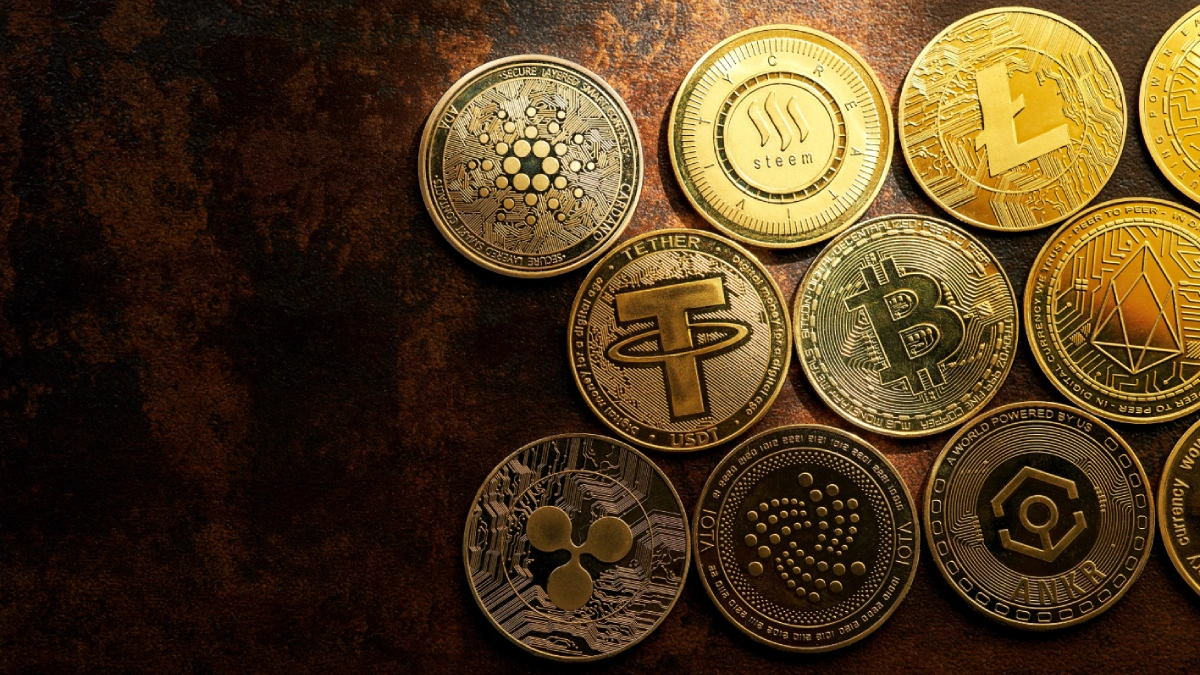
French policymakers are calling for more euro-based stablecoins, but central bank officials warn their expansion could introduce new risks to monetary stability and reshape the foundations of the EU payments system.
Calls to accelerate euro-based stablecoins are emerging just as central bankers warn their widespread use could undermine Europe’s monetary system, exposing a growing divide in the bloc’s digital payments strategy.
Speaking at a crypto conference in Paris on 17 April, Roland Lescure reportedly urged the development of euro-denominated stablecoins and called on banks to explore tokenised deposits, positioning both as tools to reduce reliance on dollar-backed digital assets.
According to Reuters, Lescure said the relatively small volume of euro-pegged stablecoins compared to dollar-pegged ones was “not satisfactory”. He noted a group of European banks have formed a company to launch a euro-pegged stablecoin in the second half of 2026 that they hope will counter US competition.

“That is what we need and that is what we want,” Lescure said. “I also strongly encourage banks to further explore the launch of tokenised deposits,” he added. Tokenisation refers to creating blockchain-based tokens to stand in for existing financial assets.
The remarks reflect growing political concern over the dominance of US dollar-linked stablecoins in global markets, where euro-based alternatives remain limited in scale and adoption.
Yet just weeks earlier, Deputy Governor of the Banque de France, Denis Beau, had set out a more cautious view from within the central banking community, warning that the expansion of stablecoins – particularly those issued outside Europe – could carry broader systemic implications.
A question of monetary foundations
In remarks delivered at the Eurofi High Level Seminar in March, Beau framed the rise of stablecoins as a structural challenge to Europe’s existing monetary system.
He warned that the increasing use of stablecoins as settlement assets could lead to a “stablecoinisation” and “dollarisation” of payments, particularly if non-European issuers continue to dominate the market.
Such a shift, he suggested, could introduce risks to both financial stability and strategic autonomy, particularly if large parts of the payments system begin to rely on privately issued digital money rather than central bank or regulated bank money.
Instead, Beau emphasised tokenisation in Europe should be built on the “solid foundation” of the existing two-tier monetary system, where central bank money and private bank money coexist and remain interchangeable at par.
Stablecoins push versus tokenised deposits
The divergence between the two positions is not simply about whether Europe should compete in stablecoins, but what form this competition should take.
While Lescure’s comments point towards scaling euro-denominated stablecoins, central bank thinking appears to favour alternatives such as tokenised bank deposits and central bank-backed infrastructure.
Beau explicitly highlighted the role of “tokenised private money issued by European financial institutions” alongside central bank initiatives, including wholesale tokenised settlement services and the digital euro.
Tokenised deposits, issued by regulated banks, sit within the existing financial system and benefit from access to central bank liquidity and supervision. Stablecoins, particularly those issued by non-bank entities, do not necessarily operate under the same framework.
The central bank position is also reflected in its approach to regulation. Beau noted that while the EU’s Markets in Crypto-Assets (MiCA) regulation provides a foundation for oversight, it “only partially addresses the risks” associated with the sector’s evolution.
He called for stronger measures, including restrictions on the use of stablecoins for everyday payments, particularly where they are backed by non-euro currencies.
This suggests that even as political momentum builds behind euro-based stablecoins, their practical use within the EU payments system may remain constrained by regulatory design.
A fragmented path forward
Taken together, the remarks highlight an emerging tension in Europe’s digital asset strategy.
On one side, policymakers are seeking to build domestic alternatives to dollar-backed stablecoins, viewing them as part of a broader effort to strengthen Europe’s position in digital payments.
On the other, central banks are focused on preserving the integrity of the monetary system, favouring models that extend existing structures rather than introducing parallel forms of privately issued money at scale.
The result is not outright opposition, but a lack of alignment on how Europe’s tokenised future should be constructed, and what role stablecoins should ultimately play within it.